
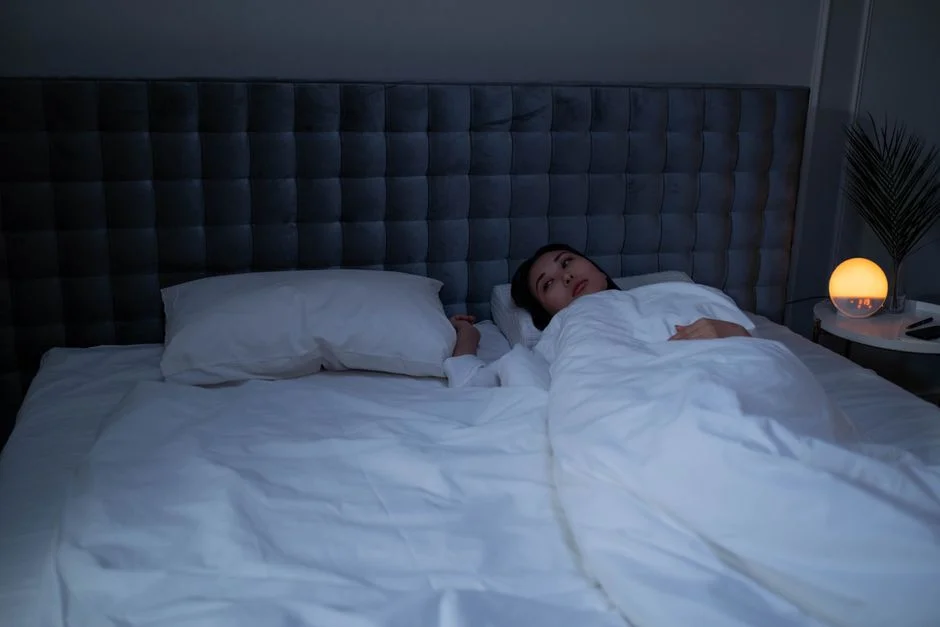
If night sweats keep waking you, the most useful move is two-track: make the bedroom and your evening easier on sleep, and ask a clinician about treating the hot flashes themselves. Sleep habits may help some people, but they are not a substitute for treatment when symptoms are severe. Here is how to think about both, and what the research does and does not say.
Why hot flashes and bad sleep travel together
A study of 467 women aged 40 to 60 with menopausal complaints found that 262 of the 450 women who completed the sleep questionnaire (58.2%) had a Pittsburgh Sleep Quality Index score of 6 or higher. Worse sleep scores were linked to more hot flashes, more sweating, and more anxiety and depression symptoms, and anxiety and depression appeared to carry part of the effect between sweating and sleep quality.[1]
Two limits apply. It was a cross-sectional study, so it shows association, not cause. And the women were seeking help for menopausal problems, so that result will not match every woman at midlife. Still, the pattern is a useful frame: the sweats, anxiety and depression, and the sleep loss tend to show up together.
Six ways to recharge when nights are rough
The first five are everyday sleep habits. If you have a medical condition, or take medication that affects sleep or body temperature, check with your clinician first. The sixth, CBT-I, has a meta-analysis of 11 randomized trials behind it, covered below.
- Cool the bedroom. A fan, breathable sheets and layers that come off easily.
- Keep a steady schedule. The same bedtime and wake time, weekends included.
- Wind down without screens. A book, a warm shower or a caffeine-free tea, and the television out of the bedroom.
- If you wake, do not force sleep. Leave the bed and read a printed book in soft light until you feel drowsy, instead of checking email or tidying up.
- Quiet the worry. Ten minutes with a “worry journal” before bed, or meditation, gentle yoga or a hot bath, can help you unwind. Notice whether an afternoon coffee affects your nights, and try decaf if it does.
- Ask about CBT for insomnia, known as CBT-I, which targets the thoughts and habits that keep insomnia going.
What the evidence says about CBT-I
A 2025 systematic review and meta-analysis of 11 randomized controlled trials with 973 menopausal women. CBT-I significantly improved sleep quality and reduced insomnia severity. The effect held whether it was delivered face to face, by phone or online.[2]
Caveats: the pooled analyses used smaller subsets of the 973 women, the trials differed in design, and the authors call for more large-scale, high-quality studies. Treat it as encouraging evidence that CBT-I is worth asking about, not a guarantee.
Other mind-body practices, including yoga and mindfulness, have trials in menopausal women too. A 2025 systematic review and meta-analysis of 18 randomized trials (1,572 participants, peri- and postmenopausal women) found that mind-body therapies improved depression and anxiety, and sleep quality (pooled from 13 of the trials), with moderate-to-large effects. Yoga and Qigong showed stable benefits for sleep. Mindfulness, music therapy, dance therapy and Reiki showed larger psychological benefits than yoga and Qigong. The comparison groups were usual care or no intervention, and the authors call for higher-quality trials.[3]
Do not stop at sleep hygiene
If you wake several times a night drenched in sweat, putting the phone away is not enough. The sweats may need treatment too. Hormone therapy and several non-hormonal prescription options exist, and which one fits depends on your history, symptoms and preferences. That is a conversation for a menopause-informed clinician, not something to settle on your own.
Sleep problems also have other causes that can overlap with menopause, such as sleep apnea, restless legs syndrome, thyroid problems and medication side effects. Mention disrupted sleep to your clinician even if you think it is only the hot flashes.
One small step to start
You do not have to change everything at once. Pick one change this week, such as the cooler room or the fixed wake time, and add the next one later. Then write down how many times you woke and how you felt in the morning, so you have something concrete to bring to your appointment.
Related reading: severe menopause hot flashes and what the evidence says about treatment and sleep in midlife.
References
↑︎ Zhou Q, Wang B, Hua Q, et al. Investigation of the relationship between hot flashes, sweating and sleep quality in perimenopausal and postmenopausal women: the mediating effect of anxiety and depression. BMC Women’s Health. 2021. Population: 467 women aged 40 to 60 with menopausal problems (450 completed the PSQI). DOI: https://doi.org/10.1186/s12905-021-01433-y. Finding as used: 262 of 450 women who completed the PSQI (58.2%) had a score of 6 or higher; sleep quality scores were positively correlated with hot flashes, sweating, anxiety and depression symptoms; anxiety and depression played a mediating role between sweating from hot flashes and sleep quality.
↑︎ Moon HJ, Yu SN, Hur MH. Effects of cognitive behavioral therapy on sleep quality and insomnia severity index in women with menopausal insomnia: a systematic review and meta-analysis. Women’s Health Nursing. 2025. Population: 11 randomized controlled trials, 973 menopausal women. DOI: https://doi.org/10.4069/whn.2025.09.07. Finding as used: CBT-I significantly improved sleep quality (SMD -1.01; 95% CI -1.27 to -0.75) and reduced insomnia severity (MD -4.49; 95% CI -6.12 to -2.87), and was effective regardless of delivery mode, follow-up duration or baseline insomnia severity.
↑︎ Fan Z, Zhang Y, Shu Y, Zhou Y, Zuo Z. Mind-body therapies for sleep disturbances, depression, and anxiety in menopausal women: a systematic review and meta-analysis of randomized controlled trials. Frontiers in Public Health. 2025. Population: 18 randomized controlled trials, 1,572 peri- and postmenopausal women. DOI: https://doi.org/10.3389/fpubh.2025.1686981. Finding as used: mind-body therapies significantly improved sleep quality (abstract SMD -0.86, 95% CI -1.24 to -0.48; the sleep pool covered 13 of the 18 trials and the results section reports SMD -0.91), depression (SMD -0.79) and anxiety (SMD -1.13) against usual care or no-intervention controls; yoga and Qigong gave stable sleep benefits; mindfulness, music, dance and Reiki gave greater psychological benefit than yoga and Qigong.

Kurt Greiner
Kurt is a digital strategist and IT professional blending emerging technology with practical application, exploring how individuals can leverage modern tools to navigate the second half of life with purpose.
Leave a Reply