
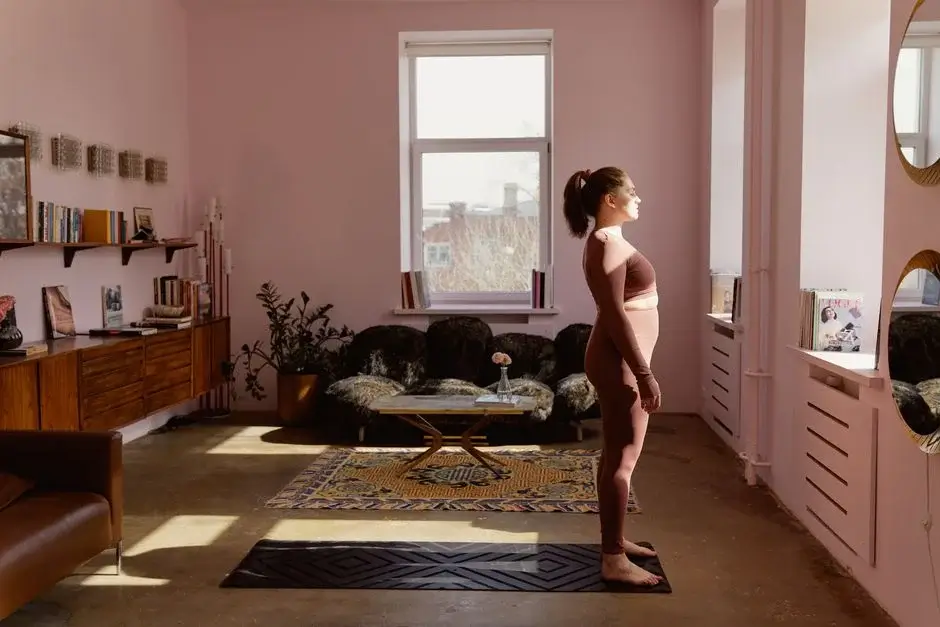
Before you add another supplement, tracker, or protocol, try making your days more predictable. The research below points to a short list of low-cost habits tied to timing and rhythm: when you sleep, when you get light, how you breathe, and when you move.
Keep your sleep and wake times steady
In a UK Biobank study of 60,977 adults (average age about 63) who wore activity trackers, people with more regular sleep and wake times had a 20% to 48% lower risk of death from any cause over about 6 years than the least regular group. Sleep regularity performed at least as well as sleep duration in predicting mortality risk (the difference was not statistically significant). This was an observational study, so it shows a link, not a cause.[1] A simple step: pick a wake time you can hold on most days, including weekends.
Slow your breathing
A systematic review and meta-analysis of 223 studies found that voluntary slow breathing raised heart rate variability measures tied to the parasympathetic nervous system, the calming branch of your autonomic nervous system. The increase showed up during breathing sessions, right after a single session, and after multi-session programs, with few adverse effects expected.[2] Heart rate variability is a physiological marker, not a direct measure of how stressed or calm you feel. Try a few minutes of slow, easy breaths before a stressful meeting or at the end of a workout. Stop if you feel lightheaded. A review of the physiology adds that more research is still needed on the clinical uses.[3]
Get light at the right time of day
Light is the main signal that sets your internal clock, and its timing matters. In a lab study of 21 healthy adults, bright light given after the body’s temperature minimum, which falls in the early morning hours, shifted the clock earlier, while light given before that point shifted it later.[4] The study used a 6.7-hour bright light exposure, so it does not tell us how many minutes outdoors you need. A review of the evidence supports using light as a low-risk tool for sleep and mood.[5] Morning daylight and dim evenings are a sensible pattern to try. If you have bipolar disorder or work night or rotating shifts, talk to a clinician before changing your light timing.
Dim the screens at night
In a laboratory study that compared the same participants reading on a light-emitting device and reading a printed book before bed, the device delayed sleep onset, reduced evening sleepiness, suppressed melatonin, shifted the circadian clock later, and lowered next-morning alertness.[6] A printed book or low-light activity in the last hour before bed is an easy swap.
Take a short walk after meals
In a randomized crossover trial of 41 adults with type 2 diabetes, walking 10 minutes after each main meal lowered blood glucose over the following 3 hours by about 12% compared with one 30-minute walk at another time. The drop was about 22% after the evening meal.[7] The participants had type 2 diabetes, so the size of the effect may differ in people without it. If you take glucose-lowering medication, ask your doctor how walking fits your plan.
The takeaway
You do not need a new protocol. A steady sleep schedule, slow breaths when you feel wound up, daylight in the morning, quieter screens at night, and a walk after dinner all have research behind them. Pick one, hold it for two weeks, and add the next.
References
↑︎ Windred DP, Burns AC, Lane JM, et al. Sleep regularity is a stronger predictor of mortality risk than sleep duration: a prospective cohort study. Sleep. 2024;47(1):zsad253. DOI: https://doi.org/10.1093/sleep/zsad253
↑︎ Laborde S, Allen MS, Borges U, et al. Effects of voluntary slow breathing on heart rate and heart rate variability: a systematic review and a meta-analysis. Neurosci Biobehav Rev. 2022;138:104711. DOI: https://doi.org/10.1016/j.neubiorev.2022.104711
↑︎ Russo MA, Santarelli DM, O’Rourke D. The physiological effects of slow breathing in the healthy human. Breathe (Sheff). 2017;13(4):298-309. DOI: https://doi.org/10.1183/20734735.009817
↑︎ Khalsa SBS, Jewett ME, Cajochen C, Czeisler CA. A phase response curve to single bright light pulses in human subjects. J Physiol. 2003;549(Pt 3):945-952. DOI: https://doi.org/10.1113/jphysiol.2003.040477
↑︎ Blume C, Garbazza C, Spitschan M. Effects of light on human circadian rhythms, sleep and mood. Somnologie (Berl). 2019;23(3):147-156. DOI: https://doi.org/10.1007/s11818-019-00215-x
↑︎ Chang AM, Aeschbach D, Duffy JF, Czeisler CA. Evening use of light-emitting eReaders negatively affects sleep, circadian timing, and next-morning alertness. Proc Natl Acad Sci U S A. 2015;112(4):1232-1237. DOI: https://doi.org/10.1073/pnas.1418490112
↑︎ Reynolds AN, Mann JI, Williams S, Venn BJ. Advice to walk after meals is more effective for lowering postprandial glycaemia in type 2 diabetes mellitus than advice that does not specify timing: a randomised crossover study. Diabetologia. 2016;59(12):2572-2578. DOI: https://doi.org/10.1007/s00125-016-4085-2

Kurt Greiner
Kurt is a digital strategist and IT professional blending emerging technology with practical application to help businesses and individuals streamline their digital presence. His current work focuses on the intersection of intentional living and technological resilience, exploring how individuals can leverage modern tools to navigate the second half of life with purpose.
Leave a Reply