
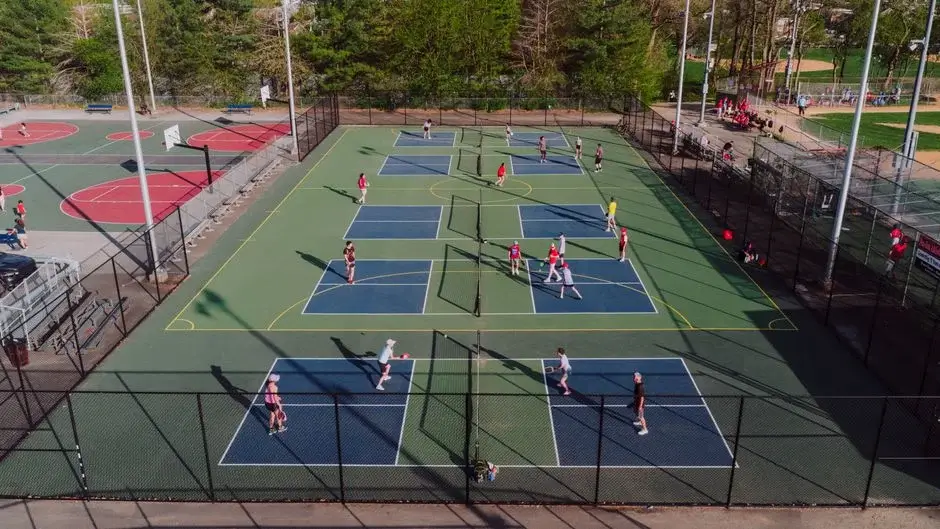
Build strength and balance before you chase more court time. Pickleball is social, accessible, and a solid way to get your heart rate up, but emergency department data show that older players do get hurt, mostly from falls. Here is what the research says and how to use it.
What the injury data show
A national surveillance study of U.S. emergency department visits from 2013 to 2022 counted an estimated 66,350 pickleball injuries. The average patient was 64, and most injuries (61.1%) happened to people aged 65 to 80. Falls caused 65.5% of injuries. Fractures were the most common diagnosis (32.7%), followed by strains and sprains (30.8%), and the wrist was the most injured body part (12.7%). Women accounted for 69.1% of the fractures.[1] A separate analysis of players 60 and older found a similar pattern: falls caused 63.3% of injuries, and women were far more likely than men to suffer a fracture, including wrist fractures.[2]
These numbers only count people who went to an emergency department, and they do not tell us how many people play, so they cannot give your personal risk. The same analysis also showed that 11.1% of emergency visits among pickleball players 60 and older were for non-injury problems such as cardiovascular events.[2] If you have heart disease, chest symptoms, or have been inactive for a long time, talk with your doctor before you ramp up.
Train balance and strength off the court
The World Health Organization recommends that all adults get 150 to 300 minutes of moderate-intensity aerobic activity per week, or an equivalent mix, plus regular muscle-strengthening activity.[3] For falls specifically, a Cochrane review of 108 randomized trials with 23,407 community-dwelling adults aged 60 and older (average age 76) found that exercise reduced the rate of falls by 23%. Balance and functional exercises reduced it by 24%, and programs combining several types of exercise, most often balance and functional work plus resistance training, reduced it by 34% (moderate-certainty evidence).[4] These trials did not test pickleball players, so applying the results to the court is an inference, but it is a reasonable one given that falls drive most pickleball injuries.
Examples of balance and functional work you can do at home:
- Single-leg stands near a counter for support, building up to eyes-open holds on each side
- Side steps with a light resistance band around your thighs
- Lunges and sit-to-stands, done slowly and under control
- Light resistance exercises for the legs, hips, shoulders, and core, done regularly
Warm up before you play
A systematic review of randomized trials on warming up found that three of five high-quality studies showed fewer injuries with a warm-up and two found no significant effect. The authors concluded that evidence is insufficient to endorse or drop routine warm-ups, although the weight of evidence favored a lower injury risk.[5] Because the risk is low, a few minutes of easy walking, side-to-side steps, and gentle trunk turns before play is a sensible habit.
The takeaway
The goal is not just playing pickleball today but still playing it at 65. Falls are the biggest injury driver in the data, and balance and strength training is a well-supported way to lower fall risk. Add short sessions during the week and keep playing.
References
↑︎ Yu J, Yendluri A, Linden GS, et al. Increasing incidence of pickleball injuries presenting to US emergency departments: a 10-year epidemiologic analysis of mechanisms and trends. Orthop J Sports Med. 2025;13(1):23259671241305364. DOI: https://doi.org/10.1177/23259671241305364
↑︎ Weiss H, Dougherty J, DiMaggio C. Non-fatal senior pickleball and tennis-related injuries treated in United States emergency departments, 2010-2019. Inj Epidemiol. 2021;8(1):34. DOI: https://doi.org/10.1186/s40621-021-00327-9
↑︎ Bull FC, Al-Ansari SS, Biddle S, et al. World Health Organization 2020 guidelines on physical activity and sedentary behaviour. Br J Sports Med. 2020;54(24):1451-1462. DOI: https://doi.org/10.1136/bjsports-2020-102955
↑︎ Sherrington C, Fairhall NJ, Wallbank GK, et al. Exercise for preventing falls in older people living in the community. Cochrane Database Syst Rev. 2019;1:CD012424. DOI: https://doi.org/10.1002/14651858.CD012424.pub2
↑︎ Fradkin AJ, Gabbe BJ, Cameron PA. Does warming up prevent injury in sport? The evidence from randomised controlled trials? J Sci Med Sport. 2006;9(3):214-220. DOI: https://doi.org/10.1016/j.jsams.2006.03.026

Kurt Greiner
Kurt is a digital strategist and IT professional blending emerging technology with practical application to help businesses and individuals streamline their digital presence. His current work focuses on the intersection of intentional living and technological resilience, exploring how individuals can leverage modern tools to navigate the second half of life with purpose.
Leave a Reply