
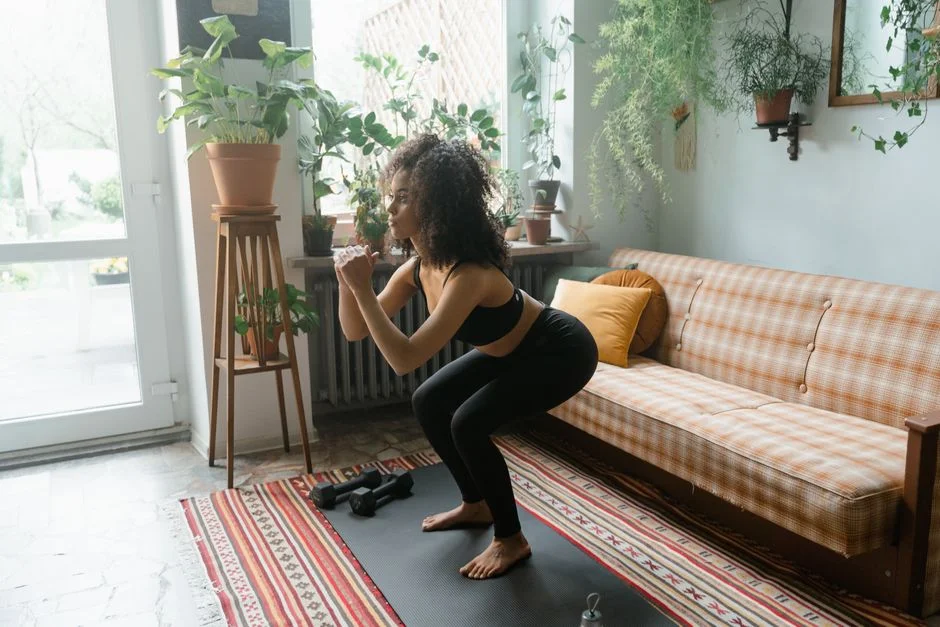
Exercise shows up in sleep apnea advice as a side note: lose weight, move more. A small randomized controlled trial from Brazil tested something more specific. Adults with moderate to severe obstructive sleep apnea did eight weeks of resistance training, three sessions a week. Afterward they reported better sleep quality and better quality of life than a comparison group. Their daytime sleepiness score did not change.[1]
What the researchers did
The trial enrolled 25 adults with an average age of 54.6 years and an average BMI of 36.1. Their average apnea-hypopnea index was 52.2 events per hour. That number counts breathing pauses and shallow breaths per hour of sleep, and it put the group in the moderate to severe range.[1]
Participants were randomized to resistance training three times a week or to a control group that met twice a week. In the companion trial, the control group did stretching exercises.[2] Sleep quality, daytime sleepiness and quality of life were measured with three standard questionnaires: the Pittsburgh Sleep Quality Index, the Epworth Sleepiness Scale and the SF-36 health survey.[1]
This paper is a secondary analysis. The main trial asked whether resistance training changes apnea severity. This report goes back to the same participants and looks at the outcomes people reported about themselves.[1]
What they found
On the sleep quality questionnaire, a lower score means better sleep. Changes from start to finish, resistance training versus control:[1]
- Overall sleep quality score: down 3.2 points in the training group, up 0.2 in the control group (p = 0.004).
- Time to fall asleep (the sleep latency component): down 1.0 versus up 0.2 (p = 0.018).
- Sleep duration component: down 0.6 versus down 0.2 (p = 0.012).
- Sleeping medication component: down 0.2 in the training group, up 0.8 in the control group (p = 0.007).
- SF-36 global quality of life score: up 10.8 versus down 3.4 (p = 0.002).
- SF-36 emotional aspects: up 29.6 versus down 17.9 (p = 0.008).
- Daytime sleepiness (Epworth Sleepiness Scale): no difference between groups.
The companion trial measured sleep overnight with polysomnography. Apnea-hypopnea index fell by 21.0 events per hour in the training group and rose by 3.5 in the control group (p = 0.015). Brief awakenings called arousals also dropped in the training group. Within the training group, a bigger drop in waist circumference went along with a bigger drop in apnea severity (r = 0.643, p = 0.018).[2] That is a correlation inside one small group, so it does not show that a smaller waist caused the change.
What this does not show
- It was 25 people, all with moderate to severe sleep apnea and an average BMI in the obesity range. The results do not automatically apply to someone with mild snoring or no diagnosis.
- Sleep quality and quality of life came from questionnaires. They capture how people felt, not how they slept on a given night.
- The two groups differed in more than exercise type: three sessions a week versus two. The comparison is training against a lighter, different activity, not against doing nothing.
- Results are reported after eight weeks. The abstracts do not say whether the changes last.
- Several outcomes were tested in a small sample, so treat these findings as early. Daytime sleepiness did not improve.
- The details here come from the published abstracts. They do not describe the exercises or loads used.
- Nothing in the study suggests that exercise replaces treatment your clinician has prescribed.
What to do with it
- If you snore loudly, wake unrefreshed, or a partner notices pauses in your breathing, ask your clinician about a sleep evaluation. An overnight sleep study is how sleep apnea is diagnosed.
- If you already have a diagnosis, ask your clinician whether a resistance program fits alongside your treatment.
- For a starting structure, try three full-body sessions a week: a squat or sit-to-stand, a hip hinge, a push, a pull and a carry. This is a general template, not the study protocol, so start light and add load gradually.
- Give it the same eight weeks the trial used, and keep a simple log of how long it takes to fall asleep and how rested you feel in the morning.
- If you have joint pain, a heart condition or another long-term illness, talk to your clinician or a qualified trainer about how to adapt the moves.
References
[1] de Almeida JRV, da Silva Ferreira DK, de Arantes Lima VD, dos Santos ENN, dos Santos de Oliveira Silva NS, Aguiar JLP, dos Santos ECF, Germano-Soares AH, Pedrosa RP, Esteves AM, Farah BQ, de Lima Lins-Filho O. Effects of resistance training on subjective sleep quality, excessive daytime sleepiness, and quality of life in patients with obstructive sleep apnea: a secondary analysis from a randomized controlled trial. Sleep and Breathing, 2026;30(6):296. Population: 25 adults with moderate to severe obstructive sleep apnea (mean age 54.6 years, mean BMI 36.1, mean AHI 52.2 events/hour). DOI: https://doi.org/10.1007/s11325-026-03842-5. Finding as used: eight weeks of resistance training (three sessions per week) versus a control group (two sessions per week) improved overall Pittsburgh Sleep Quality Index score (change -3.2 vs +0.2; p = 0.004), sleep latency (p = 0.018), sleep duration (p = 0.012), sleeping medication (p = 0.007), SF-36 global score (+10.8 vs -3.4; p = 0.002) and SF-36 emotional aspects (+29.6 vs -17.9; p = 0.008); no difference in the Epworth Sleepiness Scale. ↑︎
[2] de Almeida JRV, Farah BQ, Aguiar JLP, dos Santos ECF, de Arantes Lima VD, dos Santos ENN, dos Santos de Oliveira Silva NS, Germano-Soares AH, Saavedra F, Pedrosa RP, da Silva Ferreira DK, de Lima Lins-Filho O. Effects of resistance training on obstructive sleep apnea severity: a randomized controlled trial. Sleep Medicine, 2026;142:108879. Population: 25 adults with moderate to severe obstructive sleep apnea randomized to resistance training (3 weekly sessions for 8 weeks) or a stretching control group. DOI: https://doi.org/10.1016/j.sleep.2026.108879. Finding as used: apnea-hypopnea index change -21.0 vs +3.5 events/hour (p = 0.015); arousals -7.9 vs +7.4 (p = 0.028); in the resistance training group, change in AHI correlated with change in waist circumference (r = 0.643, p = 0.018); control group did stretching exercises. ↑︎

Kurt Greiner
Kurt is a digital strategist and IT professional blending emerging technology with practical application, exploring how individuals can leverage modern tools to navigate the second half of life with purpose.
Leave a Reply