
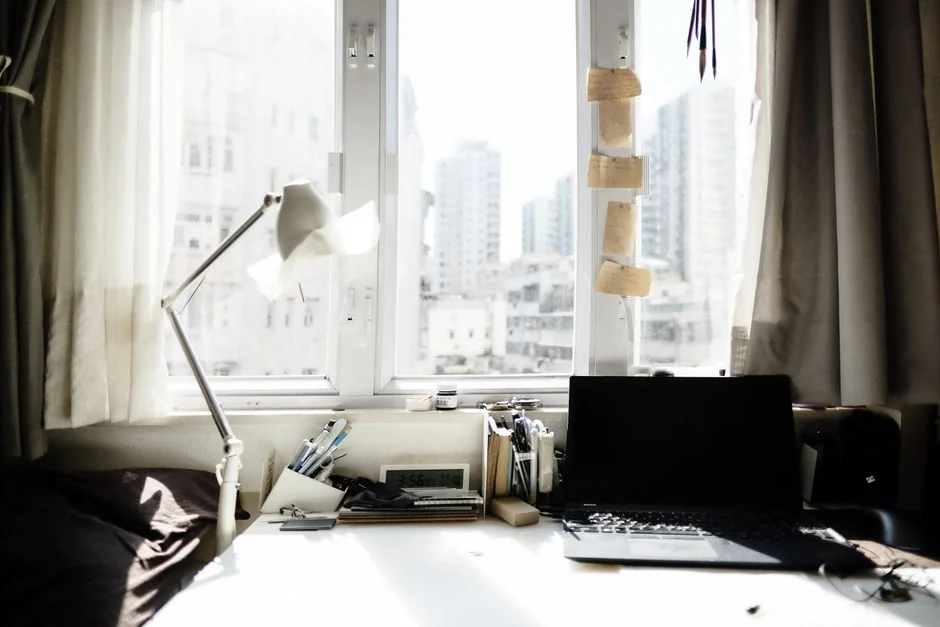
Set up a home work life with more movement, clearer boundaries and a routine you can keep.
If you have a health condition, or you have pain, talk with a clinician before changing how you move, sleep or exercise.
How to use this course. Read it in one sitting or one day at a time. Statements with a bracketed number come from a study. Everything else is practical advice from the Bettering Me team.
Jump to: Day 1 | Day 2 | Day 3 | Day 4 | Day 5
Day 1: Move more at home
Working from home can quietly remove the movement your old routine gave you for free. No commute, no walk to the meeting room, no stroll to the coffee machine. Your day can shrink to the distance between the bed, the kitchen and the desk.
Today’s idea is simple: build movement into your day on purpose.
What the research says
A large review of mostly observational studies linked long hours of sitting with a higher risk of early death, death from heart disease and type 2 diabetes.[1] One pooled analysis of more than a million people found that long sitting hours were linked to early death in the least active group, but not in the most active group, which did about 60 to 75 minutes of moderate activity a day.[2] These are observational findings. They show an association, not proof that sitting causes the problem.
So what about a sit-stand desk? In trials lasting up to three months, sit-stand desks cut sitting at work by about 100 minutes a day. The evidence behind that figure is rated low quality.[3]
Whether that cut turns into better health is less clear. One 12-month trial of office workers, which combined a desk with coaching and other supports, found small improvements in fasting blood sugar. Most other markers showed no significant change.[4] A desk on its own is not a health plan.
What about how you feel at the desk? In one small lab study of 25 adults, alternating between sitting and standing left people slightly less sleepy and less physically tired than sitting all day, though their legs felt more uncomfortable.[5] One lab study that had people alternate between sitting and standing every 20 minutes also measured faster processing speed on a simple task. It found no clear effect on higher-level thinking.[6] A one-hour-a-day, five-day trial in office workers found no significant difference in attention, memory or task efficiency between sitting and standing.[7] A review of eight studies found mixed results. Gains in working memory, attention and psychomotor tasks lasted up to 30 minutes after the intervention, and no study measured beyond that.[8] Effects on higher-level thinking are not established, and in one long workplace trial the benefits had faded by two years.[9]
The takeaway: standing is a tool for breaking up sitting, not a magic setting. Treat it as one way to keep moving through the day, and do not expect more from it than that.
Your action for today
Set a reminder to get up once an hour. Stand for a call, refill your water, walk to the end of the street and back, or stretch for two minutes. If you have a sit-stand desk, alternate positions instead of standing all day.
Exercise: map your day
Write out a normal workday in hour blocks. Mark where you sit longest. Pick one block and add one movement break there. Start with just that one.
Next: Day 2, the pitfalls you will actually hit
Day 2: The pitfalls you will actually hit
Work-from-home trouble tends to follow patterns. Three come up often:
- The drifting schedule. Work starts early because the laptop is right there, and it never quite ends.
- The constant interruption. Family, deliveries, the dishes, a message that “only takes a second.”
- The quiet isolation. Days pass with no casual contact with anyone.
You do not need to fix all three at once. You need to know which ones are most likely to hit you, and what you will do when they arrive.
A word on isolation
Across 88 studies with about 40,000 people, loneliness and depression were moderately linked (r=.50).[10] In a five-year study of adults aged 50 to 68, loneliness predicted later depressive symptoms, and not the other way around.[11] These studies were not about remote workers, and they do not show that working from home causes low mood.
Working from home can remove the casual contact an office provides, so plan some on purpose. A weekly coffee with a friend, a call that is not about work, a walk with a neighbor. Put it in your calendar like a meeting.
Exercise: your pitfall map
Draw a table with three rows and three columns: pitfall, trigger, counter-move.
| Pitfall | Trigger | Counter-move |
|---|---|---|
| Example: schedule drift | Opening email before breakfast | Laptop stays closed until 8:30 |
Fill in the three pitfalls most likely for you. For each, write what sets it off and one small thing you will do. Keep the counter-moves small enough that you will do them on a bad day.
Next: Day 3, a workspace that signals “work”
Day 3: A workspace that signals “work”
Keep work and rest in different places if you can. Working from the bed or the couch can blur the line between the two, which can make it harder to start work and harder to stop.
The goal is separation, even a small one. A spare room is lovely. A corner of the dining table that you set up and clear down each day works too.
Pick one fixed spot
Choose one place to work and use it every day. If you cannot give it up completely, create a start-and-stop ritual: lay out your laptop and notebook at the start, and put them away at the end. Clearing the desk at the end of the day can give your mind a clean stopping point.
Light
Set up near a window if you can, so daylight reaches you during the day. Add task lighting for darker hours, aimed so it does not glare on your screen.
What does the research say? In one small study of 49 office workers, those with windows reported better vitality and sleep quality than those without.[12] In an observational study of office workers, more circadian-effective light over the day was associated with fewer depressive symptoms and better sleep.[13] These were small or observational studies, and they do not show that daylight causes better mood or better work. Treat daylight as a sensible habit, not a proven mood treatment.
Exercise: photograph your workspace
Take a photo of where you work right now. Look at it as a stranger would. Circle one thing to move or remove: the laundry basket in the frame, the tangle of cables, the glare on the screen. Do that one thing today.
Next: Day 4, boundaries and environment
Day 4: Boundaries and environment
The house is not an office. People, pets, deliveries and devices will interrupt you unless you set rules.
Why interruptions are costly
In one workplace observation study of 24 workers, interrupted work that was resumed the same day was picked up again after an average of about 25 minutes, with the person working on about two other tasks in between.[14] That figure measures how long it took to get back to the task, not how long the brain needs to refocus. The spread was large, so treat 25 minutes as an average, not a rule.
Three tools
These three tools are practical advice from the Bettering Me team, not study findings.
1. A household rule. Agree on one rule with the people you live with. For example: “If the door is closed, I’m in a meeting, and I’ll be out at noon.”
2. A signal. Choose a clear, easy sign for “do not interrupt.” A closed door, headphones on, or a card on the door handle. Make sure everyone knows what it means and what counts as an emergency.
3. A phone that lives out of reach. During focused work, put your phone in a basket or a drawer in another room. Having it out of reach removes the in-the-moment decision to check it. If you need it for calls, use a “do not disturb” setting that lets key contacts through.
A short ritual at the end of the day, like closing the door or turning off the desk lamp, helps mark the line between work and home.
Exercise: your interruption list
Write your three biggest sources of interruption. Beside each, write one rule you can start tomorrow.
Next: Day 5, energy and your daily rhythm
Day 5: Energy and your daily rhythm
Think about your day in terms of energy, not just hours. A long day at half energy may produce less than a shorter day aimed at your best hours. This is advice from the Bettering Me team, not a cited finding.
Work with your peak
Many people notice a stretch of the day when concentration comes easier. Put your hardest task in that window and protect it from meetings and messages. Save shallow tasks, such as email and admin, for lower-energy times.
Move, then think
Across 79 studies, a single session of exercise had a small positive effect on thinking performance.[15] In randomized trials of adults over 50, exercise improved cognitive function.[16] The effects are modest, so treat movement as one tool, not a fix.
Protect your sleep
Sleep experts recommend that adults get at least 7 hours a night. Regularly sleeping less is linked to a higher risk of several health problems, and to more errors and lower performance.[17] Long sleep is also linked to a higher risk of death in a review of 16 studies, although those studies relied on people reporting their own sleep. That is an association, not proof of cause.[18]
One small lab study suggests that alternating sitting and standing during the workday was linked to less waking at night, by self-report. It was a single short study, so take it as a curiosity, not a rule.[19]
Set a shutdown time. When it arrives, close the laptop, write tomorrow’s top task on a note, and start a wind-down cue: dim lights, a warm drink, a short walk. Without a shutdown time, work at home can leak into the evening.
Measure by finished work
At the end of each day, write down what you finished, not how long you sat there. Hours logged tell you little. Completed work tells you what the day produced.
Exercise: a two-week energy log
For two weeks, write down three things at several points each day: the time, your energy from 1 (flat) to 5 (strong), and what you were working on. After two weeks, look for the pattern. When is your energy highest? When does it dip? That is your peak hour. Move your most important task there.
You finished the course
Across five days, you have done five things: planned movement breaks, named your pitfalls, set up a work spot, set boundaries, and started tracking your energy. Pick the one that mattered most and keep it going for a month. Small, repeated changes are easier to keep than a big reset that lasts a week.
Keep going. More on these topics: Somatic Resilience and Cognitive Sovereignty.
References
1 Biswas A, Oh PI, Faulkner GE, et al. Sedentary time and its association with risk for disease incidence, mortality, and hospitalization in adults: a systematic review and meta-analysis. Ann Intern Med. 2015;162(2):123-132. doi:10.7326/M14-1651. Finding as used: in 47 mostly observational studies, prolonged sedentary time was associated with higher all-cause mortality, cardiovascular mortality and type 2 diabetes incidence, with marked heterogeneity between studies. ↑︎
2 Ekelund U, Steene-Johannessen J, Brown WJ, et al. Does physical activity attenuate, or even eliminate, the detrimental association of sitting time with mortality? A harmonised meta-analysis of data from more than 1 million men and women. Lancet. 2016;388(10051):1302-1310. doi:10.1016/S0140-6736(16)30370-1. Finding as used: among the least active, sitting more than 8 hours a day was associated with higher all-cause mortality than sitting under 4 hours; in the most active group (about 60-75 minutes of moderate activity a day), no increased risk was seen. ↑︎
3 Shrestha N, Kukkonen-Harjula KT, Verbeek JH, et al. Workplace interventions for reducing sitting at work. Cochrane Database Syst Rev. 2018;12:CD010912. doi:10.1002/14651858.CD010912.pub5. Finding as used: sit-stand desks reduced workplace sitting by about 100 minutes per workday at 3 months or less (low-quality evidence); the review found no evidence on longer follow-up. ↑︎
4 Healy GN, Winkler EAH, Eakin EG, et al. A cluster RCT to reduce workers’ sitting time. Med Sci Sports Exerc. 2017. doi:10.1249/mss.0000000000001328. Finding as used: in 231 desk workers, a multicomponent program including sit-stand desks gave no significant effect at 3 months; at 12 months fasting glucose was 0.34 mmol/L lower, which the authors describe as a small benefit. Other markers were non-significant. ↑︎
5 Kowalsky RJ, Perdomo SJ, Taormina JM, et al. Effect of using a sit-stand desk on ratings of discomfort, fatigue, and sleepiness across a simulated workday. J Phys Act Health. 2018. doi:10.1123/jpah.2017-0639. Finding as used: in 25 adults over 8-hour lab workdays, alternating sitting and standing every 30 minutes gave lower sleepiness (d=0.15) and lower physical fatigue (d=0.34) than sitting; mental fatigue was similar, and leg discomfort was higher. ↑︎
6 van Steenbergen H, Wilderjans TF, Band GPH, Nieuwenhuis S. Boosting arousal and cognitive performance through alternating posture: insights from a multi-method laboratory study. Psychophysiology. 2024. doi:10.1111/psyp.14634. Finding as used: standing increased arousal and enhanced processing speed on a flanker task, with no significant effect on higher-level executive functions. ↑︎
7 Russell BA, Summers MJ, Tranent PJ, Palmer MA, Cooley PD, Pedersen SJ. A randomised control trial of the cognitive effects of working in a seated as opposed to a standing position in office workers. Ergonomics. 2016;59(6):737-744. doi:10.1080/00140139.2015.1094579. Finding as used: in 36 university staff, sitting versus standing for one hour a day over five days showed no significant difference in attention, processing speed, memory or task efficiency (all effect sizes small, d<0.2). ↑︎
8 Tuckwell GA, Vincent GE, Gupta CC, Ferguson SA. Does breaking up sitting in office-based settings result in cognitive performance improvements which last throughout the day? A review of the evidence. Ind Health. 2022. doi:10.2486/indhealth.2021-0174. Finding as used: results were mixed; working memory, attention and psychomotor gains lasted up to 30 minutes after the intervention, and no study measured longer than 30 minutes. ↑︎
9 Konradt U, Nath A, Krys S, Heblich F. Longitudinal effects of a sit-stand desk intervention: persistence, fade-out, and psychological momentum. A randomized controlled trial. BMC Psychology. 2022. doi:10.1186/s40359-022-00948-9. Finding as used: the Bayesian model found no significant intervention effect after 24 months (fade-out). ↑︎
10 Erzen E, Cikrikci O. The effect of loneliness on depression: a meta-analysis. Int J Soc Psychiatry. 2018;64(5):427-435. doi:10.1177/0020764018776349. Finding as used: across 88 studies (n=40,068), loneliness and depression were moderately correlated (r=.50, 95% CI .44 to .55; correlational, not causal). ↑︎
11 Cacioppo JT, Hawkley LC, Thisted RA. Perceived social isolation makes me sad: 5-year cross-lagged analyses of loneliness and depressive symptomatology in the Chicago Health, Aging, and Social Relations Study. Psychol Aging. 2010;25(2):453-463. doi:10.1037/a0017216. Finding as used: in 229 adults aged 50-68, loneliness predicted later depressive symptoms, but not vice versa. ↑︎
12 Boubekri M, Cheung IN, Reid KJ, Wang CH, Zee PC. Impact of windows and daylight exposure on overall health and sleep quality of office workers: a case-control pilot study. J Clin Sleep Med. 2014;10(6):603-611. doi:10.5664/jcsm.3780. Finding as used: in 49 workers, those without windows reported worse vitality scores and poorer sleep quality than those with daylight. Mood was not directly measured. ↑︎
13 Figueiro MG, Steverson B, Heerwagen J, et al. The impact of daytime light exposures on sleep and mood in office workers. Sleep Health. 2017. doi:10.1016/j.sleh.2017.03.005. Finding as used: in 109 office workers (observational), high circadian-effective light across the day was associated with reduced depression and better sleep quality. ↑︎
14 Mark G, Gonzalez VM, Harris J. No task left behind? Proc CHI 2005. doi:10.1145/1054972.1055017. Finding as used: among 24 observed workers, interrupted work resumed the same day was picked up again after an average of 25 minutes 26 seconds (SD 54 minutes), after the person worked in about 2.26 other task spheres in between. ↑︎
15 Chang YK, Labban JD, Gapin JI, Etnier JL. The effects of acute exercise on cognitive performance: a meta-analysis. Brain Res. 2012;1453:87-101. doi:10.1016/j.brainres.2012.02.068. Finding as used: across 79 studies the overall effect of a single exercise session was positive and small (g=0.097). ↑︎
16 Northey JM, Cherbuin N, Pumpa KL, Smee DJ, Rattray B. Exercise interventions for cognitive function in adults older than 50: a systematic review with meta-analysis. Br J Sports Med. 2018;52(3):154-160 (online first 2017). doi:10.1136/bjsports-2016-096587. Finding as used: across 36 randomized trials in adults over 50, exercise improved cognitive function (0.29, 95% CI 0.17-0.41). ↑︎
17 Watson NF, Badr MS, Belenky G, et al. Recommended amount of sleep for a healthy adult: a joint consensus statement of the American Academy of Sleep Medicine and Sleep Research Society. Sleep. 2015;38(6):843-844. doi:10.5665/sleep.4716. Finding as used: adults should sleep 7 or more hours per night regularly for optimal health; sleeping under 7 hours is associated with adverse health outcomes, and with impaired performance, increased errors and greater accident risk. This is an expert consensus (15 experts, adults 18-60), not a single study. ↑︎
18 Cappuccio FP, D’Elia L, Strazzullo P, Miller MA. Sleep duration and all-cause mortality: a systematic review and meta-analysis of prospective studies. Sleep. 2010;33(5):585-592. doi:10.1093/sleep/33.5.585. Finding as used: across 16 prospective studies, long sleep was associated with higher all-cause mortality (RR 1.30, 1.22-1.38); sleep was questionnaire-assessed, with heterogeneity between studies. ↑︎
19 Kline CE, Kubala AG, Kowalsky RJ, Barone Gibbs B. The effect of replacing prolonged sitting with intermittent standing during a simulated workday on the subsequent night’s sleep. Sleep Biol Rhythms. 2024. doi:10.1007/s41105-024-00552-x. Finding as used: alternating sit/stand every 30 minutes was linked to lower self-reported night-time wakefulness (g=-0.51, p=0.03); the accelerometer result was borderline (p=0.06). ↑︎

Kurt Greiner
Kurt is a digital strategist and IT professional blending emerging technology with practical application, exploring how individuals can leverage modern tools to navigate the second half of life with purpose.
Leave a Reply