
The vagus nerve is a two-way highway running between your gut and your brain. That much is settled science. What most articles leave out is which direction most of the traffic flows: a review reports that 80 to 90% of vagus nerve fibers carry information up from the gut to the brain, and 10 to 20% carry signals down [1]. Your gut isn’t just passively receiving instructions from your brain – it’s a major source of information that your brain spends a lot of effort interpreting.
That imbalance is one reason researchers study the gut as a source of signals that reach the brain. Whether you can change those signals through diet, and how much that matters for mood or thinking, is a separate question that the evidence only partly answers.
The evidence is more mixed than the supplement aisle suggests.
Gut bacteria may affect the activity of the vagus nerve, and there is preliminary evidence that some gut bacteria have beneficial effects on mood and anxiety [1]. But the evidence that swallowing a capsule of freeze-dried bacteria reliably improves mood or thinking in healthy adults is limited and mixed. A 2020 meta-analysis of seven randomized trials with 1,146 healthy volunteers found that probiotics generally reduced subjective stress but had no significant effect on cortisol, and the authors concluded that more reliable trial evidence is needed [2].
The takeaway isn’t that probiotics don’t work. It’s that the science isn’t nearly as settled as the marketing makes it sound.
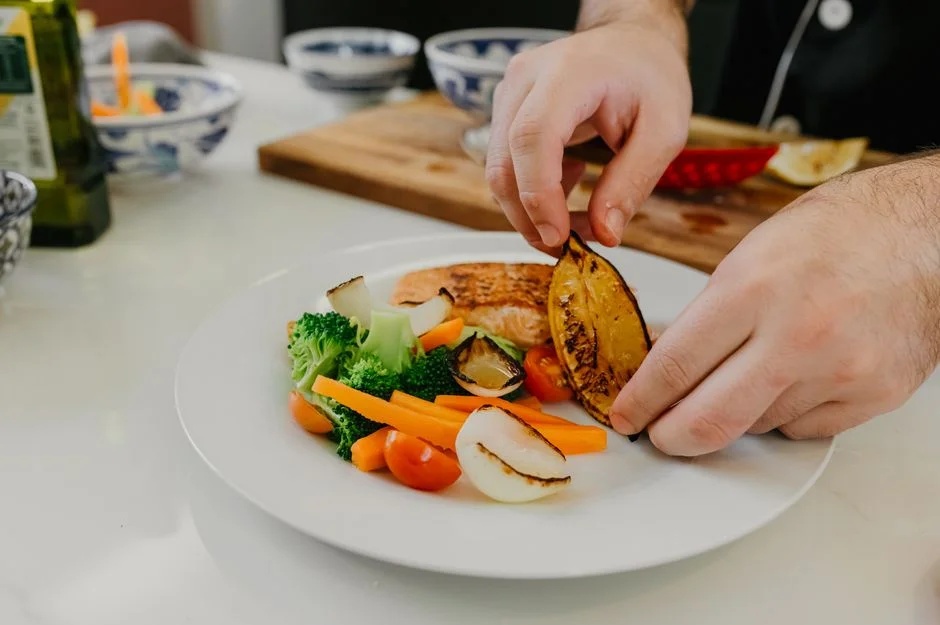
Here’s what the actual data supports: variety in your dietary fiber.
The American Gut Project, a citizen-science study with samples from more than 10,000 people, compared the gut bacteria of people who ate more than 30 types of plants a week with people who ate 10 or fewer. The high-variety group had more putative short-chain fatty acid fermenters, and in a smaller subset of 85 people, high plant diversity was associated with higher gut bacterial diversity [3]. This was a self-selected citizen-science cohort, so it shows an association, not that eating more plants causes more diverse gut bacteria.
One practical way to use this is to count: aiming for 30 different plants a week pushes you toward variety. Every herb, spice, grain, nut, seed, fruit, and vegetable counts. A teaspoon of oregano in your pasta sauce counts. A handful of almonds counts. Counting is a habit, not a tested treatment.
How fast the gut responds to food also matters. A study of short-term diets made up entirely of animal products or entirely of plant products found that both changed the structure of the gut bacterial community rapidly [4]. Those diets were extreme, so the study shows that the gut community can shift quickly with diet, not how soon a normal change in eating pays off.
Probiotics do have a documented use. A 2012 meta-analysis of 63 randomized trials (11,811 participants) found that probiotics were associated with a lower risk of antibiotic-associated diarrhea (relative risk 0.58). The authors noted that strains were poorly documented and that more research is needed to know which probiotics work best, and for whom [5]. For a healthy adult looking to support brain function through gut health, a reasonable approach based on the evidence above is to start with food variety and treat probiotic supplements as optional.
Your gut-brain connection doesn’t need a protocol. A grocery list with more variety on it is a low-cost place to start: more plants, more kinds of plants, more often. We don’t yet know how much that changes mood or thinking.
References
↑︎ Breit S, et al. Vagus nerve as modulator of the brain-gut axis in psychiatric and inflammatory disorders. *Frontiers in Psychiatry*, 2018. DOI: https://doi.org/10.3389/fpsyt.2018.00044
↑︎ Zhang N, Zhang Y, Li M, et al. Efficacy of probiotics on stress in healthy volunteers: A systematic review and meta-analysis based on randomized controlled trials. Brain Behav. 2020;10(9):e01699. DOI: https://doi.org/10.1002/brb3.1699
↑︎ McDonald D, et al. American Gut: an open platform for citizen science microbiome research. *mSystems*, 2018. DOI: https://doi.org/10.1128/mSystems.00031-18
↑︎ David LA, et al. Diet rapidly and reproducibly alters the human gut microbiome. *Nature*, 2014. DOI: https://doi.org/10.1038/nature12820
↑︎ Hempel S, Newberry SJ, Maher AR, et al. Probiotics for the prevention and treatment of antibiotic-associated diarrhea: a systematic review and meta-analysis. JAMA. 2012;307(18):1959-1969. DOI: https://doi.org/10.1001/jama.2012.3507

Kurt Greiner
Kurt is a digital strategist and IT professional blending emerging technology with practical application to help businesses and individuals streamline their digital presence. His current work focuses on the intersection of intentional living and technological resilience, exploring how individuals can leverage modern tools to navigate the second half of life with purpose.
Leave a Reply