
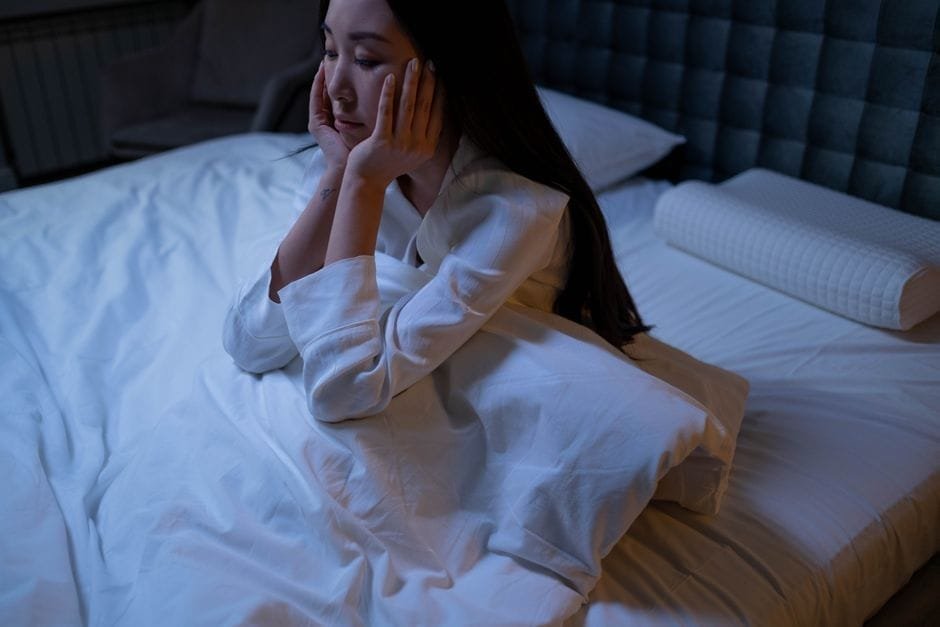
If you are tired all the time, anxious, or waking with headaches, and stress or hormones have not fully explained it, sleep apnea is worth asking about. A conference abstract from SLEEP 2026 found that women with moderate-to-severe obstructive sleep apnea reported more symptoms than men with the same diagnosis, and many of those symptoms do not sound like a breathing problem.[1]
What the study found
The researchers recruited 407 adults at two clinical sites. All had been diagnosed with moderate-to-severe obstructive sleep apnea and were about to start CPAP treatment. Thirty-eight percent were women. Before treatment, everyone filled out online questionnaires about their symptoms.[1]
Women’s apnea-hypopnea index, which counts breathing pauses per hour of sleep, was lower than men’s (median 25 versus 35 events per hour). Even so, women scored worse on fatigue, sleep disturbance, daytime problems from poor sleep, anxiety, and anger. They also reported more headaches, more nightmares, and more trips to the bathroom at night.[1]
Snoring, gasping at night, nasal congestion, reflux, and depression scores did not differ between women and men.[1] So the classic signs looked similar in both groups, and the extra symptoms were the ones that are easy to blame on something else.
There are limits. This is a conference abstract, not a full peer-reviewed paper. Everyone in it already had a diagnosis and was seeking treatment, so it cannot tell us how often apnea goes undiagnosed in women. The authors concluded that women with moderate-to-severe sleep apnea starting CPAP carry a greater symptom burden than men, and said it still needs to be tested whether treatment improves these symptoms differently by sex.[1]
Menopause and sleep apnea
An older study gives useful context. The Wisconsin Sleep Cohort Study measured breathing during sleep in a lab for 589 women. After adjusting for age, body size, smoking, and other factors, postmenopausal women had 2.6 times the odds of five or more breathing events per hour (95% confidence interval 1.4 to 4.8) and 3.5 times the odds of fifteen or more (1.4 to 8.8), compared with premenopausal women. Women in perimenopause did not differ significantly.[2]
This was an observational study, so it shows a link, not a cause. The authors concluded that women going through menopause who report snoring, daytime sleepiness, or unsatisfactory sleep should be evaluated for sleep apnea.[2]
What to do with this
This is not a reason to self-diagnose. It is a reason to ask a clear question at your next visit: “Could this be sleep apnea?” Bring up fatigue, poor sleep, anxiety, headaches, nightmares, and waking at night to urinate, along with any snoring or gasping someone has noticed. If symptoms have not improved with the usual stress or menopause care, that is worth saying out loud.
The American Academy of Sleep Medicine recommends diagnosing sleep apnea with an in-lab sleep study or a home sleep apnea test with a technically adequate device. It also recommends against using questionnaires or prediction tools alone to make the diagnosis.[3]
References
↑︎ Vaidya S, Nouraie S, Wallace D, Wieland W, Sawyer A, Patel S. Sex differences in symptom profiles in moderate to severe obstructive sleep apnea (abstract 0532). Sleep. 2026;49(Supplement_1):A237. DOI: https://doi.org/10.1093/sleep/zsag091.0531
↑︎ Young T, Finn L, Austin D, Peterson A. Menopausal status and sleep-disordered breathing in the Wisconsin Sleep Cohort Study. Am J Respir Crit Care Med. 2003;167(9):1181-1185. DOI: https://doi.org/10.1164/rccm.200209-1055OC
↑︎ Kapur VK, Auckley DH, Chowdhuri S, et al. Clinical practice guideline for diagnostic testing for adult obstructive sleep apnea: an American Academy of Sleep Medicine clinical practice guideline. J Clin Sleep Med. 2017;13(3):479-504. DOI: https://doi.org/10.5664/jcsm.6506

Kurt Greiner
Kurt is a digital strategist and IT professional blending emerging technology with practical application to help businesses and individuals streamline their digital presence. His current work focuses on the intersection of intentional living and technological resilience, exploring how individuals can leverage modern tools to navigate the second half of life with purpose.
Leave a Reply