
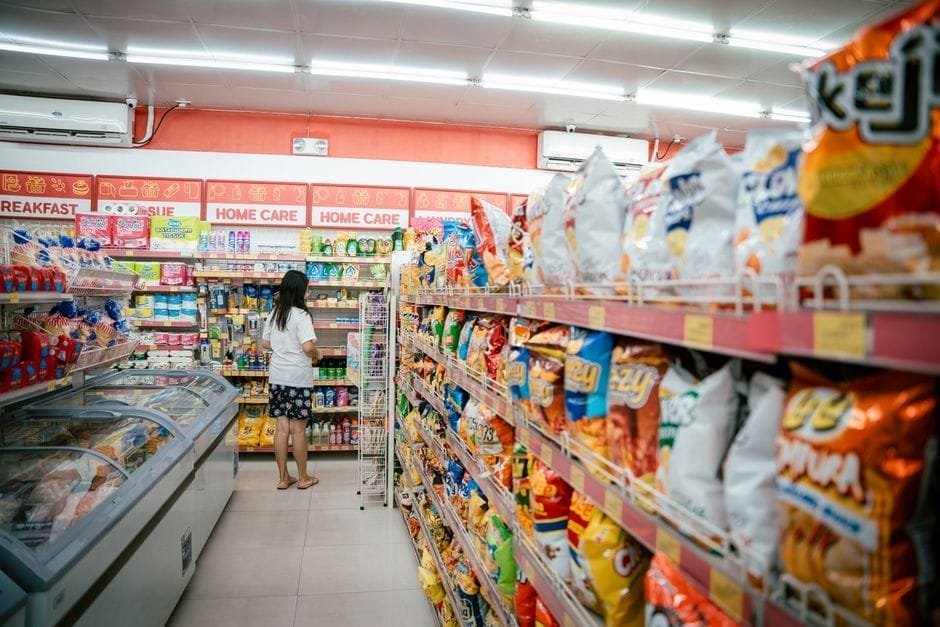
A nationally representative study of older US adults[1] just put a number on something a lot of people suspected but couldn’t quantify: how your grocery cart might relate to your risk of dementia and cognitive impairment.
The study
Researchers analyzed 5,370 older adults in the Health and Retirement Study. Diet came from a food frequency questionnaire in 2013, and cognition was assessed every two years from 2014 to 2020. The findings, published in the American Journal of Public Health, compared people by how much of their diet came from ultra-processed foods – packaged snacks, sugary drinks, and industrially manufactured items built from refined ingredients and additives, as opposed to whole or minimally processed foods.
The numbers
Compared with the lowest fifth of intake, people in the highest fifth had a 58% higher risk of dementia (hazard ratio 1.58, 95% CI 1.003 to 2.48) and a 46% higher risk of cognitive impairment without dementia (hazard ratio 1.46, 95% CI 1.13 to 1.88). The dementia estimate is imprecise: its confidence interval barely excludes no effect. Eating more unprocessed or minimally processed food was associated with lower risks of these outcomes.
What the study can’t tell you
This is an observational study, so it shows an association, not proof that ultra-processed food causes dementia. Diet was measured once, in 2013, while cognition was tracked through 2020, and other factors could explain part of the link.
A reasonable takeaway is modest: the authors suggest a potential need to reduce ultra-processed food for older adults’ cognitive health, and shifting your plate toward whole or minimally processed food costs little to try.
References
↑︎ Lee H, McEvoy CT, Steele EM, Khandpur N, Heeringa SG, Ryan LH, Langa KM, Wolfson JA, Leung CW. Ultraprocessed foods and the risk of cognitive impairment and dementia in older US adults: 2013-2020 Health and Retirement Study. Am J Public Health. 2026;116(7):981-992. PubMed: https://pubmed.ncbi.nlm.nih.gov/42233196/. PMID 42233196. Finding as used: highest versus lowest quintile of ultraprocessed food intake, hazard ratio 1.58 (95% CI 1.003-2.48) for dementia and 1.46 (95% CI 1.13-1.88) for cognitive impairment with no dementia; unprocessed or minimally processed food intake was associated with lower risks; n = 5,370, HRS 2013-2020.

Kurt Greiner
Kurt is a digital strategist and IT professional blending emerging technology with practical application to help businesses and individuals streamline their digital presence. His current work focuses on the intersection of intentional living and technological resilience, exploring how individuals can leverage modern tools to navigate the second half of life with purpose.
Leave a Reply