
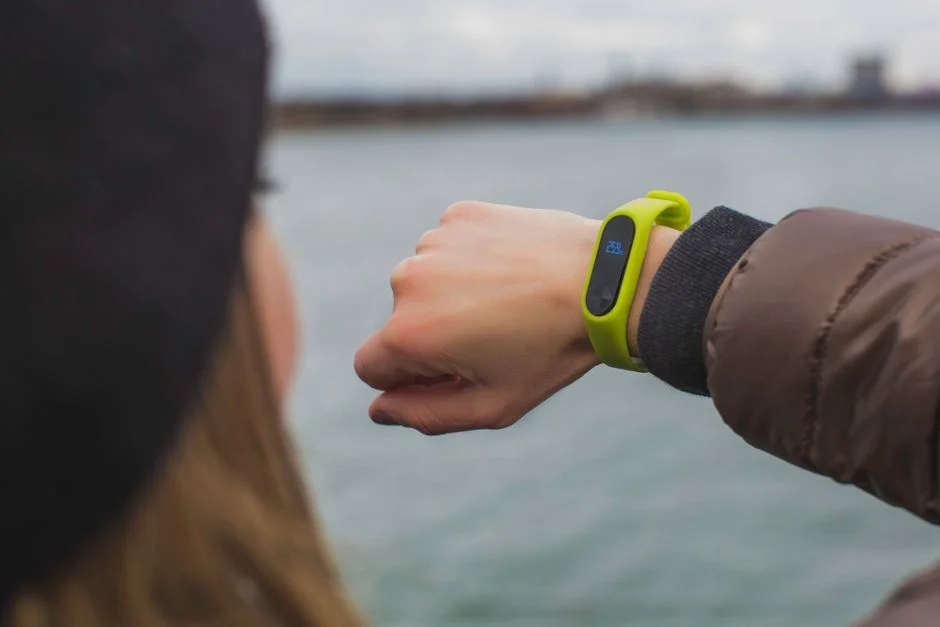
Wearable HRV tracking can leave some people feeling bad about a number they don’t understand. A low HRV reading in the morning sets off a wave of self-diagnosis: too much stress, not enough sleep, poor recovery, failing health. The device tells you something is off, but it doesn’t tell you what, and it definitely doesn’t tell you what to do about it. For some people, the result isn’t better health. It’s anxiety, with a number attached.
Heart rate variability – the variation in time between one heartbeat and the next – reflects the balance between the two branches of your autonomic nervous system: one that ramps you up, and one that calms you down. High HRV (more variation between beats) generally means your nervous system can shift between states efficiently – a sign of good adaptability. Low HRV (less variation) means the “ramp up” system is dominant – your nervous system is in a more alert, less flexible state. Measures that capture beat-to-beat changes, such as RMSSD, reflect the “calm down” system [1].
The clearest use of HRV is specific: athletes using it to manage training load. An athlete who knows their normal HRV can tell when their body hasn’t recovered from a hard training session, and adjust that day’s training intensity accordingly [1]. The process is simple – measure it when you wake up, compare it to your own recent baseline, and if the morning reading is well below that baseline, cut back on training intensity or take a recovery day. The variable being tracked is controlled (training load), the response is clear (reduce intensity), and the stakes of getting it wrong are concrete (injury, overtraining).
For a 45-year-old knowledge worker who lifted weights yesterday, slept seven hours, had a glass of wine with dinner, argued with their spouse, and is stressed about a work deadline, the morning HRV reading is a mix of all five of those things – and none of them is actionable the way an athlete’s training load is. You can’t isolate which one caused it, and even if you could, the fix (skip today’s workout, go to bed earlier) is the same no matter what the HRV number says.
What actually matters is the 30-day trend. A single low reading is just noise – worth letting go of, not worth spiraling over.
Voluntary slow breathing has been shown to raise vagally mediated HRV, both during sessions and after multi-session programs, in a meta-analysis of 223 studies [3]. Three other habits are worth testing before you spend more time on the tracker:
Consistent sleep timing – going to bed within 30 minutes of the same time every night, including weekends – is the simplest habit to fix first, and it gives the tracker a steadier baseline to read.
Cutting back on alcohol, especially close to bedtime, is worth testing. In a study of 4,098 Finnish employees who wore beat-to-beat heart rate recorders, alcohol intake was dose-dependently associated with more sympathetic (“ramp up”) regulation and less parasympathetic (“calm down”) regulation during the first three hours of sleep, and the effect showed up even at low intakes (up to 0.25 g of alcohol per kg of body weight, roughly one drink for a 70 kg person) [2]. This was an observational study, so it shows an association, not proof of cause.
Managing your total training load – making sure your weekly training volume and intensity match your current capacity, not your goal capacity – is worth testing too.
If your HRV stays chronically low despite doing all three of these consistently, one possibility is ongoing psychological stress. This is our view rather than an established mechanism: rumination, email anxiety, social-media scrolling, and work pressure may keep demand high with little physical outlet. A wearable or a supplement can’t fix that on its own. Rather than tracking more, we would try more deliberate physical activity, morning sunlight, and structured time away from screens. Chronically low HRV can also have medical causes, including illness, medications such as beta-blockers, and heart rhythm problems. If a persistently low or erratic reading comes with palpitations, fainting, chest discomfort, or unusual fatigue, see a clinician, and keep in mind that wearables can misread irregular heart rhythms.
Counterpoint: don’t wearables help build awareness? Awareness of a problem only helps if there’s a clear path to fixing it. HRV wearables build awareness of one number (your autonomic balance) while hiding the most useful information (what’s actually driving it). The device can’t tell you whether a low reading came from alcohol, sleep debt, overtraining, or stress. It just tells you the number is low and leaves you to guess. In our view, this can produce more anxiety than improvement for people who aren’t athletes.
One approach we suggest is wearing an HRV tracker for 90 days to establish your trend, then taking it off. Once you know whether your trend is stable, rising, or falling, the tracker has given you what it can. Beyond that, it can become a source of anxiety that distracts from the interventions that actually matter: consistent sleep, managing alcohol, and controlling your training load. The tracker gives you data. It doesn’t give you health. Those are different things – and you’re allowed to stop checking once you have what you need.
References
↑︎ Buchheit M. Monitoring training status with HR measures: do all roads lead to Rome? Front Physiol. 2014;5:73. DOI: https://doi.org/10.3389/fphys.2014.00073
↑︎ Pietilä J, Helander E, Korhonen I, et al. Acute Effect of Alcohol Intake on Cardiovascular Autonomic Regulation During the First Hours of Sleep in a Large Real-World Sample of Finnish Employees: Observational Study. JMIR Ment Health. 2018;5(1):e23. DOI: https://doi.org/10.2196/mental.9519
↑︎ Laborde S, Allen MS, Borges U, et al. Effects of voluntary slow breathing on heart rate and heart rate variability: a systematic review and a meta-analysis. Neurosci Biobehav Rev. 2022;138:104711. DOI: https://doi.org/10.1016/j.neubiorev.2022.104711

Kurt Greiner
Kurt is a digital strategist and IT professional blending emerging technology with practical application to help businesses and individuals streamline their digital presence. His current work focuses on the intersection of intentional living and technological resilience, exploring how individuals can leverage modern tools to navigate the second half of life with purpose.
Leave a Reply