
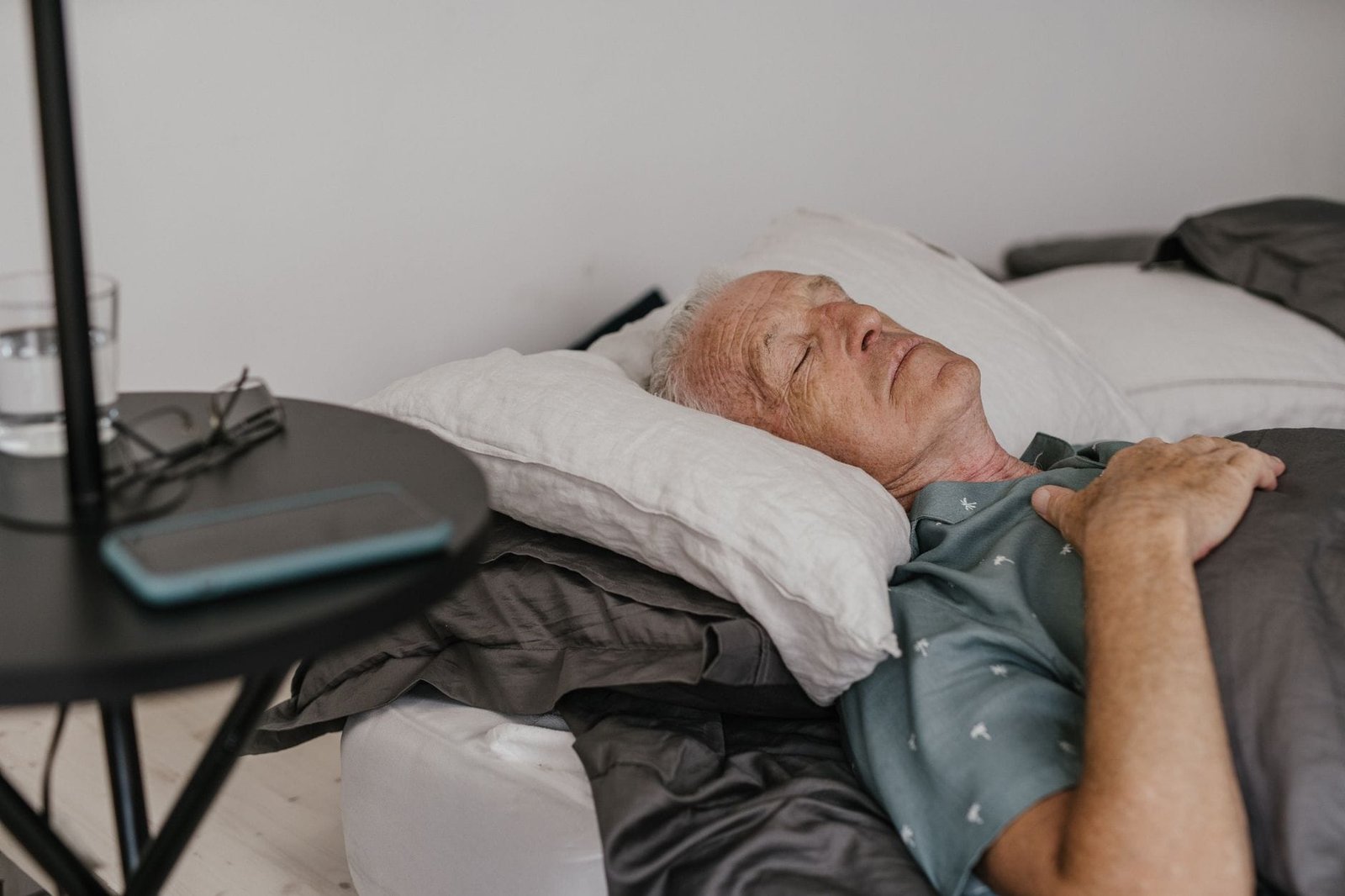
Older adults in China who slept less than six hours a night had about 30% higher odds of high blood pressure than those who slept six to nine hours, in a survey of 15,650 people.[1] It is a snapshot, not a trial, so it shows a pattern and not a cause.
What the researchers did
The team used the 2008 wave of the Chinese Longitudinal Healthy Longevity Survey. All 15,650 participants were 65 or older, with an average age of about 87, and 57% were women.[1] People reported their own sleep time, which the researchers sorted into under 6 hours, 6 to 8 hours, and 9 hours or more. High blood pressure meant a reading of 140/90 mmHg or higher, or a doctor’s diagnosis the person reported.[1]
What they found
- Of the 15,650 participants, 7,345 (46.9%) met the definition of high blood pressure.[1]
- Sleeping under 6 hours was linked to higher odds of high blood pressure after adjustment: an odds ratio of 1.30 (95% confidence interval 1.17 to 1.44), compared with sleeping 6 to 9 hours.[1]
- Sleeping 9 hours or more showed no statistically significant link after full adjustment (odds ratio 1.04, confidence interval 0.97 to 1.12).[1]
- The pattern was J-shaped, meaning the risk curve bent up at the short end of sleep time and stayed close to flat at the long end.[1]
- The short-sleep link looked stronger in people with no limits in daily activities such as dressing or bathing.[1]
What this study does not show
This is a cross-sectional study: sleep and blood pressure were measured at one point in time. It cannot tell us whether short sleep raised blood pressure, whether high blood pressure (or the treatment for it) disturbed sleep, or whether something else drove both. Sleep time was self-reported, and the group was mostly the oldest old in China, so the numbers may not carry over to a 50-year-old in New Jersey. The authors say the findings support testing sleep changes for preventing high blood pressure in future trials, which means that has not been shown yet.[1]
What to do with this
- Check your blood pressure if you have not had it measured this year, and mention how you usually sleep when you do. A short sleep history can sit next to the numbers.
- If you regularly get under six hours, keep a simple sleep log for two weeks: bedtime, wake time, and how rested you feel. It gives you something concrete to bring to an appointment.
- Read how sleep connects to the rest of your heart health in 5 Ways Sleep Affects Your Heart Health.
- If you take blood pressure medication, do not stop or change it on your own because of a sleep finding. Talk with your clinician first.
References
[1] Wang X, Chen C, Shi J, Zhao W, Dai M. Association of sleep duration and hypertension in older adults: a cross-sectional study. Blood Pressure, 2026;35(1):2717792. Population: 15,650 Chinese adults aged 65 and older (2008 wave of the Chinese Longitudinal Healthy Longevity Survey). DOI: https://doi.org/10.1080/08037051.2026.2717792. Finding as used: sleeping under 6 hours was associated with higher odds of hypertension (adjusted OR 1.30, 95% CI 1.17 to 1.44) versus 6 to 9 hours; 9 hours or more was not significantly associated (OR 1.04, 95% CI 0.97 to 1.12); J-shaped relationship; cross-sectional design. ↑︎

Kurt Greiner
Kurt is a digital strategist and IT professional blending emerging technology with practical application, exploring how individuals can leverage modern tools to navigate the second half of life with purpose.
Leave a Reply