
Adults who followed the MIND diet more closely lost brain grey matter more slowly over about 12 years of MRI scans, in a study of 1,647 people from the Framingham Heart Study.[1] The authors translate each 3-point rise in diet score into roughly 2.5 years of delayed brain aging. That is an estimate from observational data, not proof that the diet slowed anything.
What the researchers did
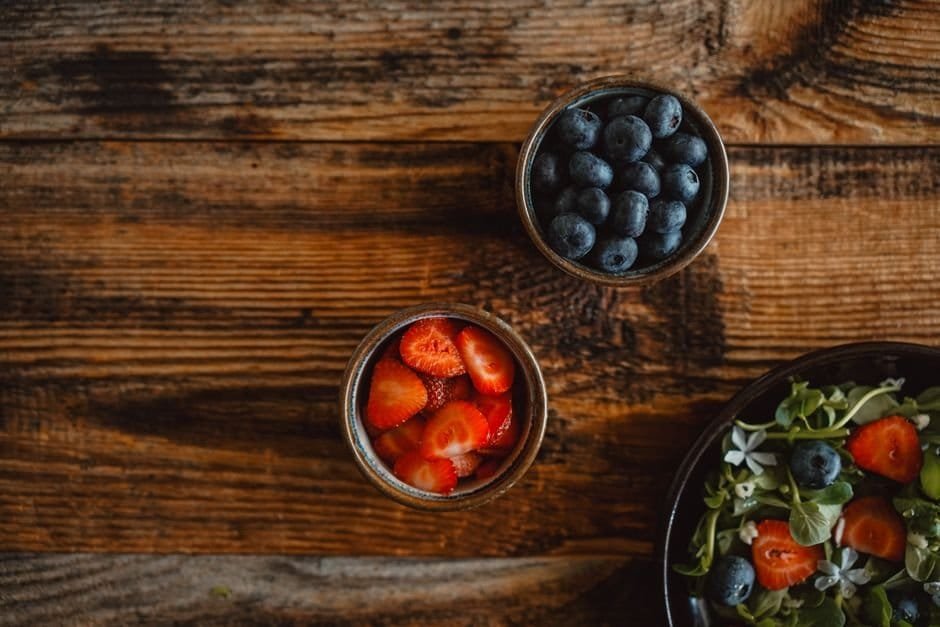
The MIND diet blends Mediterranean and DASH eating. It emphasizes green leafy vegetables, other vegetables, berries, nuts, whole grains, fish, beans, olive oil and poultry, and it limits butter and margarine, cheese, red meat, pastries and sweets, and fried or fast food.[1]
Participants averaged 60 years old at the start. They filled out food questionnaires between 1991 and 2001 and had at least two brain MRI scans between 1999 and 2019. None had a stroke or dementia at the first scan. The average MIND score was just under 7 out of 15.[1]
What they found
- Each 3-point higher MIND score was linked to slower grey matter loss (0.279 cm3 per year), about 20% less age-related decline.[1]
- The same rise was linked to slower growth of the brain’s fluid-filled ventricles, about 8% less tissue loss, or roughly a year of delayed brain aging.[1]
- Berries and poultry stood out among helpful foods. Sweets were tied to faster ventricle growth and hippocampal shrinkage, and fried fast food to greater hippocampal loss.[1]
- Some results were unexpected: higher whole grain intake was linked to faster losses, and cheese to slower ones.[1]
What this study does not show
It is observational, so it can’t show that the diet caused the slower changes. Food questionnaires depend on memory, and the researchers couldn’t rule out mild cognitive impairment at the first scan or changes in diet over time. Participants were mostly White, so the findings may not apply equally to everyone. The odd whole grain and cheese results are a reminder that single-food findings in a study like this are weak ground for changing your plate.[1]
What to do with this
- Add one MIND food a day before you cut anything: a handful of berries, a side of leafy greens, or a serving of fish or beans.
- Swap one sweet or fried-food meal a week for a home-cooked version.
- Treat diet as one piece. The associations were stronger in people who were more physically active and not overweight or obese.[1]
References
[1] Chen H, Hailili G, Tong L-S, Fei L, et al. Adherence to the MIND diet and longitudinal brain structural changes over a decade: evidence from the Framingham Heart Study Offspring cohort. Journal of Neurology, Neurosurgery & Psychiatry, 2026;97(6):505-512. Population: 1,647 adults, mean age 60 at baseline, mean follow-up about 12 years. DOI: https://doi.org/10.1136/jnnp-2025-336957. Finding as used: each 3-point higher MIND score was associated with slower grey matter loss (0.279 cm3 per year, about 20% less age-related decline, equivalent to 2.5 years of delayed brain aging) and slower ventricular expansion (0.071 cm3 per year, about 8%, roughly 1 year); observational design, food-questionnaire recall bias, mostly White cohort. ↑︎

Kurt Greiner
Kurt is a digital strategist and IT professional blending emerging technology with practical application, exploring how individuals can leverage modern tools to navigate the second half of life with purpose.
Leave a Reply