The wellness industry wants to sell you another body-based practice. Yoga, breathwork, body scanning, tension-release exercises – there’s genuine value in all of them. But there’s a step that comes before all of that, one most messaging skips, and it’s simpler and harder than any technique: stopping the override.
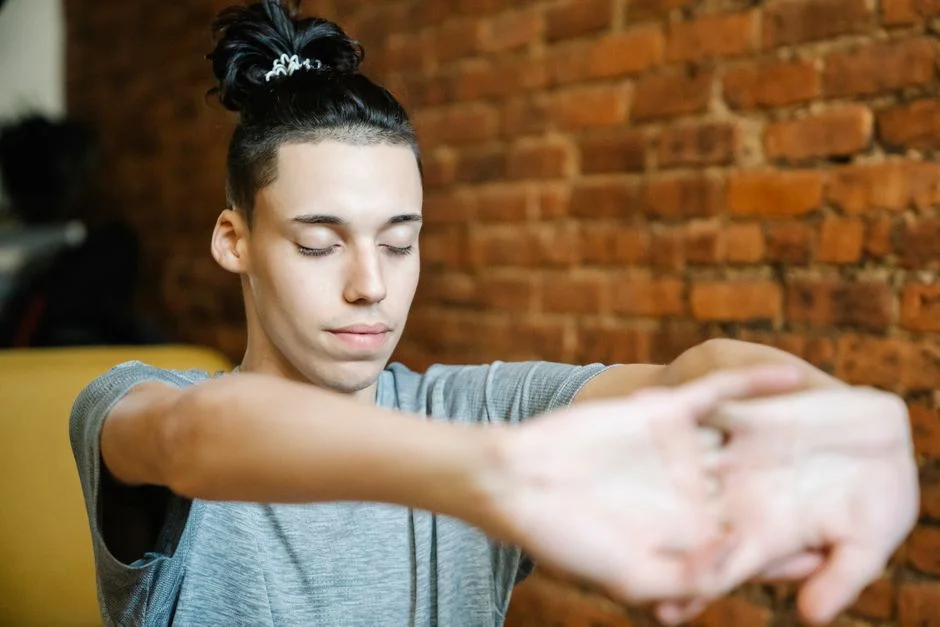
You don’t need more body-based practices. You need to stop ignoring the signals your body is already sending. Tight shoulders, shallow breathing, restless legs, that knot in your stomach before a hard conversation – that’s already body awareness. It was never missing. It was being overridden.
The science of interoception – sensing what’s happening inside your own body – confirms that humans have dedicated nerve pathways for this. Craig’s influential model identified the insula and anterior cingulate cortex as the key brain regions that turn internal sensations into conscious awareness [1]. These pathways are active whether you pay attention to them or not. Your tight shoulders are being registered by your nervous system whether you notice them or not. The difference is whether that registration reaches your conscious mind, or gets filtered out by everything else competing for your attention.
Modern productivity culture trains people to suppress these signals. The ability to push through discomfort, ignore hunger, override fatigue, and suppress the urge to move gets rewarded in school, praised at work, and treated as discipline. The message is consistent: your body’s signals are obstacles to manage, not information to use. After years of that training, most people can’t tell the difference between “I’m uncomfortable and should keep going” and “I’m uncomfortable because something is actually wrong.” The signal is identical – only the interpretation differs.
Body awareness isn’t something you achieve through practice. It’s an ability you recover by removing what’s blocking it. When you pause at the first sign of tension instead of pushing through, you aren’t adding a new technique to your day – you’re just stopping the override of a signal that was already there. That’s the whole practice. It’s about giving yourself permission, not following instructions.
These signals actually carry specific information once you learn to read them. Tension in your shoulders and jaw usually points to a boundary being crossed – something you don’t want to do but feel pressured to finish anyway. Restlessness in your legs often signals a need to move that’s been put off too long. Shallow breathing is a reliable sign that your nervous system has registered a threat, whether it’s real or just perceived. Learning to interpret these isn’t a separate skill you have to build – it comes naturally once you stop filtering the signals out.
There’s a real exception worth naming. For people with a history of trauma, difficulty identifying their own emotions, or certain anxiety disorders, tuning into body sensations can feel overwhelming rather than clarifying . In those cases, structured, guided approaches – body scans, therapist-supported somatic work – are a better first step. The “stop overriding” approach assumes your baseline ability to sense your body is intact. When it isn’t, outside support is the right call, not a sign the approach failed.
But for most people who’ve simply been trained to override their body’s signals, the most effective fix is also the simplest. Three times a day, stop what you’re doing and ask: what is my body telling me right now that I’ve been ignoring? The answer isn’t a technique. It’s information. The practice is acting on it. [OPINION]
The distinction between body awareness and body-based practices matters, because the wellness industry treats them as the same thing. Body-based practices are structured activities designed to build awareness. Body awareness is the actual ability itself. You can do yoga for a decade and still have poor awareness of your own body if you’re using the practice to override discomfort rather than listen to it . The goal isn’t more practice. The goal is a clearer signal, and that comes from stopping, not adding.
The three-times-a-day check-in is a starting point, not a fixed rule. The deeper skill is noticing the moment right before you override the signal – the split second when you decide to push through instead of respond. That moment is where you actually choose whether the signal gets processed or suppressed. Every time you catch it and choose to respond instead of override, you aren’t learning something new. You’re recovering something you already had. The signal was always there. You just stopped ignoring it.
Disclaimer: This post is for inspiration and education, not medical advice. Everyone’s body is different, so please check with your doctor before changing your diet, exercise, or lifestyle routine. By using these tips, you agree to do so at your own risk.
References
[1] Craig AD. Interoception: the sense of the physiological condition of the body. *Current Opinion in Neurobiology*, 2003. DOI: https://doi.org/10.1016/s0959-4388(03)00090-4
[2] Farb N, et al. Interoception, contemplative practice, and health. *Trends in Cognitive Sciences*, 2015. DOI: https://doi.org/10.3389/fpsyg.2015.00763

Kurt Greiner
Kurt is a digital strategist and IT professional blending emerging technology with practical application to help businesses and individuals streamline their digital presence. His current work focuses on the intersection of intentional living and technological resilience, exploring how individuals can leverage modern tools to navigate the second half of life with purpose.
Leave a Reply
You must be logged in to post a comment.