
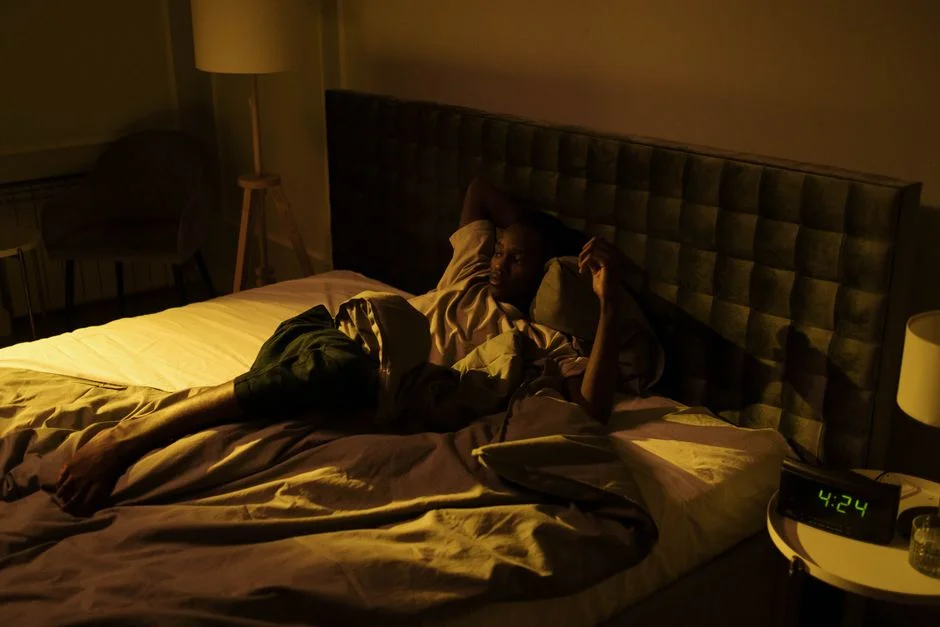
Sleep apnea is usually pictured as loud snoring and a man who falls asleep at the wheel. Recent studies suggest that picture misses people, especially women in midlife, who often report other symptoms.
Many cases in one cohort went undiagnosed
In a Swedish cohort of 8,707 adults aged 50 to 64, about 3% had a sleep apnea diagnosis. A further 11% had moderate-to-severe apnea that nobody had diagnosed. That was 17% of the men and 7% of the women.[2] This was a conference abstract, so I could not read the full analysis.
The people with undiagnosed apnea reported fewer of the classic signs: far less snoring, far fewer witnessed pauses in breathing, and somewhat less daytime sleepiness than people already diagnosed.[2] That suggests asking only about snoring and sleepiness may miss many people.
Women often report different symptoms
A 2026 review of the literature on sleep apnea in women notes that women more often report daytime fatigue, insomnia, depression, anxiety and poor sleep quality, rather than sleepiness or snoring. Its authors estimate that up to 75% of women with sleep apnea remain undiagnosed. It is a review, and the figure is theirs, not from a single trial.[4]
A 2026 study of 3,736 patients at a Greek sleep clinic found that women over 45 had more severe sleep apnea, with lower blood oxygen at night than younger women. It also found that symptom-based screening tools performed poorly in younger women and older patients, while STOP-Bang, a short eight-question screening checklist, was the most consistent across groups.[3] This is a clinic sample, not a general population.
Midlife and heart risk
A 2024 survey analysis of 5,909 Korean adults aged 40 to 64 used the STOP-Bang checklist to rate sleep apnea risk. Higher risk went with poorer cardiovascular health, measured by blood pressure, blood sugar, weight, smoking, diet, activity and cholesterol. Among women, the odds of poor cardiovascular health were 3.2 times higher at moderate risk and 12.9 times higher at high risk, compared with low risk.[1]
That is an association in a questionnaire study. It is not a sleep test, and the authors note the questionnaire is a screen, not a diagnosis.[1]
What to notice
Tiredness, poor sleep, low mood or anxiety that doesn’t lift can have many causes, including sleep apnea. They are worth raising with a clinician, not a reason to diagnose yourself.
If you fall asleep while driving, see a clinician promptly.
A clinician can screen for sleep apnea and, if needed, arrange a sleep test. Tell them about any heart, blood pressure or blood sugar concerns. One study linked higher apnea risk with poorer heart health.
What the evidence doesn’t show
Most of this work is screening, questionnaires or clinic samples. None of the studies here show that treating sleep apnea in midlife prevents heart disease, and none sets a clear symptom list for women. The studies come from Korea, Sweden and Greece, so the results may not transfer between populations.
References
[1] Kang SY, Kim JH, Kim Y. Relationship Between the Risk of Obstructive Sleep Apnea and Cardiovascular Health in Middle-Aged Korean Men and Women: A Nationwide Study. Journal of Clinical Medicine. 2024. DOI: 10.3390/jcm13226702. Finding: 5,909 adults aged 40 to 64 (KNHANES 2019 to 2021); STOP-Bang risk; odds ratios for poor cardiovascular health 3.21 (moderate) and 12.88 (high) in women versus low risk. Limitations stated by the authors: STOP-Bang used instead of diagnostic criteria; recall bias. Full text read. ↑︎ a b
[2] Holmgren E, Ljunggren ME, Blomberg A, et al. Why are people with sleep apnea undiagnosed? The SCAPIS Sleep Cohort. ERS International Congress 2025 (conference abstract). DOI: 10.1183/13993003.congress-2025.pa1082. Finding: 8,707 adults aged 50 to 64 (54% women); 3% previously diagnosed; 11% undiagnosed moderate-to-severe OSA (17% men, 7% women); undiagnosed group reported less snoring, witnessed apneas and daytime sleepiness. Abstract only. ↑︎ a b
[3] Tzinas A, Karkala A, Kotoulas S-C, et al. Age and Sex Matter: Phenotypic Heterogeneity, Diagnostic Gaps, and Screening Tool Performance in Obstructive Sleep Apnea. Diagnostics. 2026. DOI: 10.3390/diagnostics16070983. Finding: 3,736 patients at a tertiary sleep clinic (2013 to 2023); women over 45 more severe and hypoxic; symptom tools poor in young women and older patients; STOP-Bang most consistent. Abstract only. Clinic sample. ↑︎
[4] Bouloukaki I, Fabozzi A, Schwarz EI, Schiza SE. Advances in the Diagnosis and Treatment of Obstructive Sleep Apnea in Women. Pulmonary Therapy. 2026. DOI: 10.1007/s41030-026-00350-5. Finding: review; women more often report fatigue, insomnia, depression and anxiety than sleepiness or snoring; the authors state up to 75% of women with OSA remain undiagnosed. Abstract only; review. ↑︎
This post draws on one full-text survey analysis from 2024, and three abstracts, one of them for a review. Other studies were not included.

Kurt Greiner
Kurt is a digital strategist and IT professional blending emerging technology with practical application, exploring how individuals can leverage modern tools to navigate the second half of life with purpose.
Leave a Reply