
Two people can have nearly identical grip strength and walking speed scores and still be heading in completely different directions, one recovering, one declining. A new review in Ageing Research Reviews proposes a way to finally start explaining why, and it involves growing tiny lab versions of human muscle.[1]
Right now, sarcopenia (age-related muscle loss) is mostly diagnosed with cutoff scores: below a certain strength or muscle-mass number, you’re classified as sarcopenic. That’s useful for diagnosis, the researchers argue, but it doesn’t explain why some people bounce back from a bad flu, a hospital stay, or a period of inactivity while others with similar starting scores keep sliding.
Muscle tissue in a chip
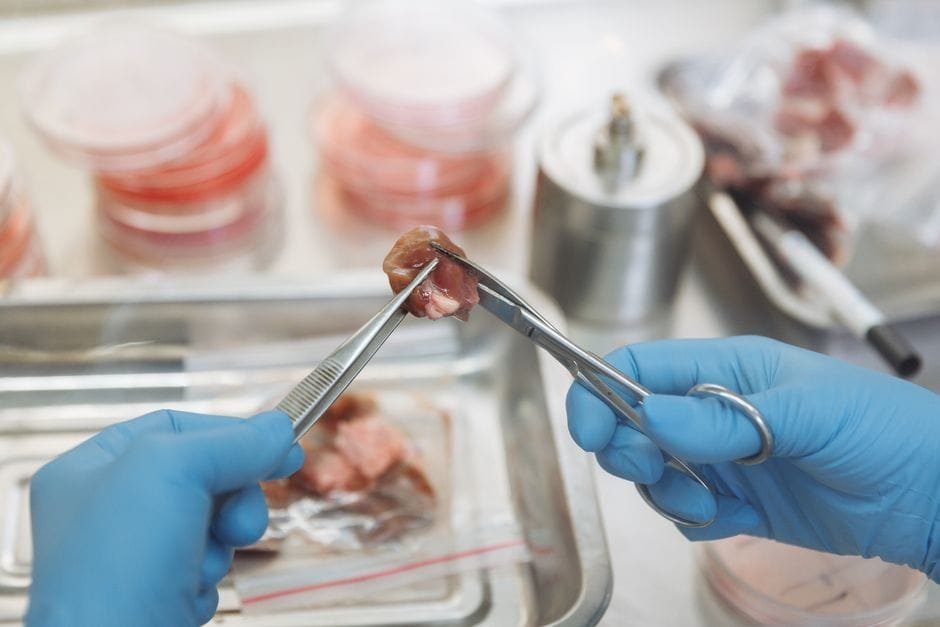
Their proposed answer is “muscle organ chips,” engineered human muscle tissue grown on a small device that can be paired with fat, immune, blood vessel, or nerve tissue to mimic how muscle actually behaves in a real body. Scientists can then apply a controlled stress, inflammation, a metabolic challenge, simulated inactivity, and repeatedly measure how the tissue responds and recovers over time, something you simply can’t do by taking repeated biopsies from a real patient. Layer AI on top to track the mountains of resulting data, and the authors propose using the chips to study why recovery differs between people. They say the evidence does not yet support prediction.
It’s important to be clear-eyed about where this actually stands: the authors describe the current evidence as “largely proof of concept,” explicitly stating it does not yet support predicting any individual patient’s recovery window or long-term outcome. This is an early-stage research roadmap, not a diagnostic tool you or your doctor can use today. But it points toward a future where muscle aging might be assessed as a dynamic, personalized process rather than a single static number, which could eventually mean more tailored exercise and nutrition recommendations instead of one-size-fits-all advice.
References
- Yu L, Lin Z, Hu L, et al. “Learning muscle-health trajectories in ageing: towards AI-guided organ chips.” Ageing Research Reviews, 2026;122:103346. DOI: 10.1016/j.arr.2026.103346. Finding used: the authors propose using human muscle organ chips (optionally integrated with adipose, immune, vascular, or neuromuscular tissue) combined with AI analysis to study individualized recovery trajectories in age-related muscle decline, explicitly noting current evidence is proof-of-concept and does not yet support predicting individual patient recovery or long-term sarcopenia progression. ↑︎

Kurt Greiner
Kurt is a digital strategist and IT professional blending emerging technology with practical application to help businesses and individuals streamline their digital presence. His current work focuses on the intersection of intentional living and technological resilience, exploring how individuals can leverage modern tools to navigate the second half of life with purpose.
Leave a Reply