
If you or someone close to you has been told memory changes are “mild cognitive impairment,” the first question is usually what can be done besides wait. A new network meta-analysis ranked non-drug options for the amnestic type, and the honest answer is that several help a little and none is a clear winner.[1]
What the researchers did
Amnestic mild cognitive impairment (aMCI) means memory slips beyond what’s typical for your age, while daily life still works. The authors describe it as a stage before Alzheimer’s disease, with roughly 10% prevalence and 5% to 10% of people progressing to dementia each year.[1]
They pooled 32 randomized controlled trials that compared two or more non-drug approaches, then ranked them by change in two memory-and-thinking screening tests, the MMSE and the MoCA. Options included acupuncture, moxibustion (burning dried mugwort near acupuncture points), cognitive therapies, magnetic stimulation of the brain, and Tai Chi.[1]
What they found
- MMSE ranking: acupuncture combined with moxibustion came first, then Tai Chi, then electroacupuncture. Against usual care, the top option improved scores by 1.65 points (95% CI 0.01 to 3.29).[1]
- MoCA ranking: acupuncture plus moxibustion again came first, followed by acupuncture alone and moxibustion alone.[1]
Look at that confidence interval. The low end sits almost exactly on zero, so even the best-ranked option barely clears the bar. The authors say the effects were modest, the top ranking was tentative because the trials disagreed with each other in places and only a few informed it, and the quality of the underlying trials limited how far the results can be trusted.[1]
What this doesn’t tell you
- It doesn’t show these options slow progression to dementia. The outcome was a change in test scores, not diagnosis down the road.
- A “rank” is not a size. Being first in a list of modest effects is still a modest effect.
- The trials differed in design and quality, which the authors flag as limiting how far the findings can be trusted.
What to do with it
The authors position these approaches as add-ons to standard care, not replacements, and they point to good safety profiles.[1] That framing is a sensible one to borrow.
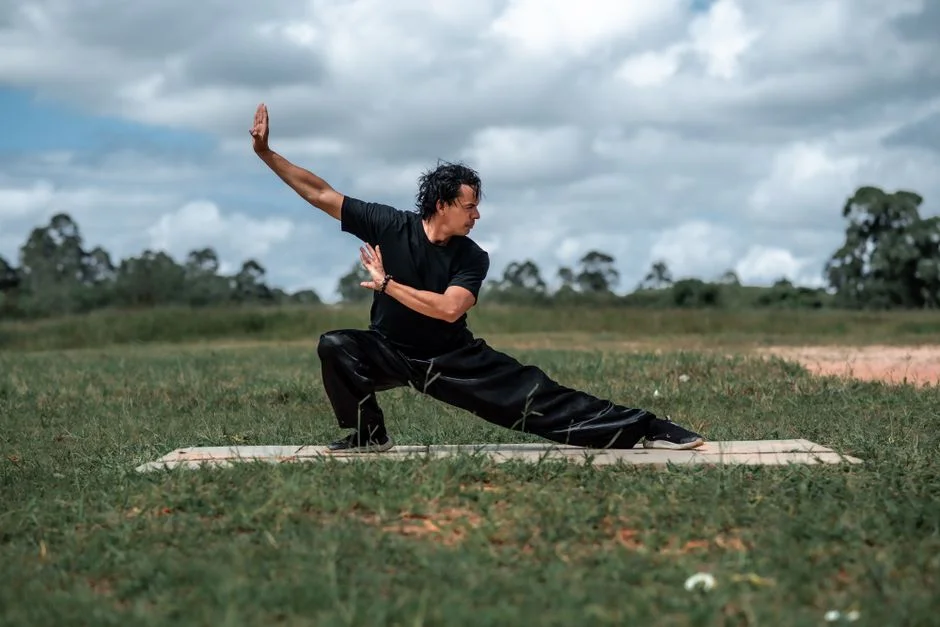
- Start with the one that’s easiest to keep doing. Tai Chi placed second on the MMSE and needs no equipment. A weekly community class is a low-cost trial run.
- Bring this to your clinician. Ask for a baseline score on a test like the MoCA so you can tell in six months whether anything is shifting, and ask what else could be contributing, such as sleep problems, medications, mood or hearing.
- If you try acupuncture, treat it as an experiment. Pick a licensed practitioner, agree on a number of sessions up front, and re-test afterward.
For related reading, see what a new trial found on virtual reality and dementia and why your walking speed might be a brain-health signal.
References
[1] Zhang B, Li X, Zhao Q, Zhang S, et al. Comparative efficacy of non-pharmacological interventions for amnestic mild cognitive impairment: a network meta-analysis. Front Aging Neurosci, 2026;18:1878590. Population: 32 randomized controlled trials in patients with amnestic mild cognitive impairment; frequentist network meta-analysis. DOI: https://doi.org/10.3389/fnagi.2026.1878590. Finding as used: aMCI prevalence approximately 10.03% with annual conversion to dementia of 5%-10%; 32 RCTs included (22 reported MMSE, 21 reported MoCA); manual acupuncture combined with moxibustion ranked first for MMSE (SUCRA 87.9%; MD 1.65, 95% CI 0.01 to 3.29 vs usual care), followed by Tai Chi (76.7%) and electroacupuncture (71.7%); for MoCA the combination ranked first (95.3%), then manual acupuncture (71.5%) and moxibustion (65.9%); absolute effect sizes were modest, the top ranking tentative given local inconsistency and few informing trials, and certainty of evidence limited by methodological quality; best positioned as adjunctive therapies. ↑︎

Kurt Greiner
Kurt is a digital strategist and IT professional blending emerging technology with practical application to help businesses and individuals streamline their digital presence. His current work focuses on the intersection of intentional living and technological resilience, exploring how individuals can leverage modern tools to navigate the second half of life with purpose.
Leave a Reply