
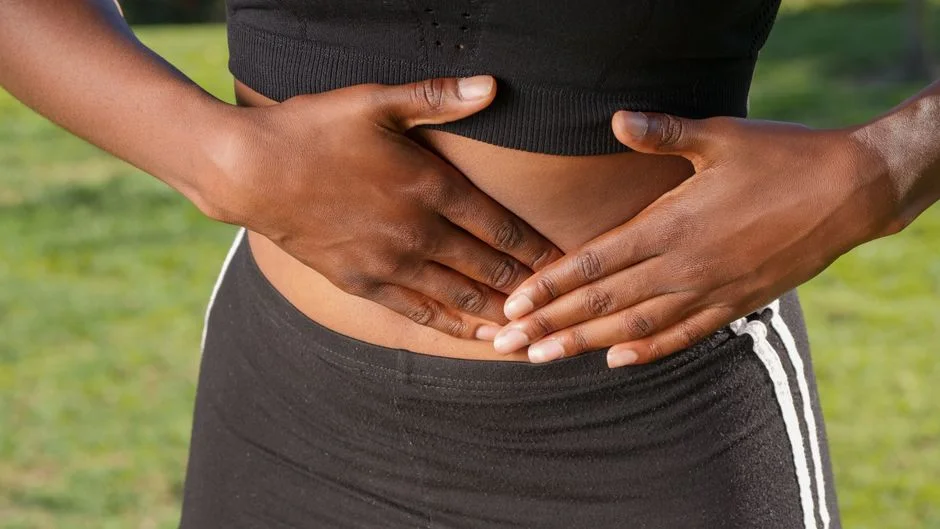
The common explanation of the gut-brain connection is that gut bacteria send signals directly to the brain, shaping mood and cognition in real time. That’s part of the picture, but reviews describe several routes at once: the immune system, the vagus nerve, and neuroactive compounds that bacteria make or consume.[1] Most of that evidence comes from animal models, and the review’s author states that much more work is needed to learn whether changing these pathways affects human physiology.[1] This post looks at one route that is easy to act on: how the fiber you eat feeds gut bacteria, and how that may connect to inflammation.
Certain gut bacteria produce butyrate, a short-chain fatty acid made when they ferment dietary fiber. A review of the evidence proposes that butyrate can support brain health, in part by changing gene expression, and presents this as a hypothesis rather than a proven benefit.[2] In mice, animals raised without gut bacteria had a leakier blood-brain barrier – the specialized boundary that keeps the brain’s internal environment stable – and giving them butyrate-producing bacteria or sodium butyrate lowered that permeability.[3] The chain proposed from this work runs: fiber → butyrate → a tighter blood-brain barrier in mice → possible protection of brain function. These studies do not show that eating more fiber does this in people.
A second pathway involves neurotransmitters. The gut holds much of the body’s serotonin, and in mice, spore-forming bacteria from mouse and human gut microbiota promoted serotonin production by cells lining the colon.[4] Reviews also report that bacteria can produce or consume dopamine, norepinephrine, serotonin, and GABA, but the evidence is mostly from animals, and early human studies are only starting to show that microbiota-based treatments can change neurotransmitter levels.[1]
A common assumption is that probiotic supplements are the best way to change the microbiome. The evidence is less settled than the marketing suggests. An expert panel defines a prebiotic as a substrate that host microorganisms selectively use to confer a health benefit, and stresses that the benefit must be documented before a substance counts as one.[5] In a study that combined mouse and human data, a multi-strain probiotic given after antibiotics led to delayed and incomplete recovery of the gut’s own microbiome compared with spontaneous recovery.[6] That does not make probiotics useless for everyone, and it was one study. If you are recovering from antibiotics or managing a gastrointestinal condition, ask your clinician before choosing a probiotic.
A reasonable place to start is fiber from a wide range of plants. In the American Gut project, a citizen-science cohort of more than 10,000 people, those who reported eating more than 30 types of plants per week had gut microbes that included more short-chain fatty acid fermenters, and fewer antibiotic resistance genes, than those who reported eating 10 or fewer.[7] The data were self-reported and observational, so they show an association, not that adding plants changes your microbiome.
One often-overlooked detail is how quickly this system responds. In a controlled feeding study of 10 volunteers, five days of eating only animal products or only plant products changed the structure of the gut microbial community, with differences apparent about one day after the food reached the gut.[8] Diet can also affect inflammatory signals within hours: in 12 healthy men, a high-fat meal raised blood levels of bacterial endotoxin over the following four hours.[9] These were short studies, so they do not show lasting effects on mood or thinking.
The cognitive stakes are real. A review reports that inflammation rises with age throughout the body and brain, and that both acute and chronic inflammation in the brain have been associated with cognitive decline and dementia risk in older adults. Smoking, poor diet, and inactivity are among the factors believed to increase inflammation.[10] The gut isn’t the only source of inflammation, and these are associations, not proof that changing your microbiome protects thinking.
None of this means probiotics are worthless. It means the strongest case in these studies is for the food that feeds the bacteria you already have: a wide range of fiber-rich plant foods. Think of tending a garden rather than ordering a delivery. If you have a gastrointestinal condition, take antibiotics, or take medication that diet changes could affect, check with your clinician before making large changes.
References
↑︎ Strandwitz P. Neurotransmitter modulation by the gut microbiota. Brain Res. 2018;1693:128-133. DOI: https://doi.org/10.1016/j.brainres.2018.03.015
↑︎ Bourassa MW, Alim I, Bultman SJ, et al. Butyrate, neuroepigenetics and the gut microbiome: can a high fiber diet improve brain health?. Neurosci Lett. 2016;625:56-63. DOI: https://doi.org/10.1016/j.neulet.2016.02.009
↑︎ Braniste V, Al-Asmakh M, Kowal C, et al. The gut microbiota influences blood-brain barrier permeability in mice. Sci Transl Med. 2014;6(263):263ra158. DOI: https://doi.org/10.1126/scitranslmed.3009759
↑︎ Yano JM, Yu K, Donaldson GP, et al. Indigenous bacteria from the gut microbiota regulate host serotonin biosynthesis. Cell. 2015;161(2):264-276. DOI: https://doi.org/10.1016/j.cell.2015.02.047
↑︎ Gibson GR, Hutkins R, Sanders ME, et al. Expert consensus document: the International Scientific Association for Probiotics and Prebiotics (ISAPP) consensus statement on the definition and scope of prebiotics. Nat Rev Gastroenterol Hepatol. 2017;14(8):491-502. DOI: https://doi.org/10.1038/nrgastro.2017.75
↑︎ Suez J, Zmora N, Zilberman-Schapira G, et al. Post-antibiotic gut mucosal microbiome reconstitution is impaired by probiotics and improved by autologous FMT. Cell. 2018;174(6):1406-1423.e16. DOI: https://doi.org/10.1016/j.cell.2018.08.047
↑︎ McDonald D, Hyde E, Debelius JW, et al. American Gut: an open platform for citizen science microbiome research. mSystems. 2018;3(3):e00031-18. DOI: https://doi.org/10.1128/mSystems.00031-18
↑︎ David LA, Maurice CF, Carmody RN, et al. Diet rapidly and reproducibly alters the human gut microbiome. Nature. 2014;505(7484):559-563. DOI: https://doi.org/10.1038/nature12820
↑︎ Erridge C, Attina T, Spickett CM, et al. A high-fat meal induces low-grade endotoxemia: evidence of a novel mechanism of postprandial inflammation. Am J Clin Nutr. 2007;86(5):1286-1292. DOI: https://doi.org/10.1093/ajcn/86.5.1286
↑︎ Sartori AC, Vance DE, Slater LZ, et al. The impact of inflammation on cognitive function in older adults: implications for healthcare practice and research. J Neurosci Nurs. 2012;44(4):206-217. DOI: https://doi.org/10.1097/jnn.0b013e3182527690

Kurt Greiner
Kurt is a digital strategist and IT professional blending emerging technology with practical application to help businesses and individuals streamline their digital presence. His current work focuses on the intersection of intentional living and technological resilience, exploring how individuals can leverage modern tools to navigate the second half of life with purpose.
Leave a Reply