
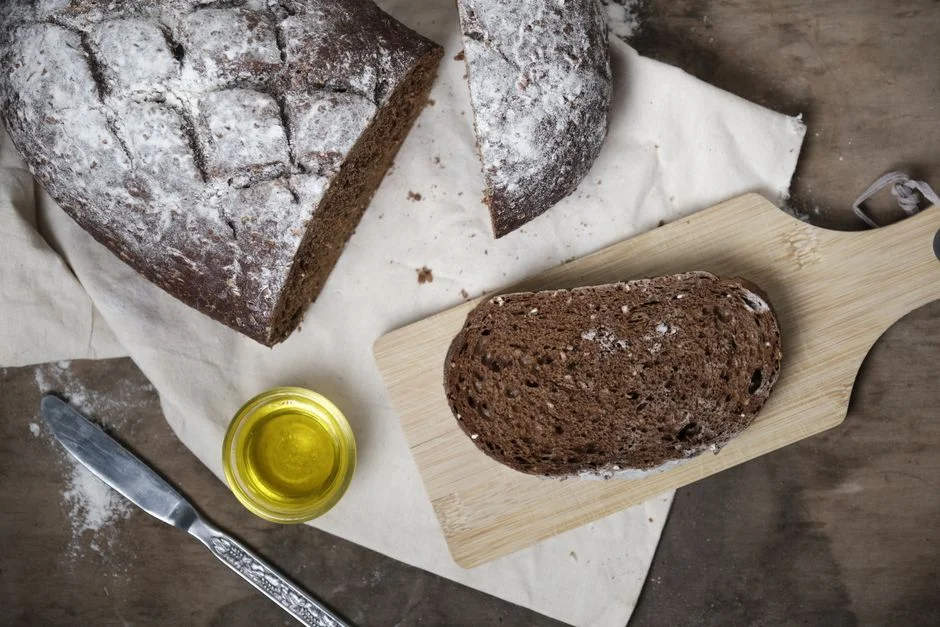
Prevention recently ranked 45 foods for longevity. You don’t need 45. Five food groups have the strongest evidence, and each is linked to lower mortality in large studies and comes with an amount you can use this week: about five servings of fruit and vegetables a day, nuts most days, whole grains in place of refined ones, a little olive oil in place of butter, and beans on a regular basis.
How to read what follows: nearly all of this evidence comes from large studies that follow people for years and track what they eat. People who eat more of these foods tend to have a lower risk of dying from any cause, known as all-cause mortality. That is an association, not proof that the food did the work. One big randomized trial is covered below. A 2017 pooled analysis of prospective studies found lower all-cause mortality with more whole grains, vegetables, fruit, nuts and fish, and higher mortality with more red and processed meat.[1]
Five foods with the strongest numbers
- Fruit and vegetables: about 5 a day. Two US cohorts of health professionals followed 108,735 people through 33,898 deaths. Eating about 5 servings a day (2 of fruit and 3 of vegetables) was linked to a hazard ratio of 0.87 for death from any cause, compared with 2 servings a day. That is 13% lower. The benefit leveled off near 5 servings, and fruit juice and potatoes did not show it.[2]
- Nuts: most days of the week. In the Nurses’ Health Study and the Health Professionals Follow-up Study (118,962 people combined), the hazard ratio for death was 0.87 for nuts two to four times a week and 0.80 for seven or more times a week, compared with never eating nuts.[3] A tree nut industry foundation helped fund that study. The 2017 pooled analysis also found nuts had the strongest link per daily serving of the food groups it reported.[1]
- Whole grains: about 3 servings a day. A meta-analysis of 45 studies found that each 90 grams a day (three servings, such as two slices of whole grain bread and a bowl of whole grain cereal) went with a relative risk of 0.83 for all-cause mortality. It found little evidence of a link for refined grains or white rice.[4]
- Olive oil: about half a tablespoon a day, in place of butter. Across 28 years and 36,856 deaths, people who used more than 7 grams a day (about half a tablespoon) had a hazard ratio of 0.81 for all-cause mortality compared with people who rarely or never used it. Replacing 10 grams a day of margarine, butter, mayonnaise or dairy fat with olive oil went with 8% to 34% lower risk of death. Olive oil showed no significant edge over other vegetable oils combined, so think of it as a swap for butter and mayo, not a magic ingredient.[5]
- Beans and other legumes: a regular serving. A pooled analysis of 32 cohorts (1,141,793 people) found a hazard ratio of 0.94 for death from any cause at the highest intake, and 6% lower risk for each extra 50 grams a day. It found no clear link with heart disease or cancer deaths, and the authors rate the certainty of the evidence as low to moderate. This is the smallest signal of the five, and it is cheap and easy to act on.[6]
The one randomized test
The PREDIMED trial in Spain randomly assigned 7,447 adults aged 55 to 80 at high cardiovascular risk to a Mediterranean diet with extra-virgin olive oil, a Mediterranean diet with mixed nuts, or advice to cut dietary fat. After a median of 4.8 years, major cardiovascular events (heart attack, stroke or cardiovascular death) were lower in both Mediterranean groups, with hazard ratios of 0.69 for olive oil and 0.72 for nuts.[7]
Two things to know. The original 2013 report was withdrawn after the team found randomization problems at some sites, and this 2018 version is the corrected analysis; results were similar after removing the 1,588 participants whose assignments were in question.[7] And it tested a whole Mediterranean-style pattern in high-risk people, with free olive oil and nuts, not each food on its own.
What this can’t tell you
- It shows links, not proof. People who eat more of these foods differ from people who don’t in other ways too. The studies adjust for many of those differences, but no adjustment removes all of them.
- The big cohorts are mostly health professionals in the US. Food intake came from questionnaires, which are imperfect, and the results may not match every body or every diet.
- Nutrient content is not the same as evidence. Long lists often pick foods for what is in them: fiber, omega-3s, antioxidants. That is a reasonable start, but a nutrient profile does not show that a food helps people live longer. The five above have been tracked against deaths.
How to use this
Pick two this week. Add a third in a month. Missing a day breaks nothing, because the patterns in these studies were built over years, not days.
- Produce: add one serving at lunch and one at dinner until you reach five a day. Choose whole fruit over juice.
- Nuts: keep a small container at your desk and have a handful most days. If you have a nut allergy, skip this one. The other four still work.
- Whole grains: swap one refined grain a day (bread, pasta or rice) for the whole grain version. Our look at whether oatmeal lives up to the hype is a good place to start.
- Olive oil: use it where you would use butter or mayo: on vegetables, in dressings, in the pan.
- Beans: add a serving of beans or lentils to a salad or soup a few times a week.
Start with the swap that takes the least effort. The easiest one is the one you will still be doing next year.
References
[1] Schwingshackl L, Schwedhelm C, Hoffmann G, Lampousi AM, Knüppel S, Iqbal K, et al. Food groups and risk of all-cause mortality: a systematic review and meta-analysis of prospective studies. Am J Clin Nutr, 2017;105(6):1462-1473. Population: systematic review and dose-response meta-analysis of prospective studies of 12 major food groups. DOI: https://doi.org/10.3945/ajcn.117.153148. Finding as used: with each additional daily serving, risk of all-cause mortality was lower for whole grains (RR 0.92), vegetables (RR 0.96), fruits (RR 0.94), nuts (RR 0.76) and fish (RR 0.93), and higher for red meat (RR 1.10) and processed meat (RR 1.23); nuts had the lowest RR per daily serving of the groups reported. ↑︎
[2] Wang DD, Li Y, Bhupathiraju SN, Rosner BA, Sun Q, Giovannucci EL, et al. Fruit and Vegetable Intake and Mortality: Results From 2 Prospective Cohort Studies of US Men and Women and a Meta-Analysis of 26 Cohort Studies. Circulation, 2021;143(17):1642-1654. Population: 66,719 women (Nurses’ Health Study) and 42,016 men (Health Professionals Follow-up Study) free of cardiovascular disease, cancer and diabetes at baseline; 33,898 deaths; meta-analysis of 26 cohorts. DOI: https://doi.org/10.1161/CIRCULATIONAHA.120.048996. Finding as used: intake of about 5 servings a day of fruit and vegetables (2 fruit and 3 vegetable) was associated with the lowest mortality and no further reduction above that level; compared with 2 servings a day, 5 servings a day had a hazard ratio of 0.87 (95% CI 0.85-0.90) for total mortality; fruit juice and potatoes were not associated with mortality. ↑︎
[3] Bao Y, Han J, Hu FB, Giovannucci EL, Stampfer MJ, Willett WC. Association of nut consumption with total and cause-specific mortality. N Engl J Med, 2013;369(21):2001-2011. Population: 76,464 women (Nurses’ Health Study, 1980-2010) and 42,498 men (Health Professionals Follow-up Study, 1986-2010) without cancer, heart disease or stroke at baseline; 16,200 women and 11,229 men died. DOI: https://doi.org/10.1056/NEJMoa1307352. Finding as used: compared with no nut consumption, pooled hazard ratios for death were 0.87 (95% CI 0.83-0.90) for two to four times per week and 0.80 (95% CI 0.73-0.86) for seven or more times per week; the study was funded by the National Institutes of Health and the International Tree Nut Council Nutrition Research and Education Foundation. ↑︎
[4] Aune D, Keum N, Giovannucci E, Fadnes LT, Boffetta P, Greenwood DC, et al. Whole grain consumption and risk of cardiovascular disease, cancer, and all cause and cause specific mortality: systematic review and dose-response meta-analysis of prospective studies. BMJ, 2016;353:i2716. Population: 45 prospective studies (64 publications). DOI: https://doi.org/10.1136/bmj.i2716. Finding as used: per 90 g/day increase in whole grain intake (three servings, for example two slices of bread and one bowl of cereal made from whole grains), the summary relative risk for all-cause mortality was 0.83 (95% CI 0.77-0.90); there was little evidence of an association with refined grains, white rice, total rice or total grains. ↑︎
[5] Guasch-Ferré M, Li Y, Willett WC, Sun Q, Sampson L, Salas-Salvadó J, et al. Consumption of Olive Oil and Risk of Total and Cause-Specific Mortality Among U.S. Adults. J Am Coll Cardiol, 2022;79(2):101-112. Population: 60,582 women (Nurses’ Health Study, 1990-2018) and 31,801 men (Health Professionals Follow-up Study, 1990-2018) free of cardiovascular disease or cancer at baseline; 28 years of follow-up; 36,856 deaths. DOI: https://doi.org/10.1016/j.jacc.2021.10.041. Finding as used: the pooled hazard ratio for all-cause mortality in the highest olive oil intake group (more than 0.5 tablespoon, or more than 7 g, per day) versus never or rarely was 0.81 (95% CI 0.78-0.84); replacing 10 g/day of margarine, butter, mayonnaise and dairy fat with olive oil was associated with 8%-34% lower risk of total and cause-specific mortality; no significant associations were observed when olive oil was compared with other vegetable oils combined. ↑︎
[6] Zargarzadeh N, Mousavi SM, Santos HO, Aune D, Hasani-Ranjbar S, Larijani B. Legume Consumption and Risk of All-Cause and Cause-Specific Mortality: A Systematic Review and Dose-Response Meta-Analysis of Prospective Studies. Adv Nutr, 2023;14(1):64-76. Population: 32 cohorts (31 publications), 1,141,793 participants, 93,373 deaths from all causes. DOI: https://doi.org/10.1016/j.advnut.2022.10.009. Finding as used: highest versus lowest legume intake was associated with lower all-cause mortality (HR 0.94, 95% CI 0.91-0.98); each 50 g/day increase was associated with a 6% reduction in all-cause mortality (HR 0.94, 95% CI 0.89-0.99); no significant association for cardiovascular, coronary heart disease or cancer mortality; certainty of evidence judged low to moderate. ↑︎
[7] Estruch R, Ros E, Salas-Salvadó J, Covas MI, Corella D, Arós F, et al. Primary Prevention of Cardiovascular Disease with a Mediterranean Diet Supplemented with Extra-Virgin Olive Oil or Nuts. N Engl J Med, 2018;378(25):e34. Population: 7,447 Spanish adults aged 55 to 80 (57% women) at high cardiovascular risk without cardiovascular disease; median follow-up 4.8 years; randomized trial (PREDIMED, republished after the 2013 report was withdrawn for protocol deviations). DOI: https://doi.org/10.1056/NEJMoa1800389. Finding as used: major cardiovascular events (myocardial infarction, stroke or cardiovascular death) occurred in 3.8% of the extra-virgin olive oil group, 3.4% of the nuts group and 4.4% of the control group; hazard ratios versus control were 0.69 (95% CI 0.53-0.91) for the olive oil group and 0.72 (95% CI 0.54-0.95) for the nuts group; results were similar after omitting 1,588 participants whose assignments were known or suspected to have departed from the protocol. ↑︎

Kurt Greiner
Kurt is a digital strategist and IT professional blending emerging technology with practical application to help businesses and individuals streamline their digital presence. His current work focuses on the intersection of intentional living and technological resilience, exploring how individuals can leverage modern tools to navigate the second half of life with purpose.
Leave a Reply