
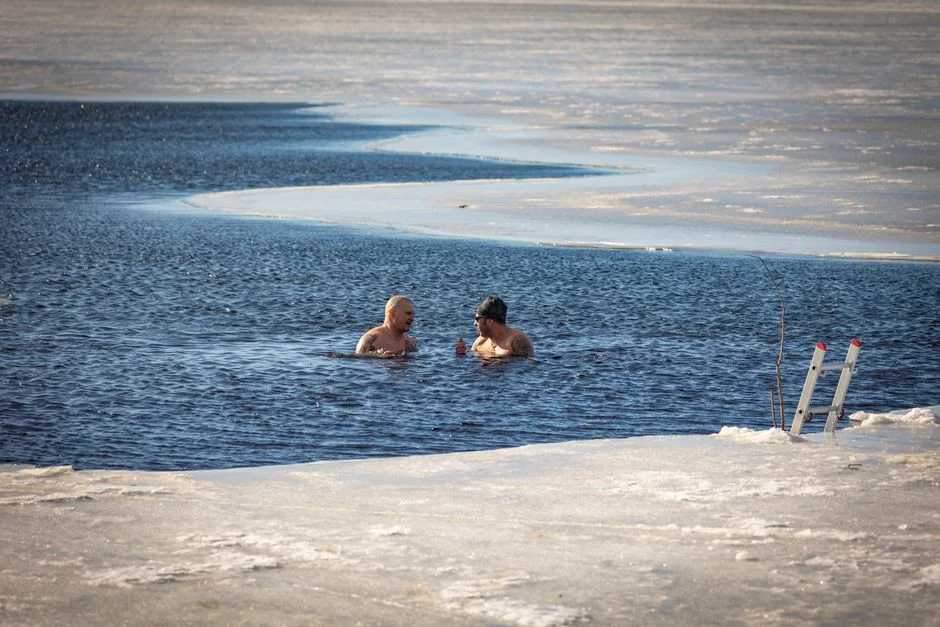
Alternating hot and cold water, usually called contrast therapy, is now a fixture at gyms, spas and hotels. A runner’s month-long trial of it, written up in Outside, makes a useful reality check. Her result matches what the research suggests: you may well feel better afterward, but feeling better and recovering faster are not the same thing.
One runner’s month
The runner averaged about 35 miles a week and kept her training normal. Two to three times a week, mostly after long runs and hard workouts, she did three rounds of 10 to 15 minutes of heat followed by two minutes in cold water. She tracked soreness, fatigue, pace and heart rate.
She felt less sore and more relaxed, and she slept better on the nights she did a session. Her pace and heart rate did not noticeably change, she did not feel consistently fresher on her next run, and a few times she felt more tired the next day. Her own conclusion: it made her feel better between workouts, not faster.
That is one person with no comparison group and no way to blind herself to the routine. It cannot separate the effect of the water from the effect of an hour of quiet, warm relaxation. Treat it as a description of what the experience can feel like, not as evidence.
What the trials suggest
The most direct evidence is a 2013 systematic review and meta-analysis of contrast water therapy after exercise that damages muscle. It found 18 trials, and all of them had a high risk of bias. Pooling 13 of the studies, contrast therapy produced greater improvements in muscle soreness than passive recovery (simply resting) at every follow-up point from under 6 hours to 96 hours, and it reduced the loss of muscle strength at each of those points too.[1]
Two limits matter. First, contrast therapy was compared with doing nothing in those results. Against other recovery methods (cold water, warm water, compression, active recovery and stretching), the review found little evidence that any one was better. Second, the authors noted the effects may be most relevant to elite athletes, and the studies were mostly small lab trials after damaging exercise, which is not the same as your Tuesday jog.[1]
The catch with the cold half
Cold water straight after lifting is a separate question. In a 12-week trial, 21 physically active men strength trained twice a week and spent 10 minutes after each session either in cold water or on an active recovery. Strength and muscle mass increased more in the active recovery group. The authors concluded that regular post-exercise cold water immersion should be reconsidered.[2]
That study tested cold water alone, not hot-then-cold, in young active men. Even so, it is a reason to think about timing. If building muscle is the goal, a plunge right after every lifting session may work against you. The doctors quoted in the Outside piece make a similar point: the evidence for endurance training is less clear, and feeling recovered is different from adapting.
Staying safe
- Extreme cold can cause hypothermia and strain the heart and blood vessels. Too much heat can cause dehydration and overheating.
- A doctor quoted by Outside says 50 to 59 degrees Fahrenheit is a well-studied range for cold immersion, and that there is no clear evidence painfully colder water works better.
- If you are pregnant, or have heart disease, uncontrolled high blood pressure or an irregular heart rhythm, talk with your clinician before deliberate hot or cold exposure.
If you want to try it
Get the basics in first: a steady sleep window, enough protein and an easy day after a hard one. Then change one thing at a time. If you add contrast therapy, the runner’s routine is a reasonable starting point to adapt, though it is one person’s routine and not a tested protocol.
- Pick one hard-session day per week to start, and keep rounds short.
- Log two numbers: next-morning soreness from 0 to 10, and one repeatable marker such as your time on a regular route.
- Compare against the two weeks before. If both numbers are unchanged, you are using it for how it feels, and that is a fair reason to keep it or drop it.
Here’s how Bettering Me frames it: the evidence says contrast therapy probably eases soreness, and it has not been shown to make you faster. If a hot soak and a cold finish also give you a calm few minutes away from your phone, that is a real benefit, just a different one.
References
[1] Bieuzen F, Bleakley CM, Costello JT. Contrast water therapy and exercise induced muscle damage: a systematic review and meta-analysis. PLoS ONE. 2013;8(4):e62356. DOI: 10.1371/journal.pone.0062356. Finding as used: 18 trials, all at high risk of bias; pooled data from 13 studies showed contrast water therapy improved muscle soreness and reduced strength loss at each follow-up time (under 6 to 96 hours) versus passive recovery; little evidence of superiority over other recovery methods; effects may be most relevant to elite athletes. ↑︎
[2] Roberts LA, Raastad T, Markworth JF, et al. Post-exercise cold water immersion attenuates acute anabolic signalling and long-term adaptations in muscle to strength training. The Journal of Physiology. 2015;593(18):4285-4301. DOI: 10.1113/JP270570. Finding as used: 21 physically active men strength trained for 12 weeks with 10 minutes of cold water immersion or active recovery after each session; strength and muscle mass increased more with active recovery. ↑︎

Kurt Greiner
Kurt is a digital strategist and IT professional blending emerging technology with practical application, exploring how individuals can leverage modern tools to navigate the second half of life with purpose.
Leave a Reply