
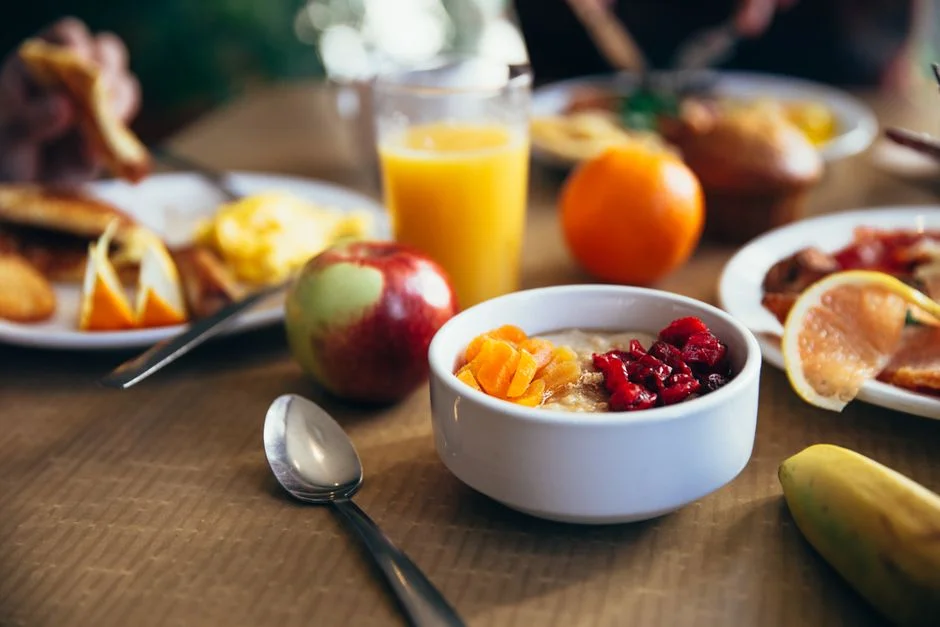
A survey of about 400 college students found that people who ate breakfast most days, slept at least six hours and exercised for 20 minutes or more tended to handle stress better. Interesting, but the group is 19-year-olds, so treat it as a clue rather than a plan for your own mornings.[1]
What the researchers did
Researchers at Binghamton University ran an anonymous online survey of 401 U.S. college students (mean age 19, about 58% female). It asked about diet, sleep, exercise and other habits, and measured two traits: resilience, meaning bouncing back from stress, and psychological flexibility, meaning the ability to adjust your thoughts and actions when circumstances change. A statistical model then tested whether flexibility sat between the habits and resilience.[1]
What they found
- Eating breakfast five or more times a week and having fast food three or fewer times a week were associated with higher resilience through psychological flexibility.[1]
- Sleeping fewer than six hours a night was associated with lower resilience through that same route.[1]
- Independent of flexibility, taking fish oil four or more times a week and exercising more than 20 minutes daily were linked to higher resilience.[1]
- Psychological flexibility itself had a direct positive association with resilience.[1]
What this doesn’t show
Surveys can’t sort out cause from correlation. Resilient people may simply be the ones with time and energy for breakfast. The same analysis found alcohol use associated with higher resilience, which is a good reminder of how messy self-reported data in young adults can be.[1] Nothing here tests whether adding breakfast changes how you handle stress, and nothing tests it in adults over 40.
What to do with it
These habits are cheap to try, so a short experiment costs you little.
- Run a two-week breakfast test. Eat breakfast at least five days a week, then notice how a stressful afternoon feels.
- Protect the six-hour floor. Set a lights-out time that guarantees at least seven hours in bed.
- Practice the “step back” move. Psychological flexibility is a skill. When something goes wrong, say to yourself, “I feel this because of that. What can I do?” Then pick one next action.
If you want a structured way to build that skill, see early help for stress, nurse-led care versus guided CBT.
References
[1] Begdache L, Cherry J, Talkachov AJ. Dietary and lifestyle factors and resilience: the role of psychological flexibility as a mediator. J Am Coll Health, 2025;74(6):1569-1580. Population: 401 U.S. college students (mean age 19, about 58% female); anonymous online cross-sectional survey analyzed with structural equation modeling. DOI: https://doi.org/10.1080/07448481.2025.2597907. Finding as used: eating breakfast five or more times per week (b = 0.12, 95% CI 0.035-0.229) and fast food three or fewer times per week (b = 0.09, 95% CI 0.001-0.196) were associated with increased resilience through psychological flexibility processes; fewer than 6 hours of sleep per night was associated with lower resilience through those processes (b = -0.10, 95% CI -0.342 to -0.100); independent of flexibility, fish oil four or more times per week, exercising more than 20 minutes daily and alcohol consumption were directly associated with higher resilience and marijuana use with lower resilience; psychological flexibility was directly and positively associated with resilience. Cross-sectional survey, associations only. ↑︎

Kurt Greiner
Kurt is a digital strategist and IT professional blending emerging technology with practical application, exploring how individuals can leverage modern tools to navigate the second half of life with purpose.
Leave a Reply