
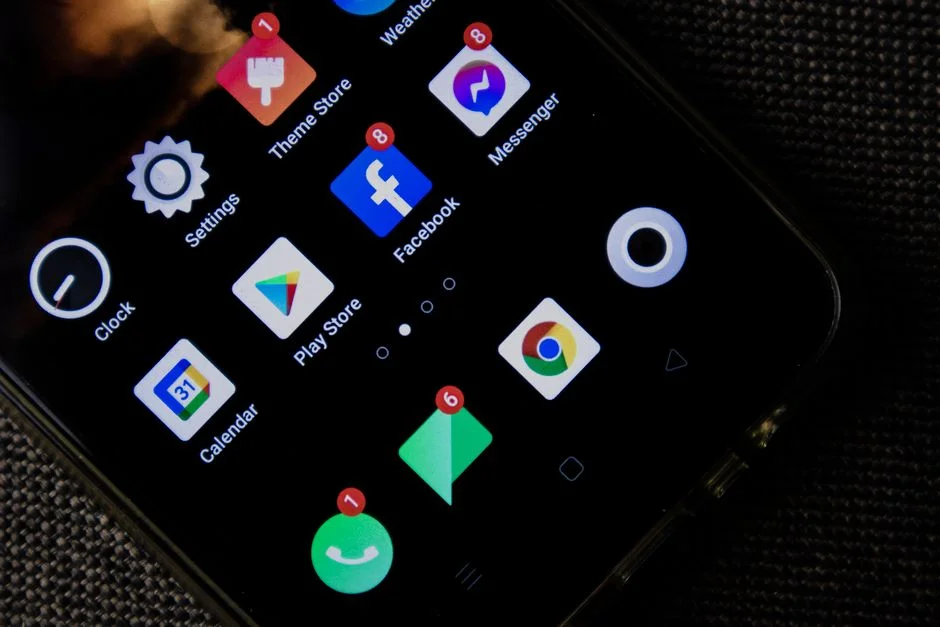
You already know notifications are bad for you. You’ve read the articles, installed the blockers, and still find yourself three tabs deep in something you never meant to open. That’s not a character flaw, and the research on interruptions suggests it’s an ordinary human response to a work environment built to fragment attention.
This post sticks to what a few specific studies actually found: what interrupted work costs, what a brief break can do for sustained attention, and what we know (and don’t) about training attention. Where the popular story goes further than the evidence, I’ll say so.
What Interruptions Cost
In a lab study of interrupted work, Gloria Mark and colleagues found something counterintuitive: people finished interrupted tasks in less time, with no difference in quality. The catch is how they did it. They compensated by working faster, and that came at a price: more stress, higher frustration, more time pressure, and more effort [1]. The study also found that the context of the interruption didn’t change the effect, and that individual differences mattered, with personality measures such as openness to experience and need for personal structure predicting how costly interruptions were.
That reframes the question. The cost of a notification may not show up as a ruined output. It may show up as how you feel at the end of the day: wired, rushed, and a little frayed.
You may also have heard that it takes 23 minutes to recover your focus after an interruption. That number is repeated constantly, but it isn’t something the study cited above reports, so I’m not relying on it here. What the evidence supports is narrower and still useful: interruptions carry a real cost, and part of it is paid in stress and effort.
Why Willpower Isn’t the Whole Story
It’s tempting to explain compulsive checking with a neat brain-chemistry story: notifications deliver small doses of dopamine, your reward system adapts, and now sustained focus feels intolerable. It’s a plausible hypothesis, and you’ll see it stated as fact all over the internet. None of the studies cited in this post measured dopamine, tested a shifting reward baseline, or showed that notification habits recalibrate anything in the brain. So treat it as an idea worth investigating, not a finding.
What you can say without that mechanism is simpler. If your day is already fragmented, an extra alert is one more pull on a system that is working to stay on task. You don’t need a theory of your reward circuitry to justify reducing those pulls.
Brief Breaks and Sustained Attention
A well-known problem in attention research is the vigilance decrement: performance on a monotonous task steadily declines the longer you stay on it. Ariga and Lleras tested a different explanation from the usual “attentional resources run out” account. They proposed that the brain stops keeping the task goal active over long stretches, and that briefly switching away from the goal might prevent that. In their experiment, observers did a visual vigilance task while holding digits in memory. Observers who were only asked to recall the digits at the end showed a steep decline in vigilance performance. Observers who were asked to recall the digits sporadically during the task did not show the decline [2].
Two cautions. This was a controlled laboratory task, not a workday. And the “break” was a brief switch to a different task, not a walk outside or a scroll through your phone. What it suggests is that short, deliberate pauses may protect sustained attention better than grinding through without one. It does not show that every interruption is a helpful reset. The difference is who chooses the timing.
Training Attention
If distraction is partly a habit, can attention be trained? Mindfulness meditation is the most studied candidate. A review in Nature Reviews Neuroscience by Tang, Hölzel and Posner concluded that research over the past two decades broadly supports beneficial effects of mindfulness meditation on physical and mental health and on cognitive performance, and that neuroimaging studies have begun to identify the brain areas and networks involved. The same review is candid that the underlying neural mechanisms remain unclear and that more methodologically rigorous studies are needed [3].
In other words: promising, not settled. It’s reasonable to try a few minutes of focused attention practice and see how it feels, but the evidence here doesn’t tell us how long, how often, or whether it will change how you respond to notifications specifically.
A Practical Experiment
Here is a low-stakes way to apply all of this without overclaiming. Treat it as an experiment on yourself, not a protocol with proven doses.
Batch your alerts. Since interrupted work seems to cost you in stress and effort, let notifications wait for scheduled check-in times instead of arriving on their own schedule.
Take planned pauses. If you’re doing long, monotonous work, build in brief, deliberate switches rather than waiting until you drift. Short and self-chosen is the idea.
Practice staying with one thing. Try a short block, say ten minutes, on a single task with the phone out of reach. The ten minutes is an arbitrary starting point, not a number from the research. Notice how it feels, and adjust.
Then check in with yourself at the end of the day. The Mark study suggests the thing to watch is how rushed and frustrated you feel, not just how much you got done.
The Bottom Line
Interruptions cost something, even when the work still gets done. Brief, deliberate breaks may help sustain attention, and attention training looks promising but unfinished. The tidy dopamine story may turn out to be right in part, but today it’s a hypothesis, and you don’t need it to make better choices about your notifications.
References
↑︎ Mark G, Gudith D, Klocke U. The cost of interrupted work: more speed and stress. Proceedings of the SIGCHI Conference on Human Factors in Computing Systems (CHI 2008). 2008:107-110. Finding as used: in an empirical study, people completed interrupted tasks in less time with no difference in quality, compensating by working faster at the price of more stress, frustration, time pressure and effort; the context of the interruption made no difference, and openness to experience and need for personal structure predicted disruption costs. DOI: https://doi.org/10.1145/1357054.1357072
↑︎ Ariga A, Lleras A. Brief and rare mental “breaks” keep you focused: deactivation and reactivation of task goals preempt vigilance decrements. Cognition. 2011;118(3):439-443. Finding as used: observers who sporadically recollected digits during a visual vigilance task did not show the vigilance decrement seen in observers who recalled the digits only at the end. DOI: https://doi.org/10.1016/j.cognition.2010.12.007
↑︎ Tang YY, Hölzel BK, Posner MI. The neuroscience of mindfulness meditation. Nature Reviews Neuroscience. 2015;16(4):213-225. Finding as used: research broadly supports beneficial effects of mindfulness meditation on health and cognitive performance, but the underlying neural mechanisms remain unclear and more methodologically rigorous studies are needed. DOI: https://doi.org/10.1038/nrn3916

Kurt Greiner
Kurt is a digital strategist and IT professional blending emerging technology with practical application, exploring how individuals can leverage modern tools to navigate the second half of life with purpose.
Leave a Reply