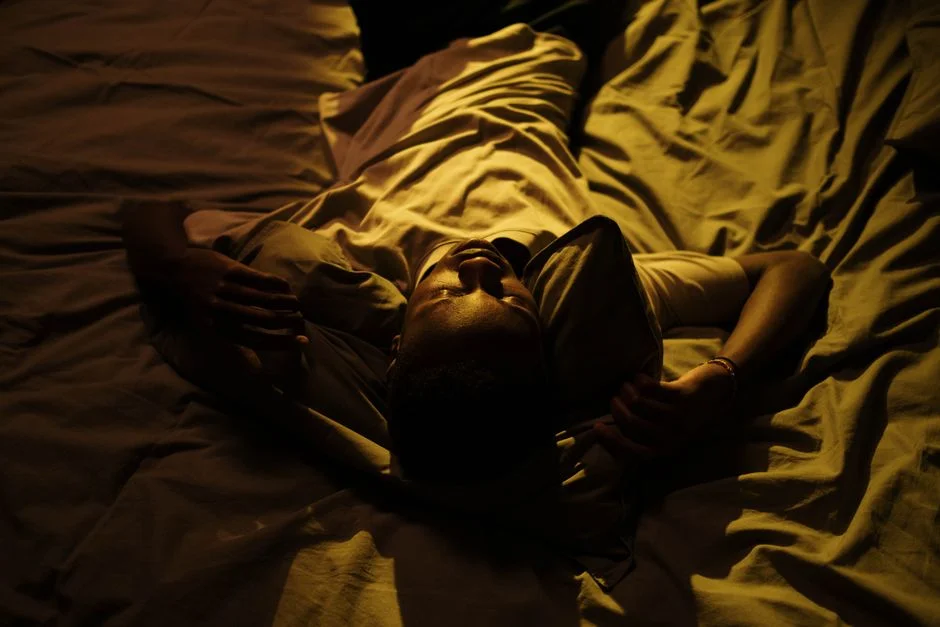
Plenty of midlife adults reach for cannabis to sleep. A new JAMA Network Open study that followed people for 35 years found the opposite pattern on a sleep tracker: more cannabis use went with worse measured sleep, even though people didn’t feel they slept worse.[1]
What the researchers did
The data come from CARDIA, a long-running U.S. cohort that began in young adulthood. In this analysis, 891 participants (mean age 60.7) wore a wrist actigraph for seven days, and 1,128 completed a sleep quality questionnaire. The team counted lifetime exposure in “cannabis-years,” where one cannabis-year equals 365 days of use, and also compared people who used in the past 30 days with former and never users.[1]
What they found
- Cumulative use: each added cannabis-year went with higher odds of low sleep percentage, meaning less of the night spent asleep (OR 1.10, 95% CI 1.06 to 1.14), fragmented sleep (OR 1.04, 1.01 to 1.08), and 30 or more minutes awake after falling asleep (OR 1.21, 1.10 to 1.34).[1]
- Recent use: compared with never users, people who had used in the past 30 days had about three times the odds of prolonged wake time during the night (OR 3.23, 1.44 to 7.27) and about 4.6 times the odds of sleeping longer than 8 hours (OR 4.60, 1.81 to 11.70).[1]
- The gap: self-reported sleep quality was not associated with cannabis use.[1]
What this doesn’t show
This is an observational study, so it shows an association, not cause and effect. People who already sleep poorly may be more likely to use cannabis, and the confidence intervals on the recent-use numbers are wide. The authors call it a potential adverse association between long-term recreational use and midlife sleep health, and they stress measuring both objective and subjective sleep.[1]
What to do with it
The useful part is the mismatch. How you feel in the morning and what a sensor records can disagree.
- Run a two-week test. If cannabis is part of your nights, skip it for two weeks and compare how you wake up. A consistent bedtime and wake time during the test keeps the comparison fair.
- Treat “I sleep fine” as a starting point. A wearable’s sleep numbers are rough, but a pattern of long wake time after sleep onset is worth noticing.
- Use it as a flag, not a verdict. If you need something to fall asleep most nights, talk to your clinician about the cause. Ask about cognitive behavioral therapy for insomnia.
Related: REM sleep and disease risk, and what the 83-disease study found.
References
[1] Vu TT, Knutson KL, Auer R, Jakob J, et al. Recent and Cumulative Cannabis Use and Sleep in Middle-Aged Adults. JAMA Netw Open, 2026;9(10):e2638303. Population: CARDIA cohort (35 years of follow-up); 891 participants with 7-day wrist actigraphy and 1,128 with Pittsburgh Sleep Quality Index data; mean age 60.7 years; observational cohort study. DOI: https://doi.org/10.1001/jamanetworkopen.2026.38303. Finding as used: each cannabis-year (365 days of use) was associated with higher odds of low sleep percentage (OR 1.10, 95% CI 1.06-1.14), high sleep fragmentation (OR 1.04, 1.01-1.08) and prolonged wakefulness after sleep onset (OR 1.21, 1.10-1.34); recent use versus never use: prolonged WASO OR 3.23 (1.44-7.27), long sleep duration OR 4.60 (1.81-11.70); cannabis use was not associated with subjective sleep quality. ↑︎

Kurt Greiner
Kurt is a digital strategist and IT professional blending emerging technology with practical application, exploring how individuals can leverage modern tools to navigate the second half of life with purpose.
Leave a Reply