
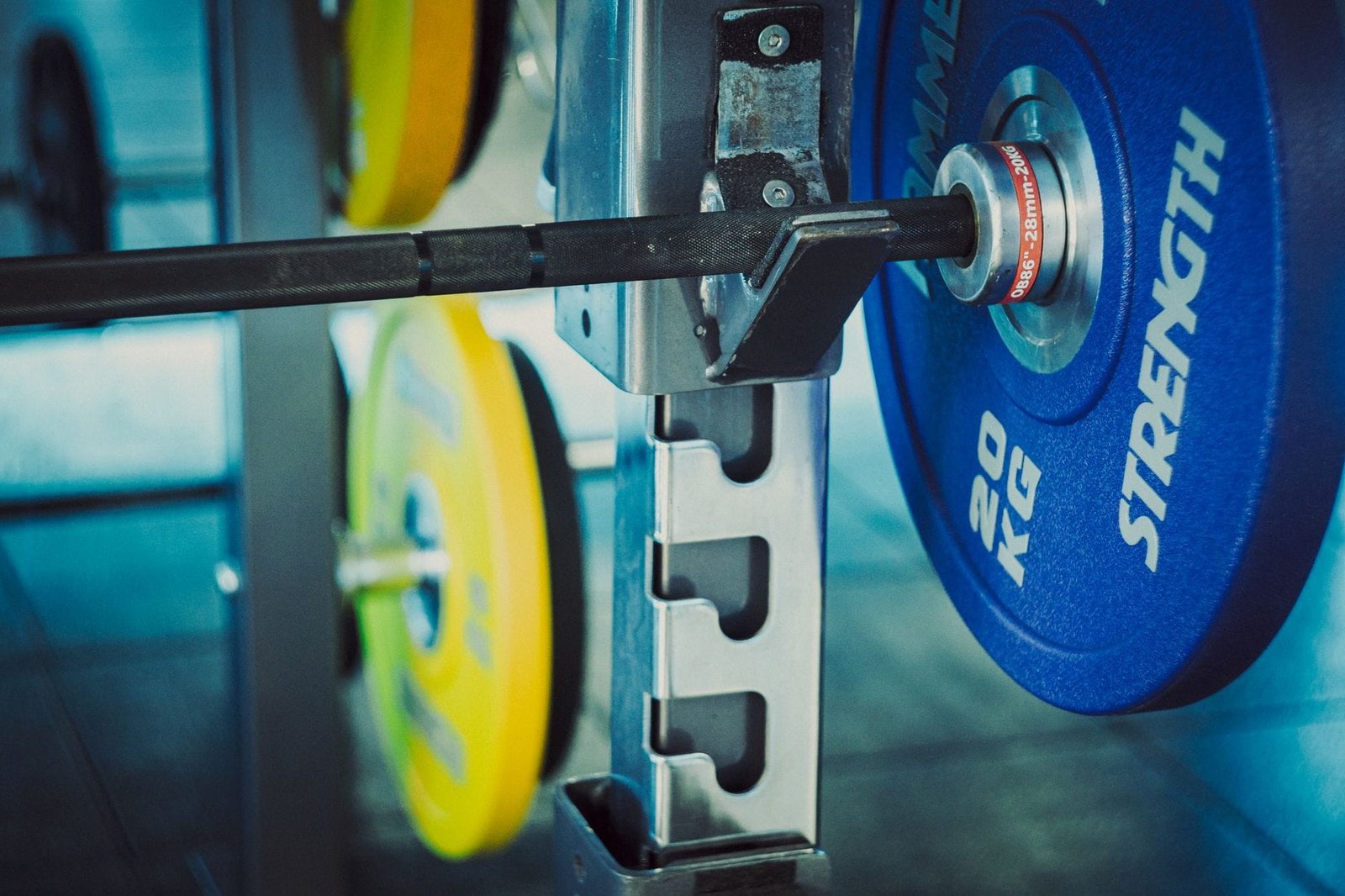
Roughly 90 to 120 minutes of strength training a week looks like the zone where the lower mortality risk shows up. In a cohort analysis of 147,374 people followed for up to 30 years, that amount was linked to a 13% lower risk of death from any cause compared with no strength training, and more time than that added nothing further.[1]
What the researchers did
The analysis pooled three large cohorts: the Health Professionals Follow-up Study (1992 to 2022) and the Nurses’ Health Study (2002 to 2021) and Nurses’ Health Study II (2003 to 2021). It included 31,540 men and 115,834 women. Participants reported their weekly resistance training and aerobic exercise on validated questionnaires at the start and every two years after. Over up to 30 years, 35,798 of them died.[1]
What they found
Compared with no resistance training, 90 to 119 minutes a week was associated with lower risk across several causes of death, after adjusting for aerobic activity. The figures below are hazard ratios, where 1.00 means no difference:[1]
- All-cause mortality: 13% lower (HR 0.87, 95% CI 0.81 to 0.95).
- Cardiovascular mortality: 19% lower (HR 0.81, 95% CI 0.67 to 0.97).
- Neurological disease mortality: 27% lower (HR 0.73, 95% CI 0.58 to 0.92).
Beyond 120 minutes a week, no additional benefit appeared. Cancer was the exception to the pattern: lower risk showed up only at smaller amounts, with an HR of 0.91 for 1 to 29 minutes and 0.88 for 30 to 59 minutes a week.[1]
Strength work did not replace cardio. When the two were analyzed together, resistance training was linked to further reduced mortality risk at every level of aerobic activity, up to about 45 MET-hours a week of aerobic exercise.[1]
What this study does not show
- It is observational. People who lift regularly may differ from those who do not in ways the adjustments miss, so the study cannot prove that lifting caused the lower risk.
- Exercise was self-reported on questionnaires, which is less precise than a measured dose.
- The cohorts are health professionals in the US, mostly women, so the results may not carry over to everyone.
- “No further benefit above 120 minutes” describes the death-rate data. It does not mean extra training has no value for strength, function or enjoyment.
What to do with it
- Aim for about 90 minutes of strength work a week, split into sessions you will actually do. Two or three sessions of 30 to 45 minutes gets you there.
- Once you are near two hours, put spare time into aerobic exercise, sleep or recovery instead of adding more lifting.
- Keep your walking, cycling or swimming. In this study, strength training added to aerobic activity, not instead of it.
- If you are new to lifting or have a heart condition or joint problems, talk to your clinician and start lighter than you think you need to.
References
[1] Zhang Y, Lee DH, Rezende LFM, Ma Y, Giovannucci E. Long-term resistance training with all-cause and cause-specific mortality: assessing dose-response and joint associations with aerobic physical activity. British Journal of Sports Medicine, 2026;60(12):874-883. Population: 147,374 participants (31,540 men, 115,834 women) from the Health Professionals Follow-up Study (1992-2022), Nurses’ Health Study (2002-2021) and Nurses’ Health Study II (2003-2021), followed up to 30 years; 35,798 deaths. DOI: https://doi.org/10.1136/bjsports-2025-110503. Finding as used: compared with no resistance training, 90-119 min/week was associated with 13% lower all-cause mortality (HR 0.87, 95% CI 0.81-0.95), 19% lower cardiovascular mortality (HR 0.81, 0.67-0.97) and 27% lower neurological disease mortality (HR 0.73, 0.58-0.92), adjusting for aerobic activity; no additional benefit above 120 min/week; reduced cancer mortality only at lower levels (HR 0.91 for 1-29 min/week; HR 0.88 for 30-59 min/week); resistance training was associated with further reduced mortality risk at all levels of aerobic activity up to about 45 MET-hours/week. ↑︎

Kurt Greiner
Kurt is a digital strategist and IT professional blending emerging technology with practical application to help businesses and individuals streamline their digital presence. His current work focuses on the intersection of intentional living and technological resilience, exploring how individuals can leverage modern tools to navigate the second half of life with purpose.
Leave a Reply