
If your work runs late, rotates, or pulls you out at 3 a.m., the most useful food decision is not a new diet. It is a rule for when you eat and how much. A new systematic review of nutrition for shift workers says plainly that the evidence is not strong enough for official guidelines.[1] But several controlled studies point the same way: keep big meals out of the middle of the night, hold a steady eating window, and make any night-time food a small snack.
What the review found, and what it did not
The researchers screened 6,909 articles and kept 43 studies. About half were crossover trials, where the same people try each approach in turn, and a third were observational. Fifteen (35%) were laboratory simulations of night work, and participants averaged about 33 years old. Only four studies (9%) involved first responders such as firefighters and police officers, the group the review set out to examine separately.[1]
The authors concluded that the evidence is insufficient to set dietary guidelines for shift workers, citing small samples, mixed methods and a moderate-to-high risk of bias.[1] So treat everything below as a best bet, not a prescription. Within the review, two signals were the most consistent. Time-restricted eating (eating inside a set window) that skipped food overnight improved glucose tolerance compared with eating at night, and higher-carbohydrate food at night led to higher blood sugar and insulin afterward. Findings on alertness and performance were mixed.[1]
Keep big meals out of your body’s night
In a 14-day lab study, 19 healthy adults (average age 26) lived through simulated night work. Ten ate on a typical shift-worker pattern, with food both day and night. Nine ate only during daytime hours, even though they were awake at night. Nighttime eating put the body’s blood sugar rhythm out of step with its master clock, a mismatch called circadian misalignment, and impaired glucose tolerance. Daytime-only meals avoided both in this small lab study.[2]
The strongest lab result is for true night work. None of these studies tested a late evening at your desk. It may be a milder version of the same mismatch, so treat the night-work results as a reason to experiment.
Hold a steady eating window
The Healthy Heroes trial randomly assigned 137 firefighters working 24-hour shifts (ages 23 to 59, 9% women) to 12 weeks of 10-hour time-restricted eating or usual care. The eating window shrank from 14.1 hours to 11.1 hours on average, no adverse effects were reported, and quality of life improved.[3] Compared with usual care, a blood fat marker called VLDL particle size dropped, which the review counts as a favorable change.[1] In a subgroup analysis of firefighters who started with elevated cardiometabolic risk, HbA1c (average blood sugar over about three months) and diastolic blood pressure fell more than with usual care.[3]
If you eat at night, keep it small
A lab study of 39 healthy adults (average age 24.5) put them through four simulated night shifts. At 12:30 a.m., one group ate a meal (30% of the day’s calories), one ate a snack (10%), and one ate nothing. At 4 a.m., the snack group did best on a driving simulator, spending more time in the safe zone with steadier speed and lane position, and had fewer lapses on a reaction test. The meal group reported feeling sleepier.[4]
A second lab study looked at what a midnight snack does to the next meal. Thirty-one healthy adults aged 21 to 35 took part, and data from 20 were analyzed. They ate either a big snack (about 500 calories) or a small one (about 200 calories, half a sandwich and fruit) around midnight, then the same breakfast at 8:30 a.m. After the night shift, the big-snack group’s blood sugar response to breakfast was 20.8% higher than after a normal night of sleep. The small-snack group showed no significant difference.[5]
What this can’t tell you
- Most participants were younger and healthy. Participants averaged about 33, and more than a quarter of the studies used volunteers with no shift-work experience. Results at 40 and beyond may differ.[1]
- Labs are not workplaces. Real shifts bring unpredictable callouts, short breaks and limited food choices. The review notes that lab results may not transfer to free-living workers.[1]
- The picture is mixed. Some studies saw worse alertness or reaction times when people did not eat at night. One time-restricted eating study found poorer food choices in later eating windows, and another found more stomach discomfort.[1]
- Many were short and measured blood markers, not disease. The authors call for longer studies in real workplaces to confirm what works over time.[1]
- If you have diabetes or take glucose-lowering medication, talk with your clinician before changing meal timing or fasting windows.
A late-work eating rule you can start tonight
- Pick a window. Start the clock at your first meal after you wake, whatever the hour, and aim to finish eating within 10 to 11 hours. Keep it the same across a rotation when your schedule allows.
- Eat real meals before and after the work block, not in the middle of it. That matches the “no eating at night” approach in the lab studies.
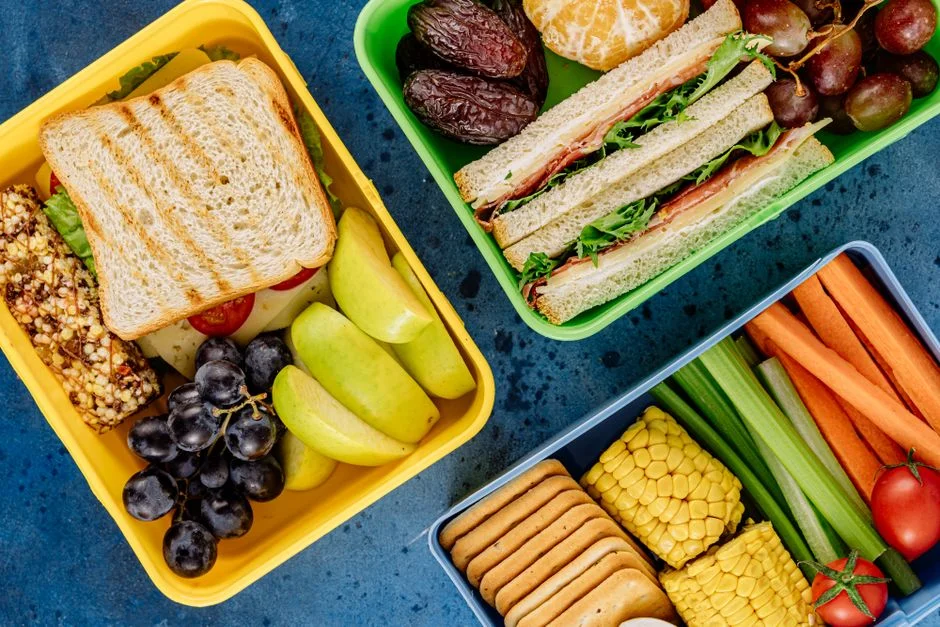
- Pack the 2 a.m. snack in advance. About 200 calories, such as half a sandwich and a piece of fruit, so the choice is made before you are tired.
- Skip the late big meal. If hunger hits hard, take the small snack over a full meal.
Tonight: decide your last-meal cutoff and pack the snack. If schedule chaos wrecks the plan for a night, that is normal. Pick it up with the next meal. For more on keeping steady rhythms under pressure, see rhythm before hacks.
References
[1] Booker AJ, Powell S, Fallowfield JL, Gibson R, et al. A Systematic Review of Nutrition Interventions for Shift Workers, With Subgroup Analysis of First Responder Populations. J Hum Nutr Diet, 2026;39(5):e70340. Population: systematic review (PROSPERO CRD42023421400) of 43 studies from 6,909 retrieved; 8 RCTs, 21 crossover RCTs, 14 observational; 4 first responder studies; mean participant age 33.2 years. DOI: https://doi.org/10.1111/jhn.70340. Finding as used: 49% of studies were crossover and 33% observational; 15 (35%) were simulated shift-work studies; first responder studies were 9%; the conclusion was that the current evidence base is insufficient to formulate evidence-based dietary guidelines for shift workers, limited by heterogeneity, small samples and moderate-to-high risk of bias; time-restricted eating, particularly strategies eliminating food intake during the biological night, showed beneficial effects on glucose tolerance compared with unrestricted or nocturnal eating; higher carbohydrate intake during night shifts was associated with elevated post-prandial glucose and insulin; evidence for cognitive and occupational performance outcomes was inconsistent, with some studies showing decrements in reaction times or alertness under no-eating-at-night conditions; one time-restricted eating study reported poorer nutritional behaviors in subsequent eating windows and another reported gastrointestinal discomfort; the review lists the reduction in VLDL particle size in Healthy Heroes among the favorable effects. ↑︎
[2] Chellappa SL, Qian J, Vujovic N, Morris CJ, Nedeltcheva A, Nguyen H, et al. Daytime eating prevents internal circadian misalignment and glucose intolerance in night work. Sci Adv, 2021;7(49):eabg9910. Population: 19 healthy adults (12 men, 7 women, mean age 26.5), 14-day laboratory protocol; 10 in the nighttime meal group, 9 in the daytime meal group. DOI: https://doi.org/10.1126/sciadv.abg9910. Finding as used: nighttime eating during simulated night work led to misalignment between central and peripheral (glucose) endogenous circadian rhythms and impaired glucose tolerance, whereas restricting meals to the daytime prevented it. ↑︎
[3] Manoogian ENC, Zadourian A, Lo HC, Gutierrez NR, Shoghi A, Rosander A, et al. Feasibility of time-restricted eating and impacts on cardiometabolic health in 24-h shift workers: The Healthy Heroes randomized control trial. Cell Metab, 2022;34(10):1442-1456.e7. Population: 137 firefighters working 24-hour shifts (ages 23-59, 9% female), randomized to 12 weeks of 10-hour time-restricted eating or standard of care (ClinicalTrials.gov NCT03533023). DOI: https://doi.org/10.1016/j.cmet.2022.08.018. Finding as used: the eating window fell from a mean of 14.13 h to 11.13 h with no adverse effects and improved quality of life (SF-36); compared with standard of care, time-restricted eating significantly decreased VLDL particle size; in participants with elevated cardiometabolic risk at baseline, there were significant reductions in glycated hemoglobin A1C and diastolic blood pressure versus standard of care. ↑︎
[4] Gupta CC, Centofanti S, Dorrian J, Coates A, Stepien JM, Kennaway D, et al. Altering meal timing to improve cognitive performance during simulated nightshifts. Chronobiol Int, 2019;36(12):1691-1713. Population: 39 healthy adults (59% male, mean age 24.5), 7-day laboratory study with four simulated nightshifts; meal at night (n=12), snack at night (n=13), no eating at night (n=14). DOI: https://doi.org/10.1080/07420528.2019.1676256. Finding as used: at 00:30 one group ate a meal (30% of 24-hour energy intake), one a snack (10%) and one did not eat; at 04:00 the snack group spent more time in the safe zone on the driving simulator and showed lower speed variability, lane variability, post-drive PVT-B lapses and reaction time on the 2-choice reaction time and running memory tasks compared with the meal and no-eating groups; the meal group reported greater subjective sleepiness; there was no difference in objective sleep between eating conditions. ↑︎
[5] Centofanti S, Dorrian J, Hilditch C, Grant C, Coates A, Banks S. Eating on nightshift: A big vs small snack impairs glucose response to breakfast. Neurobiol Sleep Circadian Rhythms, 2018;4:44-48. Population: 31 healthy participants (ages 21-35, 18 female) in a simulated nightshift laboratory study; 20 with identical breakfast consumption and complete data were analyzed. DOI: https://doi.org/10.1016/j.nbscr.2017.12.001. Finding as used: a big snack (2100 kJ, about 500 kcal) or small snack (840 kJ, about 200 kcal; half a sandwich and fruit) was eaten between 00:00 and 00:30 before an identical 2100 kJ breakfast at 08:30; in the big snack group, the glucose area under the curve after breakfast was significantly higher after the nightshift than at baseline (a 20.8% increase, SEM 5.6), while it was not significantly different between days in the small snack group. ↑︎

Kurt Greiner
Kurt is a digital strategist and IT professional blending emerging technology with practical application to help businesses and individuals streamline their digital presence. His current work focuses on the intersection of intentional living and technological resilience, exploring how individuals can leverage modern tools to navigate the second half of life with purpose.
Leave a Reply