
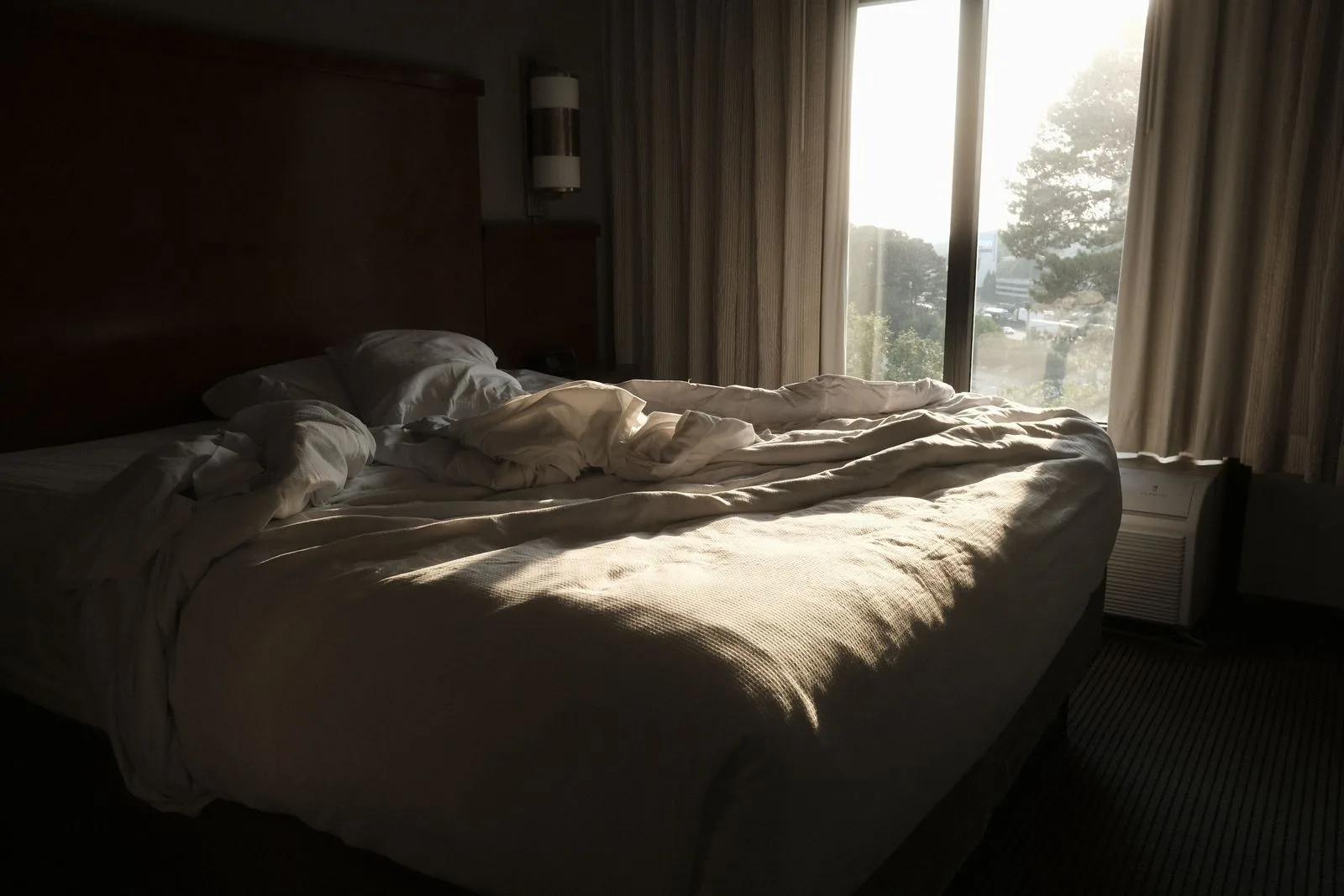
If low mood and an off-kilter sleep schedule travel together for you, start with a two-week sleep-timing log and bring it to your clinician. A new study of Australian adults with depression found that people whose sleep and body-clock features clustered together reported a different clinical picture, and a weaker response to two common antidepressant classes, than people without that cluster.[1]
What the study did
Researchers used data from the Australian Genetics of Depression Study, a nationwide cohort of people with depression. They sorted participants into a “circadian” or “non-circadian” subtype. To count as circadian, a person had to meet at least three of six features: social jetlag, seasonality, a late sleep midpoint, an evening chronotype, morning tiredness, and hypersomnia.[1]
Social jetlag is the gap between your sleep timing on work days and on free days.[2] Your sleep midpoint is the halfway point between falling asleep and waking up. About 23% of participants, 2,604 people, met the circadian threshold. That group was 80% female with an average age of about 38.[1]
What it found
Compared with the non-circadian group, people in the circadian group reported:[1]
- An earlier age at onset of depression.
- More severe clinical features, including hypomanic-like and psychotic-like experiences, suicidality, psychological distress and physical complaints.
- Weight gain during depressive episodes.
- A poorer response to selective serotonin reuptake inhibitors (SSRIs) (odds ratio 0.88, 95% CI 0.82 to 0.94) and to serotonin-noradrenaline reuptake inhibitors (SNRIs) (odds ratio 0.89, 95% CI 0.83 to 0.97), plus more side effects.
The circadian group also carried higher polygenic risk scores for ADHD, major depression, anxiety, bipolar disorder, body mass index, triglycerides, interleukin-6, insulin resistance and insomnia, along with a later genetic sleep midpoint (odds ratio 1.15, 95% CI 1.10 to 1.21).[1] In plain terms, the cluster of late sleep timing and low mood came with a recognizable clinical and genetic profile.
What the study cannot say
- It was a cross-sectional snapshot. It cannot say whether late sleep timing contributes to depression, follows from it, or both.
- Medication response was self-reported, not measured in a trial. Odds ratios of 0.88 and 0.89 describe a modest difference between groups, not what will happen for any one person.
- The subtype was defined by the authors’ own criteria, in a cohort that was mostly women with an average age near 38. It may not fit men or older adults the same way.
- The authors say the findings need independent replication. A circadian subtype is a research label, not a diagnosis, and not something to assign to yourself.
- The study did not test whether shifting your schedule treats depression.
What to do with it
You do not need a lab to collect the same information a clinician would find useful. Try this for 14 days:
- Each morning, write down your best estimate of when you fell asleep and when you woke up. Mark each day as a work day or a free day.
- Work out your sleep midpoint. If you fell asleep at 1:00 a.m. and woke at 8:00 a.m., your midpoint is 4:30 a.m.
- Compare your average midpoint on work days with your average on free days. The gap is your social jetlag.
- Add one line a day on the other features from the study: morning tiredness, sleeping much more than usual, mood shifting with the seasons, and weight changes during low stretches.
- Bring the log to your clinician and ask, “Could my sleep timing be part of this, and does it change how we think about treatment?”
If you take one thing, take the log. It turns “I sleep badly and feel low” into specifics a clinician can work with. Do not start, stop or change a medication on your own, including an antidepressant. If you are in crisis or thinking about suicide, call or text 988 (the Suicide and Crisis Lifeline in the US) right away.
References
[1] Tonini E, Crouse J, Shin M, et al. Clinical and genetic correlates of a circadian subtype of depression in the Australian Genetics of Depression Study. Br J Psychiatry. 2026 (published online Oct 20). DOI: 10.1192/bjp.2026.10798. Finding as used: In a cross-sectional analysis, 2,604 participants (23%; 80% female; mean age 37.87 years) met criteria for a circadian subtype (at least three of six features: social jetlag, seasonality, delayed sleep midpoint, evening chronotype, morning tiredness, hypersomnia). They reported earlier age at onset, more severe clinical features, weight gain during depressive episodes, poorer self-reported response to SSRIs (OR 0.88, 95% CI 0.82-0.94) and SNRIs (OR 0.89, 95% CI 0.83-0.97), and more side effects, and had higher polygenic risk scores for ADHD (OR 1.11), major depression (1.11), anxiety (1.10), bipolar disorder (1.09), BMI (1.09), triglycerides (1.10), interleukin-6 (1.08), insulin resistance (1.08), later sleep midpoint (1.15) and insomnia (1.08). The authors note independent replication is pending. ↑︎
[2] Wittmann M, Dinich J, Merrow M, Roenneberg T. Social jetlag: misalignment of biological and social time. Chronobiol Int. 2006;23(1-2):497-509. DOI: 10.1080/07420520500545979. Finding as used: the discrepancy between work-day and free-day sleep timing, between social and biological time, can be described as “social jetlag.” ↑︎

Kurt Greiner
Kurt is a digital strategist and IT professional blending emerging technology with practical application, exploring how individuals can leverage modern tools to navigate the second half of life with purpose.
Leave a Reply