
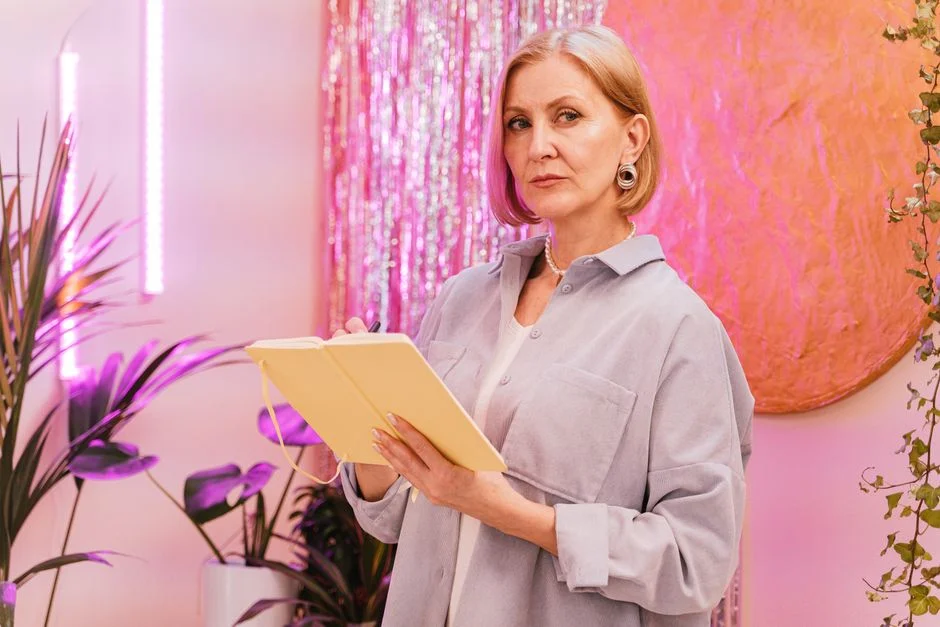
Don’t wait for symptoms to teach you what menopause is. A new Gallup survey found that only 37% of U.S. women say they have a good understanding of menopause symptoms, and just 25% say the same about their treatment options.[1] World Menopause Day is October 18, which makes a handy deadline for the one-page note and the appointment described below.
What the Gallup survey found
The Gallup-Pivotal Women’s Health Survey was fielded online from July 14 to 22, 2026, with 3,845 women and 1,296 men from the Gallup Panel.[1] Among the findings for women:
- Learning by living it. Of women who have been through menopause, 37% said they learned about it only when their own symptoms started. (That’s a different 37% from the one above, which is the share who rate their grasp of symptoms as good.)
- Few early conversations. Only 5% of women 18 to 34 and 27% of women 35 to 44 had ever discussed menopause with a healthcare provider, compared with 63% of women 45 to 54.
- Care took effort. Among women 35 and older who sought or received treatment, 24% said they had to push to be taken seriously or to get treatment.
- Real costs. Four in ten women who have been through menopause said it hurt their life or work in at least one way, including 28% who felt limited in how much effort they could give at work.
Read these with care. “Good understanding” is how women rate themselves, not a quiz score, and this is an online panel survey. It shows a gap in confidence and conversation, not a measured gap in medical knowledge.[1]
Three things worth knowing before symptoms start
1. The transition is long
In the Study of Women’s Health Across the Nation (SWAN), which followed 3,302 women at seven U.S. sites, the median total time with frequent vasomotor symptoms (hot flashes and night sweats) was 7.4 years. Among the 881 women whose final period could be pinpointed, frequent symptoms lasted a median of 4.5 years after it. Women who first had frequent symptoms while still premenopausal or in early perimenopause had the longest runs, a median of more than 11.8 years.[2] These figures describe women who had frequent symptoms, not every woman. The practical read: plan for a multi-year stretch, not a few rough months.
2. Aches count
A 2026 systematic review pooled 37 observational studies covering 93,021 women. Muscle or joint pain was reported by 40% of premenopausal women, 57% of perimenopausal women and 59% of postmenopausal women, a 1.35-fold higher risk in perimenopause than before it.[3] The studies varied a lot and were observational, so the review can’t say menopause caused the pain, and aches have plenty of other causes. Still, the International Menopause Society chose chronic pain at midlife as its World Menopause Day 2026 theme, saying it remains underestimated in both research and care.[4] A new ache belongs on your list for the appointment, not in the “just getting older” pile.
3. Treatment has a timing window
The Menopause Society’s 2022 position statement says hormone therapy is still the most effective treatment for hot flashes and night sweats and for genitourinary symptoms (vaginal and urinary changes), and that it prevents bone loss and fracture. For women under 60 or within 10 years of menopause onset with no contraindications, it rates the benefit-risk ratio as favorable for bothersome hot flashes and bone-loss prevention. Beyond 10 years or after 60, the ratio looks less favorable because of higher absolute risks of heart disease, stroke, blood clots and dementia.[5] That’s the idea behind the timing hypothesis. For vaginal symptoms that over-the-counter products don’t relieve, the statement recommends low-dose vaginal estrogen or other therapies in women without a reason to use systemic hormone therapy.[5] Whether any of this fits you depends on your history, which is why the conversation matters.
Do this before October 18
A one-page note and one booked appointment beat waiting until symptoms force the issue.
- Write the note. List your last three period start dates and any change in cycle length; the three symptoms that changed most this year (sleep, aches, focus, mood, hot flashes, vaginal or urinary changes); how they affect your work and days; and your personal and family history of blood clots, breast cancer and heart disease.
- Book the visit. Ask for an appointment specifically about midlife health or menopause, so it doesn’t get squeezed into a visit for something else. In your 40s, don’t wait for a crisis.
- Ask three questions. Could these changes be perimenopause, and what else should we rule out? Am I a candidate for hormone therapy, and what are the non-hormone options? What should I track, and when should I come back?
- Say what isn’t working. If you hear “it’s just part of aging,” ask what the next step would be, or ask for a referral to a clinician who focuses on menopause care.
Talk to a clinician promptly about very heavy bleeding, bleeding between periods or new heart palpitations, rather than assuming they come from perimenopause.
For a script to bring with you, see how to talk to your doctor about menopause symptoms. For the symptoms people miss, read Perimenopause Is Not Just Hot Flashes. And if your own menopause came early, here’s what a recent brain-health study found.
References
[1] Gallup. Women Enter Menopause Without Clear Information (Gallup-Pivotal Women’s Health Survey). Gallup News, 2026. Population: 3,845 U.S. women and 1,296 men on the Gallup Panel, online survey conducted July 14-22, 2026. Link: https://news.gallup.com/poll/714596/women-enter-menopause-without-clear-information.aspx. Finding as used: 37% of women say they have a good understanding of menopause symptoms and 25% say the same about treatment options; among women who have experienced menopause, 37% say they learned about it only when they had symptoms themselves; only 5% of women 18-34 and 27% of women 35-44 (versus 63% of women 45-54) have ever discussed menopause with a healthcare provider; among women 35 and older who sought or received treatment, 24% say they had to push to be taken seriously or to receive treatment; four in ten women who have experienced menopause say it negatively affected their life or work in at least one way, including 28% who felt limited in how much effort they could give at work. Limitation: self-rated understanding from an online panel, not a knowledge test. ↑︎
[2] Avis NE, Crawford SL, Greendale G, Bromberger JT, et al. Duration of Menopausal Vasomotor Symptoms Over the Menopause Transition. JAMA Intern Med, 2015;175(4):531-539. Population: Study of Women’s Health Across the Nation (SWAN), 3,302 women at 7 US sites; analyses included 1,449 women with frequent vasomotor symptoms. DOI: https://doi.org/10.1001/jamainternmed.2014.8063. Finding as used: median total duration of frequent vasomotor symptoms was 7.4 years; among 881 women with an observable final menstrual period, median persistence after it was 4.5 years; women premenopausal or early perimenopausal at symptom onset had the longest duration (median more than 11.8 years). ↑︎
[3] Kruse C, McKechnie T, Dworsky-Fried Z, et al. Musculoskeletal Manifestations of Perimenopause: A Systematic Review and Meta-Analysis of 93,021 Women. JBJS Open Access, 2026;11(1):e25.00254. Population: 37 observational studies across 22 countries, 93,021 women. DOI: https://doi.org/10.2106/jbjs.oa.25.00254. Finding as used: muscle or joint pain prevalence was 40% (95% CI 32%-49%) in premenopausal, 57% (48%-65%) in perimenopausal and 59% (50%-67%) in postmenopausal women; perimenopausal versus premenopausal risk ratio 1.35 (95% CI 1.25-1.46); heterogeneity was high (I2 88.6%) and the authors state the findings are observational and need confirmation. ↑︎
[4] International Menopause Society. World Menopause Day 2026: Chronic Pain At Midlife. imsociety.org, 2026. Population: not a study; society campaign page. Link: https://www.imsociety.org/education/world-menopause-day-2026/. Finding as used: World Menopause Day is held every year on 18 October; the 2026 theme is chronic pain at midlife, which the society says affects a significant proportion of women during and after the menopause transition yet remains underestimated in both research and care. ↑︎
[5] The 2022 Hormone Therapy Position Statement of The North American Menopause Society Advisory Panel. The 2022 hormone therapy position statement of The North American Menopause Society. Menopause, 2022;29(7):767-794. Population: expert consensus position statement. DOI: https://doi.org/10.1097/GME.0000000000002028. Finding as used: hormone therapy remains the most effective treatment for vasomotor symptoms and the genitourinary syndrome of menopause and has been shown to prevent bone loss and fracture; for women younger than 60 or within 10 years of menopause onset with no contraindications the benefit-risk ratio is favorable for bothersome vasomotor symptoms and prevention of bone loss; for women who start more than 10 years from onset or after age 60 it appears less favorable because of greater absolute risks of coronary heart disease, stroke, venous thromboembolism and dementia; for genitourinary symptoms not relieved with over-the-counter therapies in women without indications for systemic hormone therapy, low-dose vaginal estrogen or other therapies are recommended. ↑︎

Kurt Greiner
Kurt is a digital strategist and IT professional blending emerging technology with practical application to help businesses and individuals streamline their digital presence. His current work focuses on the intersection of intentional living and technological resilience, exploring how individuals can leverage modern tools to navigate the second half of life with purpose.
Leave a Reply