
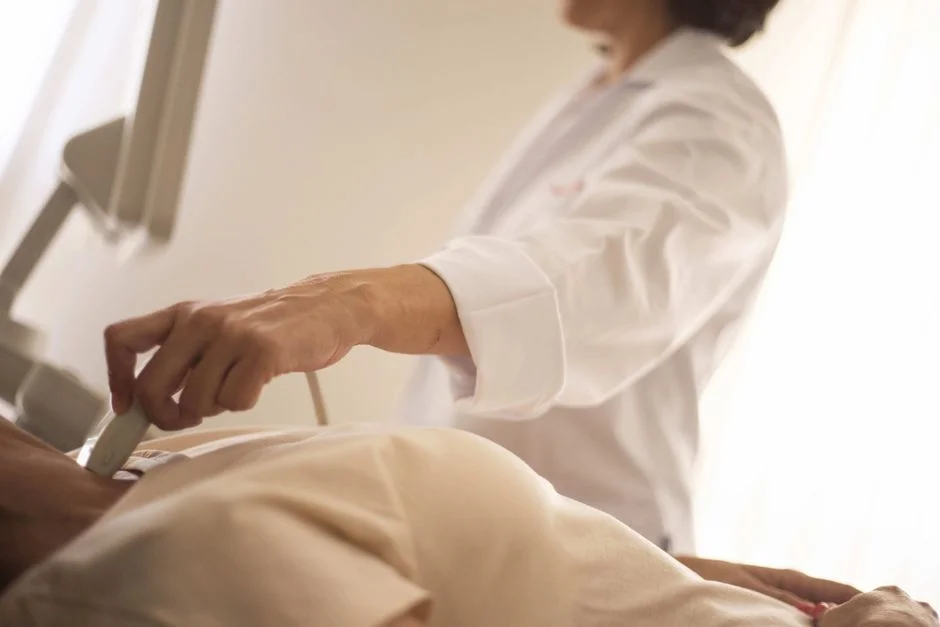
Dreading a needle biopsy, a blood draw or a scan? Plan your distraction before you’re on the table. In a new randomized trial, people who watched a calming ocean video in a VR headset during a thyroid fine-needle aspiration biopsy (a quick sample taken from a nodule with a thin needle) rated their pain a little lower afterward. The result was shaky, though, and their anxiety scores didn’t differ from the comparison group’s. The takeaway is a habit, not a gadget: give your attention somewhere to go, and ask your care team what’s allowed.
What the trial tested
Researchers at Gaziantep City Hospital in Türkiye randomly assigned 100 adults with suspected thyroid nodules to wear a VR headset during their biopsy or to have it as usual. The average age was about 48, and 88 of the 100 were women. Before the procedure, 52 of them said they were afraid of the biopsy. The headset group watched a relaxing 360-degree underwater video with music for the 6 to 10 minutes the procedure took, on a smartphone-based headset. Everyone rated their pain on a 0 to 10 scale and filled out anxiety and fear-of-pain questionnaires before and after.[1]
What it found
- Pain: a small edge for VR, with an asterisk. Average pain in the VR group fell from 4.9 to 3.7 out of 10. In the comparison group it went from 4.6 to 4.4. But the two groups’ final scores weren’t statistically different (P = .12), which means the gap could be chance. The difference only crossed the significance line (3.6 vs. 4.5, P = .048) after the researchers adjusted for starting pain and two other factors that happened to differ between the groups. Those two adjustments weren’t planned in advance.[1]
- Anxiety: no clear difference. Anxiety scores dropped a lot after the biopsy in both groups (from 19.5 to 9.1 with VR, from 16.7 to 10.5 without), and the groups didn’t differ significantly.[1]
- Fear of pain: no significant difference between the groups either.[1]
- Safety: no problems noticed. The researchers observed or heard of no dizziness, nausea, eye strain or discomfort from the headset.[1]
How much weight this deserves
Not much yet, and the authors say so. The adjusted pain effect was smaller than the smallest effect the trial was designed to detect, and they call for larger trials to confirm it. Patients and staff knew who had the headset, the research team had no formal way to conceal group assignment in advance, and it was one hospital with mostly women (88%) and mostly people with a primary school education (73%). It also only measured the short term.[1]
Researchers call a trial like this underpowered for the effect it found: too small to tell a real but modest benefit from a lucky split of the groups. That doesn’t mean VR doesn’t help. It means this study can’t settle it.
The pain people were bracing for is real for some of them. In an earlier study of 218 adults having thyroid needle biopsies, about 1 in 4 (24%) rated their pain at 3 out of 10 or higher right afterward, and 13% still did half an hour later. People who scored higher on an anxiety questionnaire before the biopsy tended to report more pain.[2] That’s a correlation, not proof that calming down lowers pain, but it’s a reason to take pre-procedure nerves seriously.
What to do with this
The idea behind VR here is distraction: occupying your attention so the procedure gets less of it. This trial didn’t show that VR does that reliably, and it didn’t test cheaper versions. But asking about distraction costs nothing. These steps are our practical suggestions, not things the trial tested. Before your next biopsy, blood draw or scan:
- Ask what’s allowed. “Can I wear headphones? Can I play music or a podcast? Can someone stay with me?” Policies vary by clinic and procedure, and some scans need you to hear instructions or hold still.
- Pick your distraction ahead of time. Choose something that holds your attention, like a playlist you know or a podcast you’re already into, and try it at home first. Don’t count on improvising in the waiting room.
- Tell the team you’re nervous. Ask them to narrate each step and to tell you before the needle goes in. Staff can often adjust the pace if they know.
- Name the worst part. If pain is your main worry, ask what comfort options they offer for this specific procedure.
- Skip the gadget purchase. One small, open-label trial with a shaky result isn’t a reason to buy a headset.
If dread has you thinking about skipping a procedure, tell your clinician before the day instead of canceling. A needed test is worth keeping, and the plan can sometimes change to make it easier.
References
[1] Karadeniz E, Arda H, Arslan Cellat EG. Effects of Virtual Reality on Pain, Anxiety, and Fear During Thyroid Fine-Needle Aspiration Biopsy: Open-Label Randomized Controlled Trial. J Med Internet Res, 2026;28:e103829. Population: 100 adults with suspected thyroid nodules at Gaziantep City Hospital, Türkiye (mean age 47.5, 88% women), randomized 50/50 to a VR headset or standard care; registered NCT06792929. DOI: https://doi.org/10.2196/103829. Finding as used: pain on a 0 to 10 visual analog scale fell from 4.86 to 3.70 with VR and from 4.64 to 4.42 without; the unadjusted between-group difference was not significant (P=.12; Cohen d=-0.33, 95% CI -0.72 to 0.07); after adjustment for baseline pain, previous thyroid mass diagnosis and voice tone changes (the latter two nonprespecified), adjusted mean pain was 3.627 vs 4.493 (P=.048); the adjusted effect (f=0.207) was smaller than the minimum detectable effect (f=0.283); anxiety (Beck Anxiety Inventory) fell from 19.48 to 9.14 with VR and from 16.70 to 10.50 without, with no significant between-group difference (adjusted P=.48); fear of pain did not differ significantly (adjusted P=.07); 52 of 100 participants reported fear of the biopsy; no dizziness, nausea, eye strain or discomfort was observed or reported; limitations include no blinding, no formal allocation concealment, a single center, 88% women, 73% primary school education and short-term follow-up only. ↑︎
[2] Leboulleux S, Borget I, Labro S, Bidault S, et al. Frequency and Intensity of Pain Related to Thyroid Nodule Fine-Needle Aspiration Cytology. Thyroid, 2013;23(9):1113-1118. Population: 218 consecutive patients (mean age 53) undergoing thyroid nodule fine-needle aspiration at a single center. DOI: https://doi.org/10.1089/thy.2012.0461. Finding as used: pain of 30 mm or more on a 100-mm visual analog scale was reported by 24% of patients immediately after the procedure and 13% at 30 minutes; the pre-procedure anxiety score (STAI) was significantly correlated with pain scores at both times. ↑︎

Kurt Greiner
Kurt is a digital strategist and IT professional blending emerging technology with practical application to help businesses and individuals streamline their digital presence. His current work focuses on the intersection of intentional living and technological resilience, exploring how individuals can leverage modern tools to navigate the second half of life with purpose.
Leave a Reply