
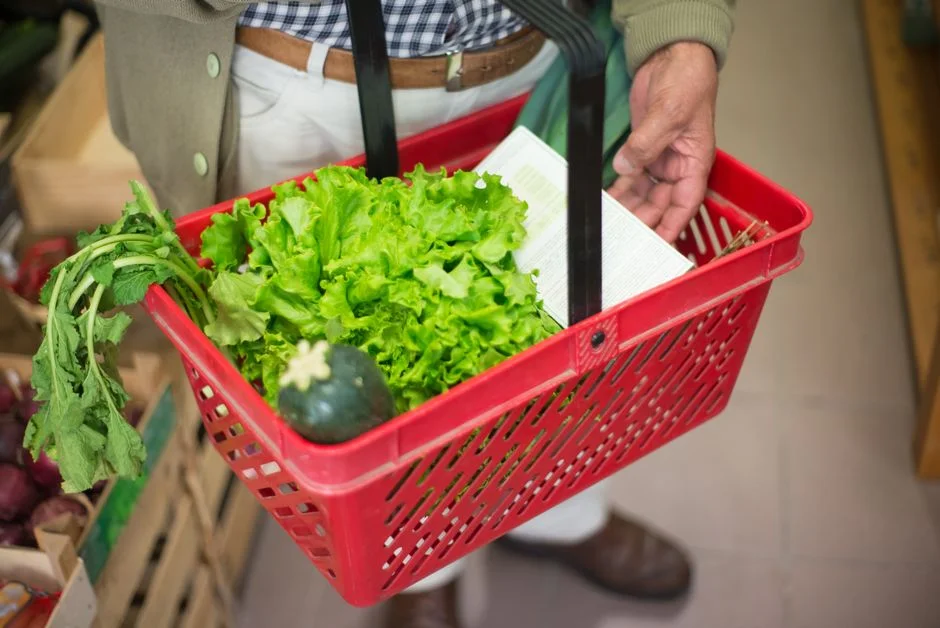
Where people shop and what is at home may both matter for diet, and many food choices are made in the store. A randomized trial tested whether dietitian-led help in a supermarket chain, guided by shopping data, could improve diet quality over three months.
What the trial did
The study enrolled 247 adults, 139 women and 108 men, in a multisite trial run with a large supermarket chain.[1] Participants were assigned in a 2:2:1 ratio to one of two dietary education strategies or to an enhanced control group that received more education than usual care.[1]
Both strategies used in-person sessions with a dietitian, guided by each person’s purchase data. The second strategy added online shopping tools, home delivery, help choosing healthier purchases, meal planning and recipes.[1]
What changed
The main measure was a diet-quality score based on DASH (Dietary Approaches to Stop Hypertension), an eating pattern rich in fruit, vegetables and whole grains that was first studied for blood pressure. Higher scores mean eating closer to that pattern. After three months, the combined strategy groups scored 4.7 points higher than the control group (95% confidence interval 0.9 to 8.5; P = 0.02).[1] The second strategy scored 3.8 points higher than the first (95% confidence interval 0.8 to 6.9; P = 0.01).[1]
Those are changes in a diet score after three months. Blood pressure and weight were secondary outcomes. Compared with the control group, they did not improve significantly, although systolic blood pressure fell within each strategy group. This summary reports no disease outcomes.
A smaller study of home food
A separate, smaller study looked at what was in the home. In a 10-week pilot of 23 parents of elementary-age children, households ended with more fruit items and fewer kinds of sugar-sweetened drinks at home. The average number of fruit items rose from 7.7 to 9.4, and sugar-sweetened drink types fell from 3.2 to 1.7.[2] That pilot had no control group, so it shows what changed, not what caused it.
Who was studied
Most participants were middle-aged women from routine primary care, living in households with a reasonable income. About 64% had obesity, and about 73% took blood pressure medication. These are not typical of the general population, so the results may not carry over.[1]
Kroger, the supermarket chain, funded part of the authors’ effort and provided staff, store space and purchasing data. Two authors reported funding from the company, and one reported other industry relationships.[1]
What to take from it
Getting help with food choices where you shop may improve diet quality, at least over a few months. The evidence is one trial with a company connection, and it does not show lasting effects.
If you take blood pressure or blood sugar medication, or have a kidney or heart condition, talk with your clinician before making major changes to your diet.
References
[1] Steen DL, Helsley RN, Bhatt DL, King EC, Summer SS, et al. Efficacy of supermarket and web-based interventions for improving dietary quality: a randomized, controlled trial. Nature Medicine. 2022. DOI: 10.1038/s41591-022-02077-7. Registration NCT03895580. Finding: 247 adults randomized 2:2:1 to two dietitian-led supermarket strategies or an enhanced control; DASH score +4.7 vs control at 3 months (95% CI 0.9 to 8.5; P = 0.02); Strategy 2 +3.8 vs Strategy 1 (95% CI 0.8 to 6.9; P = 0.01). Population mostly middle-aged, female, routine primary care; 63.6% obesity; 72.9% on hypertension medication. Funding: The Kroger Company funded part of the authors’ effort and provided staff, store space and purchasing data. Full text read. ↑︎ a b c d e f g
[2] Cassinat R, Bruening M, Crespo NC, Gutiérrez M, Chavez A, et al. Effects of a Community-Based Pilot Intervention on Home Food Availability among U.S. Households. International Journal of Environmental Research and Public Health. 2020. DOI: 10.3390/ijerph17228327. Finding: 10-week pilot, parents of elementary-age children (n=23); fruit items 7.7 to 9.4 (P = .004); sugar-sweetened beverage types 3.2 to 1.7 (P = .004); uncontrolled pre-post design. Abstract only. ↑︎
This post draws on one full-text trial from 2022 and one abstract from 2020. Other studies were not included.

Kurt Greiner
Kurt is a digital strategist and IT professional blending emerging technology with practical application, exploring how individuals can leverage modern tools to navigate the second half of life with purpose.
Leave a Reply