
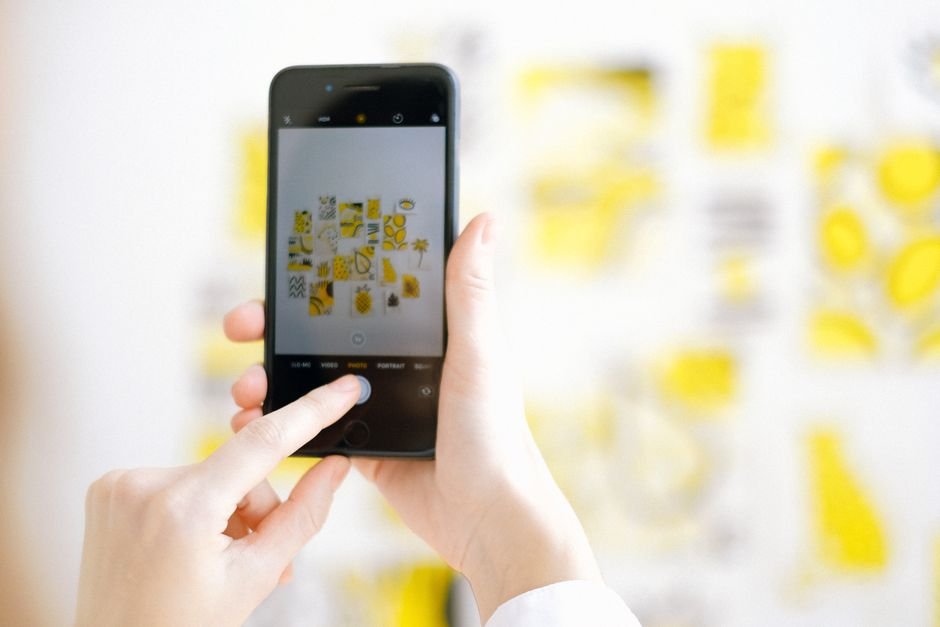
Taking a screenshot feels like you’ve dealt with the information. In seven preregistered experiments, people who screenshotted pieces of art remembered them worse than people who only looked at them, and the researchers found no consistent payoff elsewhere to make up for it.[1] Here’s what they tested, what they didn’t, and how to use screenshots without counting on them as memory.
What the researchers tested
Earlier research found a “photo-taking impairment effect“: you remember a thing less well if you photographed it than if you simply looked at it. That finding has since been extended to smartphone screenshots. This paper, by Sophia Fabrizio, Rebecca Lurie and Deanne Westerman, asked two questions. Does screenshotting hurt memory, and does it give anything back?
The second question comes from an idea called cognitive offloading. If you save information in an outside store, like a phone, you may rely on that store instead of your own memory. The authors reasoned that if this happens automatically when you screenshot, the effort you save might show up somewhere else, such as better memory for what you see next or better performance on a later task. They tested that using pieces of art as the material.
What they found
Screenshotting led to “pronounced” memory costs. And the benefits the offloading idea predicts didn’t show up consistently. Across four measures, screenshotting did not improve any of these compared with just viewing:[1]
- Source memory, meaning memory for where or how you came across an item.
- Recognition memory for items shown afterward.
- Performance on a later cognitive task.
There was one small exception. Recall for a second block of art improved modestly, but only under very specific experimental methods and only when the memory test was scored very leniently.[1] The authors’ summary is that screenshotting cost memory without any compensating benefit.
What this study can’t tell you
- It was artwork. The task was viewing pieces of art. Looking at a painting on a phone isn’t the same as capturing a recipe, a boarding pass or a slide from a meeting.
- It measured lab memory tasks. The abstract reports performance on those tasks. It doesn’t report anything about everyday memory or long-term effects, so it isn’t evidence that screenshots damage your memory in general.
- The mechanism isn’t settled. Cognitive offloading is the idea the authors set out to test. The experiments didn’t find the offsetting benefits that idea predicts, but the abstract doesn’t pin down why the costs appear.
- We read the abstract only. The full paper is behind a paywall, so details such as sample size and who took part aren’t covered here.
What to do with it
The study didn’t test any fix, so treat these as small, low-cost habits rather than proven remedies.
- Use a screenshot as storage, not as learning. It’s a good way to keep a ticket or a map. In this study, taking the screenshot didn’t help people remember what was on the screen.
- If you want to remember something, give it a moment before you capture it. Read it, say it back in your own words, then screenshot it if you still need the original. This part is untested here.
- Keep the screenshots you’ll actually look at again. A capture you never reopen is storage you’ve forgotten about.
If handing small tasks to your devices makes you wonder what else you’re handing over, we looked at a bigger version of the question in why outsourcing judgment to AI may cost you practice.
References
[1] Fabrizio SP, Lurie R, Westerman DL. Digital amnesia: The aftermath of a screenshot. Memory & Cognition, 2026. DOI: https://doi.org/10.3758/s13421-026-01921-2. Finding as used (abstract): seven preregistered experiments in which participants screenshotted or viewed pieces of art; screenshotting led to pronounced memory costs with no consistent benefits across four measures (source memory, recognition memory for subsequently presented items, performance on a subsequent cognitive task); a modest recall boost for a second block of art appeared only under very specific methods and lenient scoring. Experimental lab study; full text not reviewed. ↑︎

Kurt Greiner
Kurt is a digital strategist and IT professional blending emerging technology with practical application to help businesses and individuals streamline their digital presence. His current work focuses on the intersection of intentional living and technological resilience, exploring how individuals can leverage modern tools to navigate the second half of life with purpose.
Leave a Reply