
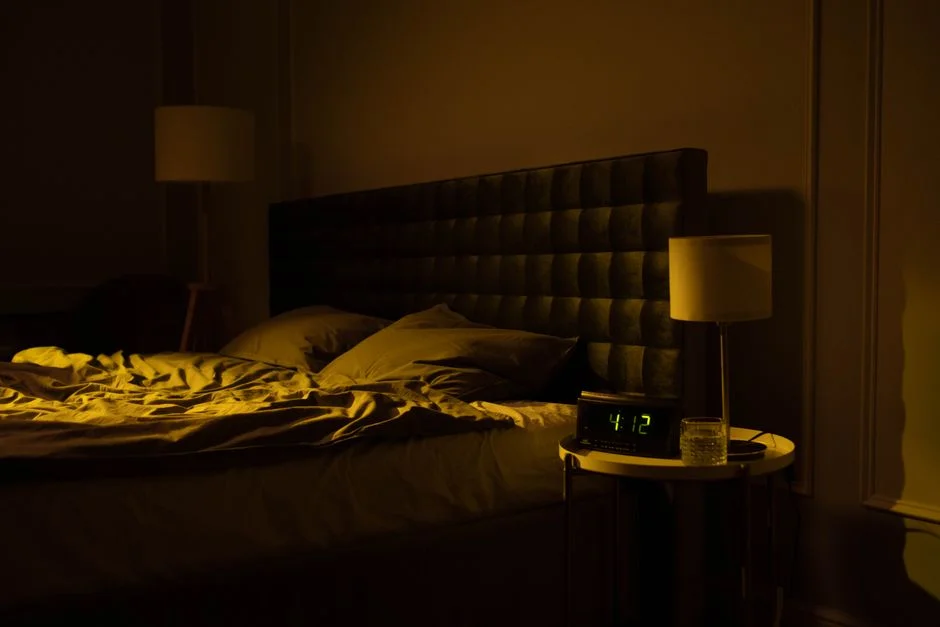
Bedtime stacking means piling a bunch of calming or useful things into bed with you: skincare, a journal, a book, a tea, a tablet. It looks cozy online. The sleep advice is to take most of that stack out of the bed and keep it nearby.
What bedtime stacking is
It is a social media trend where creators show the “stack” of items they bring to bed. According to Everyday Health, the items can include skincare products, journals, books, electronics, tea, supplements, lavender spray, even a red light mask or scalp massager.
The idea behind it is reasonable. If you are going to wind down anyway, why not make it comfortable, and why not swap doomscrolling for something gentler? Sleep medicine physician Neal Walia of UCLA Health told Everyday Health that replacing scrolling with calmer activities is not a bad idea in itself. His issue is where it happens.
Why the bed itself matters
Sleep clinicians often advise reserving the bed for sleep, and keeping other wakeful activity out of it. This is part of stimulus control, a core piece of cognitive behavioral therapy for insomnia (CBT-I). The thinking is that if you are awake in bed doing things, your brain starts to read the bed as a cue for being awake.
A 2023 systematic review and network meta-analysis of 23 randomized studies found that stimulus control is an effective treatment for insomnia compared with control conditions. It also found that not every stimulus control instruction looked essential, particularly the ones meant to recondition the bedroom for sleep, and that the evidence was limited: study quality was generally poor and the authors urged caution.[1] In other words, the “bed is for sleep” rule is a long-standing clinical habit, and the research behind its exact mechanism is less settled than the advice sounds.
Where the evidence is stronger
Two things are better supported. First, delaying sleep on purpose goes with worse sleep. In a 14-day diary study of 280 young adults, more bedtime procrastination was associated with poorer sleep restoration, later sleep timing, less efficient sleep and shorter sleep duration, independent of whether people were morning or evening types.[2] This was observational, so it shows an association, not cause.
Second, screens in bed. In a survey of 45,202 Norwegian students aged 18 to 28, each extra hour of screen time after getting into bed was associated with 59% higher odds of insomnia symptoms and about 24 minutes less sleep. The link held for social media and other screen activities alike.[3] It was a cross-sectional survey of students, so it cannot show that screens caused the poorer sleep, and it did not study bedtime stacking.
No study I found tested bedtime stacking directly. What follows is built from the broader sleep research and the experts quoted in Everyday Health.
A simple way to try it
- Move the stack to a chair or couch. Give yourself 30 to 60 minutes of wind-down outside the bed, as the experts in the Everyday Health piece suggest.
- Keep only the calm items: reading, journaling, gentle stretching or meditation. Leave email and other tasks out of the stack.
- Wrap up screens in the 30 to 60 minutes before bed, or charge your phone across the room.
- When you feel sleepy, move to bed and do one screen-free, quiet thing if you want to, then lights out.
- Run it for a week and note how long it takes you to fall asleep. That is your own data, and it is more useful than a trend.
If you lie awake most nights for weeks, talk to your clinician. Insomnia has well-studied treatments, including CBT-I, and a clinician can check for other causes.
References
- Verreault MD, Granger E, Neveu X, Delage JP, Bastien CH, Vallieres A. The effectiveness of stimulus control in cognitive behavioural therapy for insomnia in adults: A systematic review and network meta-analysis. Journal of Sleep Research. 2024;33(3):e14008. https://doi.org/10.1111/jsr.14008 Finding used: 23 randomized studies of adults with insomnia; stimulus control effective versus control conditions; not all instructions seem essential, especially those meant to recondition the bedroom for sleep; study quality generally poor, results to be interpreted cautiously. ↑︎
- Carlson SE, Baron KG, Johnson KT, Williams PG. The thief of (bed)time: Examination of the daily associations between bedtime procrastination and multidimensional sleep health. Sleep Health. 2023;9(6):903-909. https://doi.org/10.1016/j.sleh.2023.08.002 Finding used: 280 young adults, 14 days of sleep diaries; greater bedtime procrastination associated with poorer sleep restoration, later sleep timing, less efficient sleep and shorter duration, independent of chronotype. ↑︎
- Hjetland GJ, Skogen JC, Hysing M, Gradisar M, Sivertsen B. How and when screens are used: comparing different screen activities and sleep in Norwegian university students. Frontiers in Psychiatry. 2025. https://doi.org/10.3389/fpsyt.2025.1548273 Finding used: n=45,202 students aged 18-28, cross-sectional; one extra hour of screen time after going to bed associated with 59% higher odds of insomnia symptoms and 24 minutes shorter sleep; no difference between social media and other activities. ↑︎

Kurt Greiner
Kurt is a digital strategist and IT professional blending emerging technology with practical application, exploring how individuals can leverage modern tools to navigate the second half of life with purpose.
Leave a Reply