
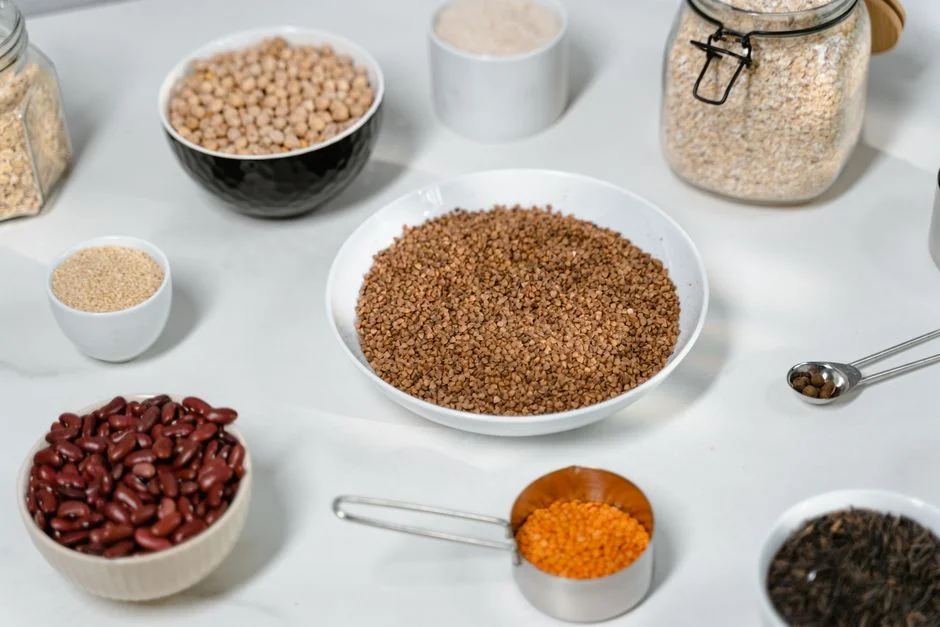
Add one fiber source to each meal, and raise the total over a couple of weeks instead of overnight. That’s the core of “fiber layering,” a trend a Prevention writer tried for 14 days and described as leaving her more regular.[1] One person’s two weeks is an anecdote. Here is what the research on fiber and regularity does and doesn’t back up.
What fiber layering is
It’s a softer cousin of “fibermaxxing,” which means eating as much fiber as possible, fast. Layering spreads a moderate amount of fiber across the day, mostly from whole foods such as fruit, vegetables, legumes, nuts and whole grains, and builds up gradually. The Prevention piece quotes a dietitian who points out that this is advice dietitians have given for a long time under a new name.[1] There is no published trial of “layering” as a named protocol that we could find, so everything below is about fiber in general.
Does fiber help regularity?
For people with constipation, it may help, modestly. A meta-analysis of five randomized trials found that dietary fiber increased stool frequency compared with placebo. It did not clearly improve stool consistency, laxative use or painful bowel movements.[2]
A second, larger review pooled seven randomized controlled trials of fiber supplements in adults with chronic idiopathic constipation. About 77% of people assigned to fiber responded to treatment, versus 44% on placebo. Fiber also increased stool frequency and softened stools. It also caused more flatulence, and the authors rated the overall quality of evidence as low, with a high risk of bias.[3]
Two limits matter here. These trials enrolled people with constipation, so they don’t tell us whether a person with normal bowel habits will become “more regular than ever.” And neither review tested layering or compared a varied fiber pattern against a single source.
How much fiber is enough?
A Lancet series of reviews covering 185 prospective studies and 58 clinical trials found that people with the highest fiber intakes had roughly 15% to 30% lower all-cause and cardiovascular mortality and lower rates of coronary heart disease, stroke, type 2 diabetes and colorectal cancer than people with the lowest intakes. The risk reduction was greatest at 25 to 29 grams per day, and the authors noted that higher intakes might protect even more.[4] That figure rests mainly on observational data, so it shows an association, and the findings apply to the general population, not to people with a chronic disease.
The Prevention article cites targets of about 25 grams a day for women and 38 grams for men.[1] Those are common public-health targets; the Lancet range above is the evidence we verified.
A practical way to try it
- Start from what you eat now. Add one fiber source to each meal: oats or berries at breakfast, beans or lentils in a salad or soup, a vegetable you don’t usually eat at dinner.
- Raise the total over two weeks or so. This is a sensible precaution rather than a tested protocol: the review above found more gas with fiber, and the Prevention writer reported an unwanted side effect of her own.[1][3]
- Favor whole foods, and keep eating the protein and fat that fill out your meals. Fiber shouldn’t crowd them out.
- Track one thing: how your bowel movements feel after two weeks. If constipation persists, or you notice blood in your stool or unexplained weight loss, talk to your clinician instead of adding more fiber.
What we can’t say
We can’t say layering works better than any other way of eating more fiber, that a particular number of fiber types per day or week matters, or that it improves the gut microbiome. We found no verified trial for those claims, so we left them out. What the evidence does support is simple: more fiber (the constipation trials mostly tested supplements, not food), at a pace your gut tolerates, tends to help stool frequency in people who are constipated and is linked to better long-term health.
References
[1] Prevention. “I Tried ‘Fiber Layering’ for 14 Days, and My Gut’s Now More Regular Than Ever.” 30 October 2026. prevention.com. Used for the description of fiber layering and one writer’s personal experience; not a scientific study. ↑︎
[2] Yang J, Wang HP, Zhou L, Xu CF. Effect of dietary fiber on constipation: a meta analysis. World J Gastroenterol, 2012;18(48):7378-7383. DOI: https://doi.org/10.3748/wjg.v18.i48.7378. Finding as used (abstract): five RCTs; dietary fiber significantly increased stool frequency versus placebo, with no significant difference in stool consistency, treatment success, laxative use or painful defecation. ↑︎
[3] Christodoulides S, Dimidi E, Fragkos KC, Farmer AD, Whelan K, Scott SM. Systematic review with meta-analysis: effect of fibre supplementation on chronic idiopathic constipation in adults. Aliment Pharmacol Ther, 2016;44(2):103-116. DOI: https://doi.org/10.1111/apt.13662. Finding as used (abstract): seven RCTs; 113 of 147 (77%) assigned to fibre responded versus 61 of 140 (44%) on placebo (RR 1.71, 95% CI 1.20-2.42); fibre increased stool frequency and softened stool consistency; flatulence was higher with fibre; overall quality of evidence low, high risk of bias. ↑︎
[4] Reynolds A, Mann J, Cummings J, Winter N, Mete E, Te Morenga L. Carbohydrate quality and human health: a series of systematic reviews and meta-analyses. Lancet, 2019;393(10170):434-445. DOI: https://doi.org/10.1016/S0140-6736(18)31809-9. Finding as used (abstract): 185 prospective studies and 58 clinical trials; observational data suggest a 15-30% decrease in all-cause and cardiovascular mortality, coronary heart disease, stroke, type 2 diabetes and colorectal cancer comparing highest with lowest fibre consumers; greatest risk reduction at 25 to 29 g/day; findings limited to risk reduction in the general population rather than people with chronic disease. ↑︎

Kurt Greiner
Kurt is a digital strategist and IT professional blending emerging technology with practical application, exploring how individuals can leverage modern tools to navigate the second half of life with purpose.
Leave a Reply