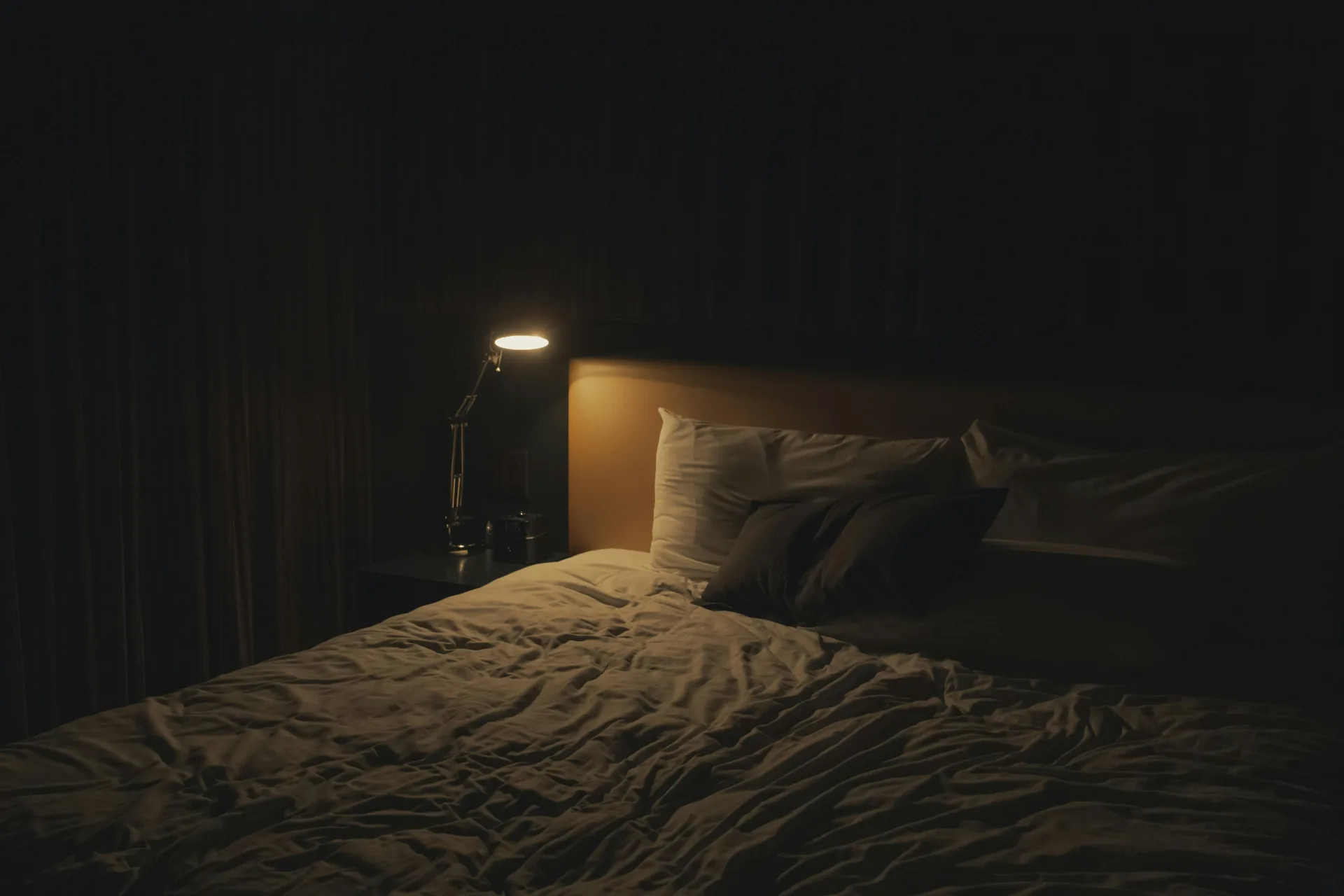
If you have ever jolted awake just as you were drifting off, you have felt what researchers call a sleep start: a sudden, involuntary jerk as you fall asleep. A new study from Austria and Germany asked what else tends to show up in people who have them often. The authors describe sleep starts as generally considered benign, but they also point out that a substantial subgroup reports distress and sleep disruption. That subgroup is where the study looked.[1]
Who took part and how
The researchers ran an online survey in German with 194 adults in Austria and Germany, collected between June 2020 and January 2021. Participants were recruited through mailing lists, flyers, social media, general practitioners and rehabilitation clinics. The mean age was 32.8 years, and 148 of the 194 participants were women. People were placed in the sleep-start group if they reported sudden awakenings at least weekly plus at least one other symptom. The 96 people in that group were compared with 98 people in a comparison group. The weekly cutoff was introduced after the data were in, as a refinement, so treat it as a working definition rather than a diagnostic line.[1]
What they found
Compared with the comparison group, the sleep-start group reported poorer sleep quality, with the difference significant at P < .05.[1]
Anxiety stood out. The sleep-start group also reported more anxiety and depressive symptoms. In a regression that included several factors, higher anxiety symptoms still went with more frequent sleep starts (P = .014). Depressive symptoms were not a significant predictor once the other factors were in the model.[1]
Taken together, the final model explained about 27 percent of the variation in how often sleep starts happened. Poorer sleep quality, a set of dysfunctional beliefs about sleep, higher anxiety and younger age each contributed.[1]
What this study can and cannot tell you
This was a cross-sectional study. Everyone was measured at one point in time, and sleep and mood were self-reported. The authors are direct about what that means: causality cannot be inferred from cross-sectional self-report data, and the results highlight potentially relevant links. The study shows what tends to travel together, not what causes what. It cannot say whether sleep starts drive poorer sleep or anxiety, or whether the relationship runs the other way.[1]
A few other limits matter. The sample was a convenience sample and not representative, and women were over-represented in the sleep-start group. The authors describe every association analysis as exploratory. Self-report could not reliably separate sleep starts from related experiences such as exploding head syndrome or hypnagogic hallucinations. The survey ran in 2020 and early 2021, but the paper was published in 2026, so the data are older than the publication date suggests.[1]
What to do with it
This study does not show that sleep starts are harmful, and it did not test any treatment. The sleep-start group was defined by weekly or more frequent jolts, so the findings say little about occasional ones. If they come often and your sleep or anxiety is also struggling, that pairing is what the study linked.[1] It is worth raising with a clinician who can look at the whole picture.
References
[1] Grünberger T, Höhn C, Schabus M, Laireiter AR. Sleep starts: Phenomenology and associations with sleep, psychological, and demographic characteristics. PLOS Mental Health, 2026;3(11):e0000737. Population: 194 adults in Austria and Germany, convenience sample, online cross-sectional survey (data collected June 2020 to January 2021). DOI: https://doi.org/10.1371/journal.pmen.0000737. Finding as used: the sleep-start group reported poorer sleep quality than controls (P < .05); in regression, higher anxiety symptoms were associated with more frequent sleep starts (P = .014), depression was not significant (P = .437), and the final model explained 26.9% of variance. The authors state that causality cannot be inferred from cross-sectional self-report data. ↑︎ a b c d e f g h

Kurt Greiner
Kurt is a digital strategist and IT professional blending emerging technology with practical application, exploring how individuals can leverage modern tools to navigate the second half of life with purpose.
Leave a Reply