
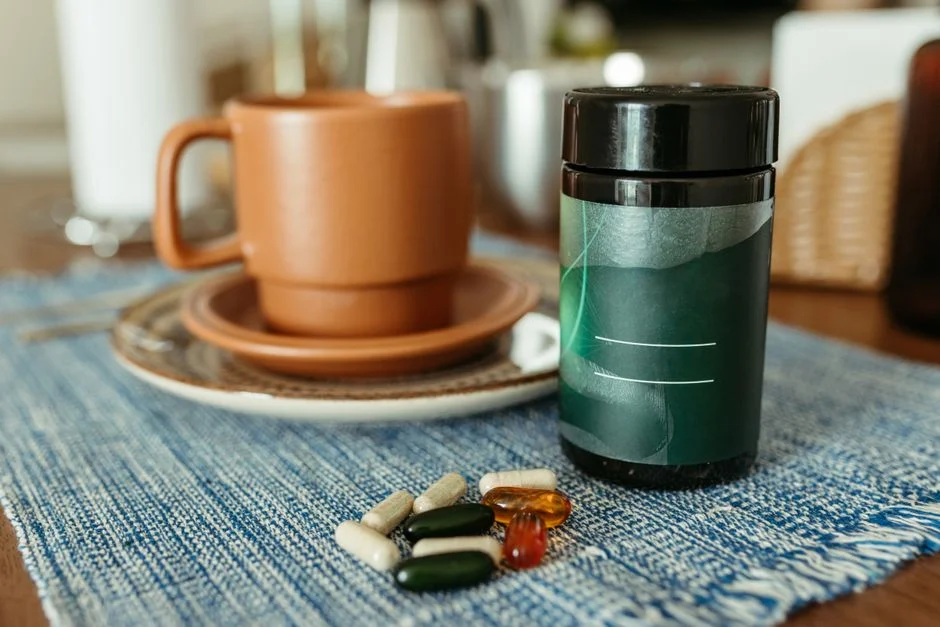
Check your supplement shelf for six names: turmeric or curcumin, green tea extract, ashwagandha, Garcinia cambogia, red yeast rice and black cohosh. These are the botanicals most often reported in cases of supplement-related liver injury, and a national survey estimates about 15.6 million US adults took at least one of them in a recent month.[1] Here is what that survey found, what it cannot tell you, and a five-minute check you can do tonight.
What the survey found
Researchers analyzed data from the National Health and Nutrition Examination Survey (NHANES), a nationally representative survey of the US population. They looked at 9,685 adults enrolled between January 2017 and March 2020 and asked what supplements each person had taken in the past 30 days.[1]
- 57.6% of adults had used some herbal or dietary supplement.
- 4.7% had used at least one of the six botanicals above. Scaled to the US population, that is an estimated 15,584,599 adults.
- Turmeric products were the most common (236 users in the sample), followed by green tea (92), ashwagandha (28), Garcinia cambogia (20), red yeast rice (20) and black cohosh (19).
- Users of these botanicals skewed older. Compared with people who took no supplements, adults 40 to 59 had 2.36 times the odds and adults 60 and older had 3.96 times the odds of being a user. Users were also more likely to have arthritis (odds ratio 2.27).
The authors put the number in context: 15.6 million is similar to the estimated number of US adults taking simvastatin (about 14.0 million) or a nonsteroidal anti-inflammatory drug (about 14.8 million), both of which the authors describe as potentially hepatotoxic drugs. They also point to a lack of regulatory oversight on manufacturing and testing of botanical products, and say clinicians should be aware of possible adverse events.[1]
What it does not show
This was a cross-sectional survey of self-reported use. It counted who was taking these products. It did not measure liver damage, and it does not show that any of these botanicals harmed the people who took them. The six were chosen because they are among the most frequently reported in cases of drug-induced liver injury, which is a reason for attention, not proof that these products are unsafe at the doses people take. The data also end in March 2020, and product use may have shifted since.[1]
The five-minute check
- Read every supplement label you own. Turmeric, green tea extract and black cohosh often sit inside blends for joints, menopause or “metabolism,” so look at the ingredient list, not just the product name.
- Look each ingredient up in LiverTox, the free database on drug and supplement liver effects run by the National Institute of Diabetes and Digestive and Kidney Diseases.
- Write down each product, dose and start date, and bring the list to your next appointment. Ask your clinician whether it makes sense for you, especially if you take a statin or a daily pain reliever, or if you have liver disease.
- Do not stop a prescribed medication on your own. If you take red yeast rice for cholesterol, talk to your clinician before swapping it for or adding it to a statin.
Start with one rule: add one new supplement at a time, so that if something feels off you know what to bring up. This piece draws on a Natural Awakenings brief; the figures above come from the original study.
References
[1] Likhitsup A, Chen VL, Fontana RJ. Estimated Exposure to 6 Potentially Hepatotoxic Botanicals in US Adults. JAMA Netw Open, 2024;7(8). Population: 9,685 adult NHANES participants enrolled January 2017 to March 2020. DOI: https://doi.org/10.1001/jamanetworkopen.2024.25822. Finding as used: 4.7% (95% CI 3.9%-5.7%) of adults used at least one of 6 potentially hepatotoxic botanicals in the past 30 days, an estimated 15,584,599 US adults; users were older, had higher educational level and were more likely to have arthritis; the count was comparable to estimated users of simvastatin and NSAIDs. ↑︎

Kurt Greiner
Kurt is a digital strategist and IT professional blending emerging technology with practical application, exploring how individuals can leverage modern tools to navigate the second half of life with purpose.
Leave a Reply