
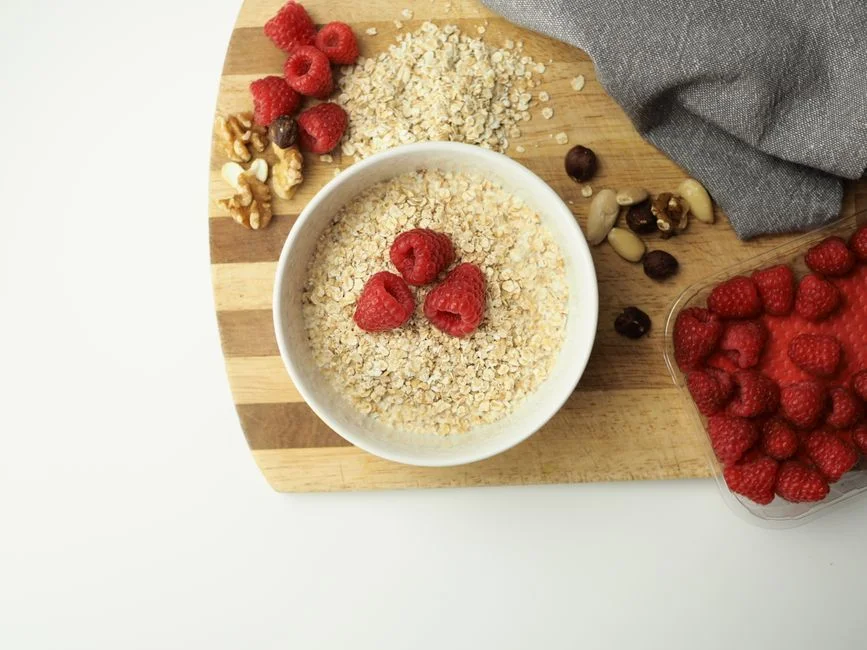
You can nudge ApoB down with food and exercise, but the effects in trials are modest, so measure first and judge by your own repeat test. Here are the levers studied most, and what each one is likely to do.
What ApoB measures
ApoB counts the cholesterol-carrying particles in your blood. LDL-C counts the cholesterol inside them. In most people, particle number tracks cardiovascular risk more closely than LDL-C or triglycerides do.[1] In a review of 15 studies that compared the markers, ApoB outperformed LDL-C as a marker of cardiovascular risk in all 9 studies that tested it.[2]
Get your number first
Ask your clinician to add ApoB to your next blood work. Why Standard Lipid Panels Can Tell an Incomplete Story and Three Blood Tests Worth Asking Your Clinician About explain why. If your result is high, whether to add medication is your clinician’s call, and the steps below sit alongside that, not in place of it.
1. Add soluble fiber
A meta-analysis of 181 randomized trials found that soluble fiber supplementation reduced LDL cholesterol, total cholesterol, triglycerides and ApoB.[3] For oats specifically, a pooled analysis of 58 trials found that about 3.5 grams a day of oat beta-glucan lowered ApoB by about 0.03 g/L (3 mg/dL) and LDL-C and non-HDL-C as well.[4] That is a small drop, and for LDL-C and non-HDL-C the results varied a lot between trials.
- Eat oats most days, and check labels for beta-glucan grams. 3.5 g/day was the median dose in the trials.
- Treat fiber as one lever among several, not a fix on its own.
2. Swap your fats
An American Heart Association advisory concludes that replacing saturated fat with unsaturated fats lowers LDL cholesterol, a related measure. Replacing it with mostly refined carbohydrates and sugars is not linked to lower cardiovascular disease rates.[5] This advisory measured LDL cholesterol, not ApoB, so treat it as a likely rather than a proven ApoB lever. In practice: unsaturated fats such as olive oil and nuts where you would have used butter, not white bread and sweets.
3. Keep exercising
In a meta-analysis of 25 studies and 1,429 participants, exercise training produced a small but statistically significant favorable change in ApoB. The authors note that more trials are needed.[6] Keep it up, but do not expect a large ApoB change from it alone.
What to expect
These changes are modest on their own. Retest after a few months with your clinician. If your ApoB is still high, ask what else is worth considering.
References
↑︎ Glavinovic T, Thanassoulis G, de Graaf J, et al. Physiological bases for the superiority of apolipoprotein B over low-density lipoprotein cholesterol and non-high-density lipoprotein cholesterol as a marker of cardiovascular risk. J Am Heart Assoc. 2022;11(20):e025858. DOI: https://doi.org/10.1161/JAHA.122.025858. Finding used: except in dysbetalipoproteinemia, the total number of apoB particles determines cardiovascular risk, and LDL-C and triglycerides can obscure that relation.
↑︎ Sehayek D, Cole J, Bjornson E, et al. ApoB, LDL-C, and non-HDL-C as markers of cardiovascular risk. J Clin Lipidol. 2025. DOI: https://doi.org/10.1016/j.jacl.2025.05.024. Finding used: in a systematic review of 15 discordance studies with 593,354 participants, apoB outperformed LDL-C as a marker of cardiovascular risk in 9 of 9 studies and was more accurate than non-HDL-C in 7 studies.
↑︎ Ghavami A, Ziaei R, Talebi S, et al. Soluble fiber supplementation and serum lipid profile: a systematic review and dose-response meta-analysis of randomized controlled trials. Adv Nutr. 2023;14(3):465-474. DOI: https://doi.org/10.1016/j.advnut.2023.01.005. Finding used: across 181 randomized trials (14,505 participants), soluble fiber supplementation significantly reduced LDL cholesterol, total cholesterol, triglycerides and apolipoprotein B.
↑︎ Ho HVT, Sievenpiper JL, Zurbau A, et al. The effect of oat beta-glucan on LDL-cholesterol, non-HDL-cholesterol and apoB for CVD risk reduction: a systematic review and meta-analysis of randomised-controlled trials. Br J Nutr. 2016;116(8):1369-1382. DOI: https://doi.org/10.1017/S000711451600341X. Finding used: across 58 trials (n = 3,974), a median 3.5 g/day of oat beta-glucan lowered LDL-cholesterol (-0.19 mmol/L), non-HDL-cholesterol (-0.20 mmol/L) and apoB (-0.03 g/L, about 3 mg/dL) versus control diets; heterogeneity was considerable for LDL and non-HDL.
↑︎ Sacks FM, Lichtenstein AH, Wu JHY, et al. Dietary fats and cardiovascular disease: a presidential advisory from the American Heart Association. Circulation. 2017;136(3):e1-e23. DOI: https://doi.org/10.1161/CIR.0000000000000510. Finding used: replacing saturated fat with unsaturated fats lowers LDL cholesterol; replacing saturated fat with mostly refined carbohydrates and sugars is not associated with lower cardiovascular disease rates.
↑︎ Downes D, Goodman S, van der Touw T, et al. Effect of exercise training on apolipoproteins: meta-analysis and trial sequence analysis. Int J Sports Med. 2025. DOI: https://doi.org/10.1055/a-2580-0722. Finding used: across 25 studies with 1,429 participants, exercise training produced a small, statistically significant favorable change in apolipoprotein B; the trial sequence analysis did not reach futility for apoB, meaning more trials are needed.

Kurt Greiner
Kurt is a digital strategist and IT professional blending emerging technology with practical application, exploring how individuals can leverage modern tools to navigate the second half of life with purpose.
Leave a Reply