
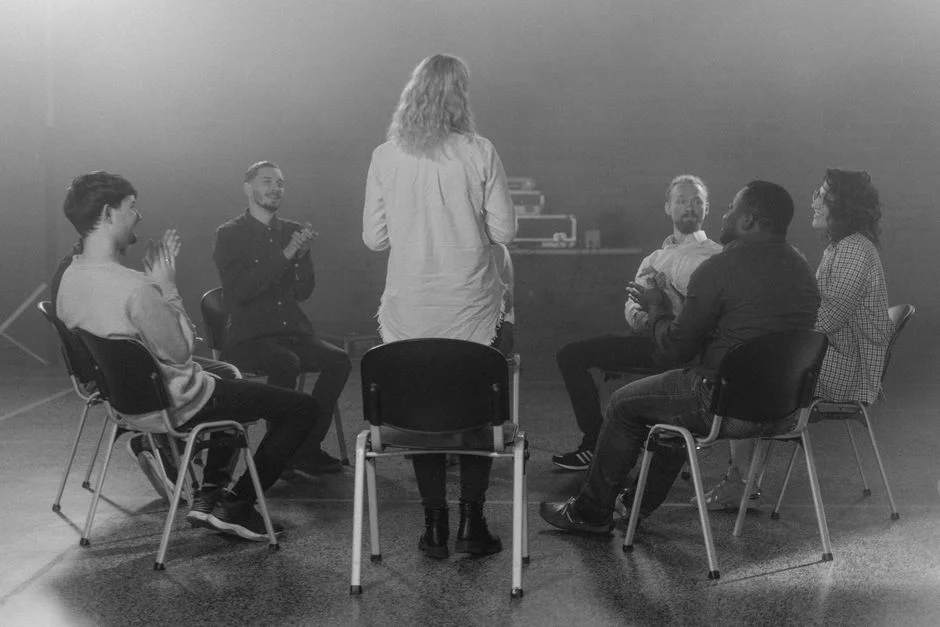
World Mental Health Day is October 10, and its 2026 theme is “Lived Experiences Heard: Real Voices, Real Change.”[1] In care, that idea often takes the form of peer support: help from someone who has lived with a mental health condition themselves. The trials suggest it may help some people feel more in charge of their recovery. They do not show that it reduces symptoms, so treat it as an addition to clinical care, not a replacement.
What peer support is
Peer support means support from someone who has lived through a mental health condition, delivered one-on-one or in a group. The research below looks at programs run inside or alongside mental health services, so the people studied were adults using those services, and one review focused on severe mental illness. Keep that in mind when you apply the numbers to your own situation.
What the trials found
Three systematic reviews pooled the randomized controlled trials of peer support:
- One-to-one peer support. A 2020 review of 19 trials with 3,329 participants found it may have a modest positive effect on self-reported recovery and empowerment. It had no effect on clinical symptoms or service use. Many studies reported their data incompletely, which the authors said suggests bias in the evidence base.[2]
- Group peer support. A 2021 review of eight trials with 2,131 participants found it may make small improvements in overall recovery, but not in hope or empowerment individually, or in clinical symptoms. Six of the eight trials had a high or unclear risk of bias, and the authors said there was not enough evidence to recommend routine use across mainstream mental health services.[3]
- Severe mental illness. A 2014 review of 18 trials with 5,597 participants found little or no evidence of effects on hospitalization, overall symptoms or satisfaction with services. Some trials showed benefits for hope, recovery and empowerment, but not consistently.[4]
How to read that
The pattern is consistent across the three reviews. Peer support was associated with modest gains in how people rate their own recovery and sense of control, and it did not reliably change symptom measures. Self-reported recovery and empowerment matter to the people reporting them, and that is a fair reason to try a group. But the evidence is thin and uneven, so a peer group works best as a supplement to treatment that is working for you, not a stand-in for it.
How to use this
- Tell a clinician what you have noticed. Say what has changed and for how long, and ask whether they know of local peer-led options.
- Try a free, peer-led group. NAMI Connection is a free, peer-led support group for adults who have experienced symptoms of a mental health condition, led by people with mental health conditions. DBSA chapters offer peer-run support groups that are not group therapy. Availability varies by location.
- Keep what’s working. Stay in any treatment you are already receiving, and don’t start, stop or change a medication on your own.
- Listen first when someone opens up. The theme asks for exactly that. Ask what would help before offering fixes.
If you suspect something has been missed in your own history, Adult ADHD and Bipolar Disorder: Why Both Get Missed shows how to build a timeline before an assessment.
Only a qualified clinician, such as a psychiatrist or psychologist, can diagnose or treat a mental health condition, so talk to one about what you are noticing.
If you’re in crisis or having thoughts of suicide, call or text 988 to reach the 988 Suicide & Crisis Lifeline (US), available 24/7. If you’re outside the US, contact your local emergency number.
References
[1] World Federation for Mental Health. World Mental Health Day 2026: Announcing This Year’s Theme. wfmh.global, August 11, 2026. Population: not a study; organization announcement. Link: https://wfmh.global/news/2026.26-08-11_world-mental-health-day-2026. Finding as used: the theme of World Mental Health Day 2026 is “Lived Experiences Heard: Real Voices, Real Change.” ↑︎
[2] White S, Foster R, Marks J, Morshead R, et al. The effectiveness of one-to-one peer support in mental health services: a systematic review and meta-analysis. BMC Psychiatry, 2020;20:534. Population: 23 studies reporting 19 trials, 3,329 participants, adults using mental health services. DOI: https://doi.org/10.1186/s12888-020-02923-3. Finding as used: one-to-one peer support may have a modest positive impact on self-reported recovery and empowerment; no impact on clinical symptoms or service use; incomplete reporting of data in many studies suggested bias in the evidence base. ↑︎
[3] Lyons N, Cooper C, Lloyd-Evans B. A systematic review and meta-analysis of group peer support interventions for people experiencing mental health conditions. BMC Psychiatry, 2021;21:315. Population: 8 randomized trials, 2,131 participants. DOI: https://doi.org/10.1186/s12888-021-03321-z. Finding as used: group peer support may make small improvements to overall recovery but not hope or empowerment individually, or clinical symptoms; six trials had high or unclear risk of bias; insufficient evidence to recommend routine implementation across mainstream mental health services. ↑︎
[4] Lloyd-Evans B, Mayo-Wilson E, Harrison B, Istead H, et al. A systematic review and meta-analysis of randomised controlled trials of peer support for people with severe mental illness. BMC Psychiatry, 2014;14:39. Population: 18 randomized trials, 5,597 participants with severe mental illness. DOI: https://doi.org/10.1186/1471-244X-14-39. Finding as used: little or no evidence that peer support was associated with positive effects on hospitalisation, overall symptoms or satisfaction with services; some evidence of positive effects on hope, recovery and empowerment, though not consistent within or across types of peer support; high risk of bias. ↑︎

Kurt Greiner
Kurt is a digital strategist and IT professional blending emerging technology with practical application to help businesses and individuals streamline their digital presence. His current work focuses on the intersection of intentional living and technological resilience, exploring how individuals can leverage modern tools to navigate the second half of life with purpose.
Leave a Reply