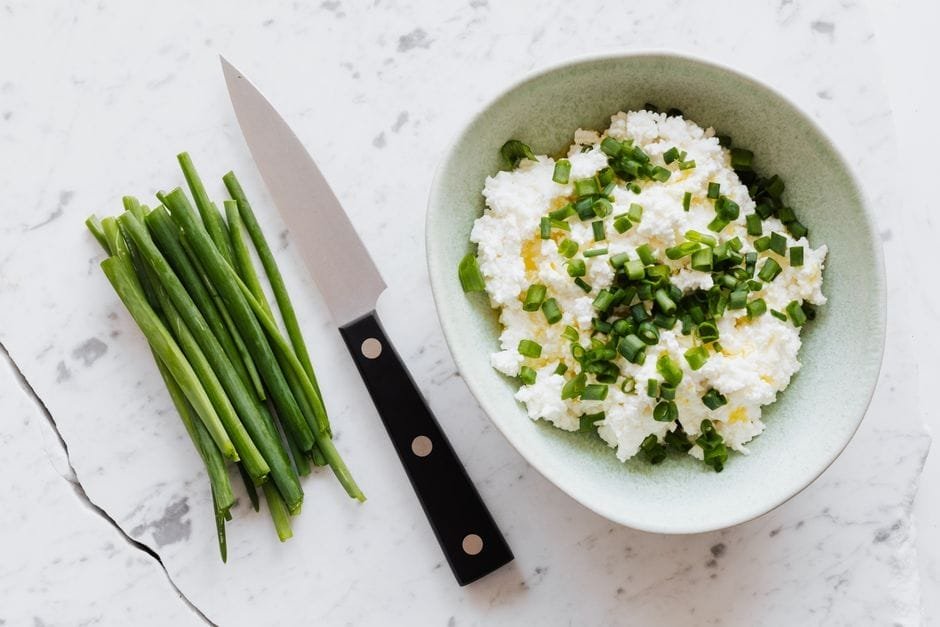
Is cottage cheese good for you? It is a convenient, protein-dense food with useful minerals, which makes it a reasonable choice for most people. The trade-offs are a modest effect on fullness and a fair amount of sodium. If you have severe kidney disease or have been told to limit sodium, check with your doctor first. Here is what the nutrition data says.
Protein: how much it offers
The USDA lists 2% cottage cheese at about 10.4 grams of protein and 81 calories per 100 grams (roughly 3.5 ounces).[1] The 1% version is listed at about 12.4 grams of protein and 72 calories per 100 grams.[1] Brands differ, so check the label on the tub you buy.
Protein matters more with age. The PROT-AGE Study Group, an international expert panel, recommends that adults over 65 average at least 1.0 to 1.2 grams of protein per kilogram of body weight per day, and 1.2 grams or more if they exercise. People with severe kidney disease are an exception and may need to limit protein, so ask your doctor first. The panel also said the evidence on protein timing is not yet strong enough for specific recommendations.[2]
Fullness: a modest effect
A review of the research on protein and weight management found that higher-protein meals produce a modest satiety effect, meaning greater perceived fullness and higher levels of satiety hormones. The same review did not find that this lowered food intake at the next meal, and longer-term results were mixed, with benefits mainly in people who stuck with the higher-protein plan.[3] So cottage cheese can help a snack feel more filling, but it is not a guaranteed appetite switch.
Minerals and vitamins it supplies
Per 100 grams, the USDA lists 2% cottage cheese at about 111 mg of calcium, 150 mg of phosphorus, 0.47 micrograms of vitamin B12, 11.9 micrograms of selenium, and 0.25 mg of riboflavin.[1] Calcium and phosphorus together form the mineral structure of bones and teeth.[4][5] For scale, the NIH lists 138 mg of calcium in a cup of 1% cottage cheese, about 11% of the Daily Value, which is less than a cup of plain low-fat yogurt (415 mg) or a cup of nonfat milk (299 mg).[4]
Sodium: the trade-off
The USDA lists 2% cottage cheese at about 308 mg of sodium per 100 grams and the 1% version at about 406 mg.[1] The FDA’s Daily Value for sodium is 2,300 mg,[6] so 100 grams supplies roughly 13% (2%) to 18% (1%) of it. The lower-fat version is not lower in sodium here, so compare labels if you watch your salt.
The takeaway
Cottage cheese is a convenient, protein-dense food with useful minerals, and 1% and 2% versions are both reasonable choices. Check the label for sodium as well as protein, since both vary by brand, and pair it with fruit or vegetables for fiber. If a clinician has told you to limit sodium, factor that in before making it a daily habit.
References
↑︎ U.S. Department of Agriculture, Agricultural Research Service. FoodData Central: Cheese, cottage, lowfat, 2% milkfat (FDC ID 172182, SR Legacy); Cheese, cottage, lowfat, 1% milkfat (FDC ID 173417, SR Legacy). https://fdc.nal.usda.gov/fdc-app.html#/food-details/172182/nutrients
↑︎ Bauer J, Biolo G, Cederholm T, et al. Evidence-based recommendations for optimal dietary protein intake in older people: a position paper from the PROT-AGE Study Group. J Am Med Dir Assoc. 2013;14(8):542-559. DOI: https://doi.org/10.1016/j.jamda.2013.05.021
↑︎ Leidy HJ, Clifton PM, Astrup A, et al. The role of protein in weight loss and maintenance. Am J Clin Nutr. 2015;101(6):1320S-1329S. DOI: https://doi.org/10.3945/ajcn.114.084038
↑︎ National Institutes of Health, Office of Dietary Supplements. Calcium: Fact Sheet for Health Professionals. https://ods.od.nih.gov/factsheets/Calcium-HealthProfessional/
↑︎ National Institutes of Health, Office of Dietary Supplements. Phosphorus: Fact Sheet for Health Professionals. https://ods.od.nih.gov/factsheets/Phosphorus-HealthProfessional/
↑︎ U.S. Food and Drug Administration. Daily Value on the Nutrition and Supplement Facts Labels. https://www.fda.gov/food/nutrition-facts-label/daily-value-nutrition-and-supplement-facts-labels

Kurt Greiner
Kurt is a digital strategist and IT professional blending emerging technology with practical application to help businesses and individuals streamline their digital presence. His current work focuses on the intersection of intentional living and technological resilience, exploring how individuals can leverage modern tools to navigate the second half of life with purpose.
Leave a Reply