
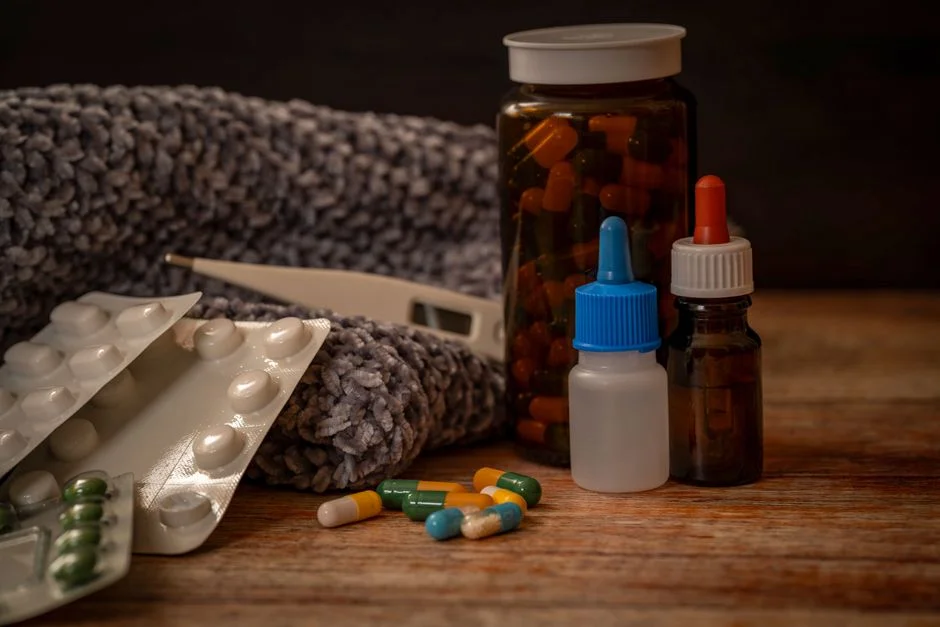
If a medicine in your cabinet is past its date, it helps to know what that date is actually telling you before you toss it or take it.
What the expiration date means
The U.S. Food and Drug Administration (FDA) has required an expiration date on prescription and over-the-counter medicines since 1979. FDA calls the date a critical part of deciding whether a product is safe to use and will work as intended. Expired products can be less effective, or risky, because the chemical makeup changes or the strength drops. After the date passes there is no guarantee the medicine is safe and effective, and FDA’s advice is that if your medicine has expired, do not use it.[1]
Where the real risk is
FDA points to two specific problems. Certain expired medications are at risk of bacterial growth. And a weakened antibiotic can fail to treat an infection, which can lead to more serious illness and to antibiotic resistance.[1]
Rescue medicines deserve extra care because you need them to work the first time. The patient instructions for EpiPen and EpiPen Jr epinephrine auto-injectors say the device has an expiration date and should be replaced before it.[2] If you carry an epinephrine auto-injector, check its date now and replace it before it expires. The label also says the device does not replace emergency care: get emergency medical help right away after using it.[2] If you rely on a medicine for a medical condition and yours has expired, call your pharmacist or prescriber about a replacement.
What lab testing shows, and why it does not change the advice
You may have heard that many drugs last well past their dates. There is real data behind that. The Shelf Life Extension Program, run by FDA for the Department of Defense, tests stockpiled drugs. A review of 122 drug products (3,005 lots) found that 88% of lots were extended at least one year beyond the original date, by an average of 66 months. The extra stability varied a lot from lot to lot, and the authors said the finding applies to drugs that are properly stored and that quality can only be assured by periodic testing of each lot.[3]
That is a controlled program with laboratory testing of each lot. The study is from 2006 and covered military stockpile products, and 12% of lots were not extended by a year or more. A bottle in your home has not been tested, so you cannot know whether it kept its strength. That is why FDA’s advice for consumers stays the same.[1] FDA also warns that children and pets can be harmed by taking leftover medicines, so keep all medicines out of their reach.[1]
Store it well, then dispose of it safely
Storage affects how long a medicine keeps its strength. FDA says improper storage, such as a damp bathroom cabinet, can reduce effectiveness even before the date. For most medicines, a cool, dry place like a dresser drawer or closet shelf is better, away from hot appliances and the sink. Always check the label first, because some medicines need the refrigerator.[1]
For expired medicine, FDA prefers a drug take-back location or a prepaid mail-back envelope. If neither is available, check whether the medicine is on FDA’s flush list; if not, follow FDA’s instructions for discarding it in household trash.[1]
References
↑︎ U.S. Food and Drug Administration. Don’t be tempted to use expired medicines. Content current as of 10/31/2024. URL: https://www.fda.gov/drugs/safe-disposal-medicines/dont-be-tempted-use-expired-medicines
↑︎ EpiPen and EpiPen Jr (epinephrine injection) patient instructions for use. DailyMed, U.S. National Library of Medicine. URL: https://dailymed.nlm.nih.gov/dailymed/drugInfo.cfm?setid=cb1b0dc7-6f5f-45fc-96c7-a6006b88fdc6
↑︎ Lyon RC, Taylor JS, Porter DA, Prasanna HR, Hussain AS. Stability profiles of drug products extended beyond labeled expiration dates. J Pharm Sci. 2006;95(7):1549-1560. DOI: https://doi.org/10.1002/jps.20636

Kurt Greiner
Kurt is a digital strategist and IT professional blending emerging technology with practical application to help businesses and individuals streamline their digital presence. His current work focuses on the intersection of intentional living and technological resilience, exploring how individuals can leverage modern tools to navigate the second half of life with purpose.
Leave a Reply