
Brittle nails, peeling nails, nails that break at the worst moment: most nail complaints are common enough that nobody thinks twice. White spots are different, and the cause is often more specific than “your nails are just dry.”
The condition has a name: leukonychia
White discoloration of the nails is called leukonychia. A 2022 clinical review describes it as usually not an alarming sign, though it can sometimes point to a systemic disease or an inherited condition.[1] Clinicians sort it by where the white color comes from. In true leukonychia the change is inside the nail plate, and it does not fade when you press on the nail. In apparent leukonychia the change is in the nail bed and fades with pressure. In pseudoleukonychia only the nail surface is affected, often by flaking.[1]
Common reasons for white spots
- Trauma. Small white dots are probably the most common form of leukonychia, and they are usually caused by injury to the nail. Over-zealous manicures and nail biting are listed causes. The review also says the spots are not related to low calcium or iron in the nail, as many people believe.[1]
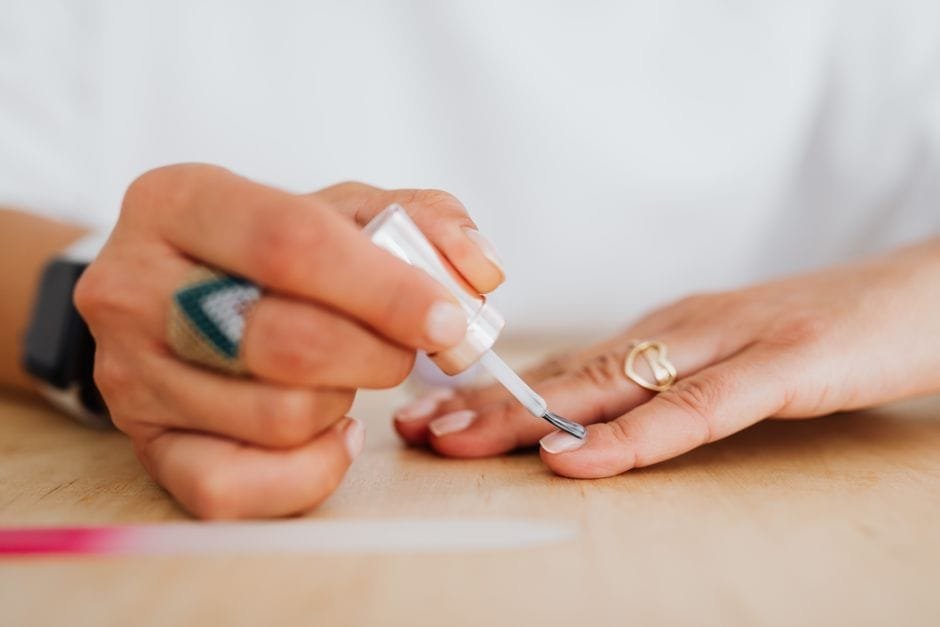
- Nail polish, remover, and artificial nails. Nail cosmetics can make the nail surface fragile and flaky, which looks like white spots. The review advises gentle nail care and limiting irritant grooming products.[1]
- Fungal infection. A type called white superficial onychomycosis causes white, flaky patches on the nail surface. A lab test on a scraping can help confirm it.[1]
- Skin conditions. The review lists psoriasis and alopecia areata among the inflammatory conditions that can cause white spots in the nail plate.[1]
- Medicines and illness. White bands across the nail have been reported with some medicines, including cytotoxic chemotherapy drugs, and with systemic diseases such as chronic kidney disease.[1]
Half-and-half nails
One pattern is worth knowing. In half-and-half nails (also called Lindsay’s nails), the part of the nail nearest the cuticle looks whitish, and a sharply bordered red, pink, or brown band covers 20 to 60% of the outer end of the nail. All nails are involved. The review reports this pattern in about 10 to 30% of people with chronic kidney disease, so finding it should prompt a kidney evaluation. It has also been reported in people without kidney disease.[1]
What makes a spot worth a doctor’s visit
One or two white spots on a single nail, especially after you remember banging it, are usually from trauma, and the pattern changes as the nail grows out. White that covers whole nails, forms bands, or shows up on many nails at once is worth a visit. For widespread patterns, the review says blood tests are essential in many patients to rule out kidney, liver, and other systemic disease. If a fungal cause is suspected, a clinician can test a scraping.[1]
The takeaway
A single white spot is most often a bump or manicure souvenir, not a red flag. White patterns that cover whole nails, form bands, or appear on many nails together are worth mentioning to a clinician, since the review notes they can sometimes point to an underlying condition.
References
↑︎ Iorizzo M, Starace M, Pasch MC. Leukonychia: what can white nails tell us? Am J Clin Dermatol. 2022;23(2):177-193. DOI: https://doi.org/10.1007/s40257-022-00671-6

Kurt Greiner
Kurt is a digital strategist and IT professional blending emerging technology with practical application to help businesses and individuals streamline their digital presence. His current work focuses on the intersection of intentional living and technological resilience, exploring how individuals can leverage modern tools to navigate the second half of life with purpose.
Leave a Reply